
China Index Research Institute's National Day Property Market Observation: Transactions improve year on year and market differentiation continues
The Zhitong Finance App learned that the China Index Research Institute published an article stating that judging from online signature transaction data, the overall number of new and second-hand housing online signings in key cities during the National Day holiday was better than in the same period last year. According to China Index data, from October 1 to 7, 551,000 square meters of newly built homes were sold in 25 key cities, an average daily increase of 33.8% over last year's National Day holiday, which is basically the same as the 2024 National Day holiday. In terms of second-hand housing, the average number of units sold per day in the 11 key cities increased by 42.8% year on year, but there is still a certain gap from the same period in 2024. It should be noted that the National Day holiday online transaction volume itself is relatively low throughout the year, and is greatly affected by factors such as the pace of holiday filing and the base for the same period, so the year-on-year growth rate tends to fluctuate significantly. Judging from city performance, online signings for new homes in cities such as Beijing and Hangzhou increased significantly over the same period last year. Shanghai and Wuhan increased, while cities such as Shenzhen and Chengdu showed a decline. At the project level, core area improvement projects, real estate with outstanding location and product advantages, and projects with strong discounts have received a lot of attention. Some COSCO suburban projects still mainly rely on price concessions to promote sales, and the uneven nature of the market continues.
In terms of policy, on September 28, the National Standing Committee proposed “studying and introducing policies and measures to stabilize the real estate market and promote employment income growth.” The interest rate discount policy for residents' home purchase loans was implemented before the holiday season, forming a certain level of support for eligible buyers.
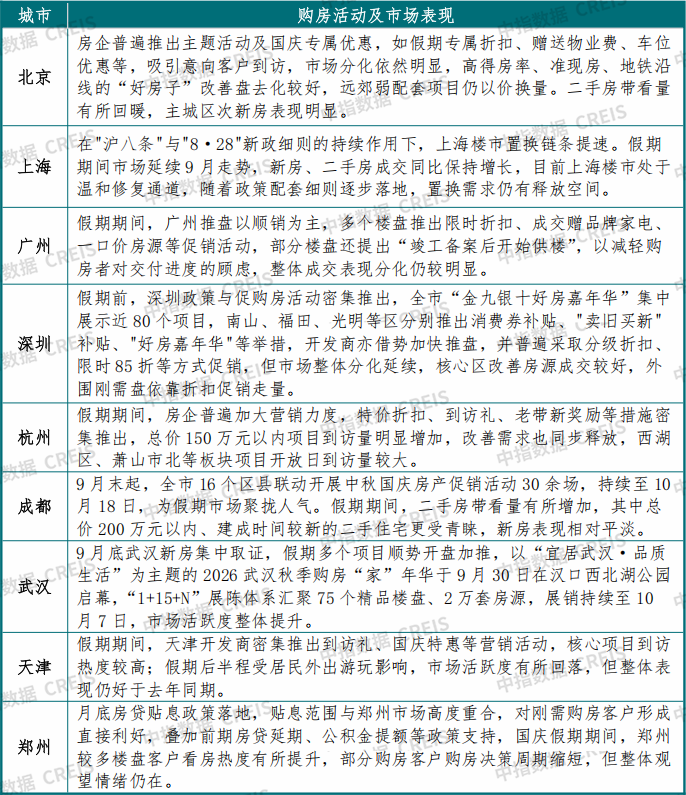
The National Day holiday is an important window for housing enterprises to concentrate on marketing and for residents to view and select houses. During the National Day this year, properties in most key cities maintained normal reception. Housing enterprises attracted customers through special housing offers, housing purchase subsidies, and parking concessions. Some cities simultaneously organized events such as home buying festivals and housing fairs. The pre-holiday market entry project added sellable properties to the holiday market, and some properties introduced home purchase discounts in conjunction with policies such as the 9/29 Home Purchase Loan Interest Rate Discount. Judging from market feedback, there has been an increase in visits to some projects, but there are still differences in performance between different cities and properties. Whether the traffic brought about by marketing activities can be converted into actual transactions still needs to be further observed.
Looking ahead to the future market, the “Silver Ten” transaction performance will be an important window for observing the market in the fourth quarter. In the short term, some projects in core cities are still supported by some demand, but the overall market is still in the stage of differentiation and adjustment; in the future, we need to focus on the actual driving effects of interest rate discount policies for home purchase loans, the introduction of incremental policies in various regions, and the progress of the implementation of the 8.28 commercial housing sales system reform rules.
Table: Marketing trends in key cities during the 2026 National Day
Data source: Comprehensive compilation by the China Index Research Institute
Figure: Online transaction area of newly built homes in 25 cities during the 2024-2026 National Day
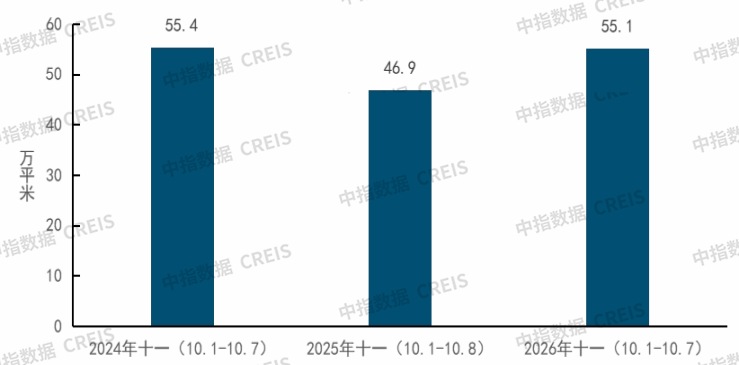
Table: Online registration area for newly built homes during the “National Day” period in some key cities
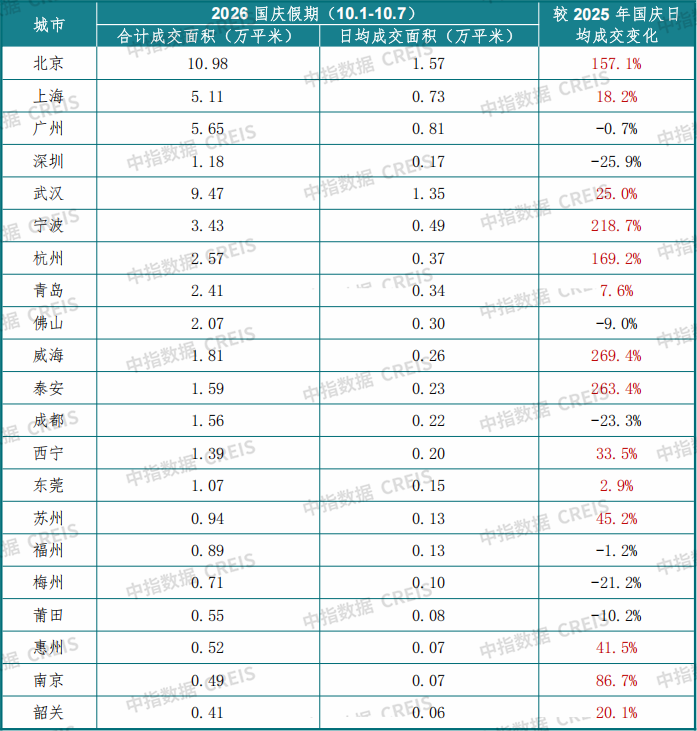
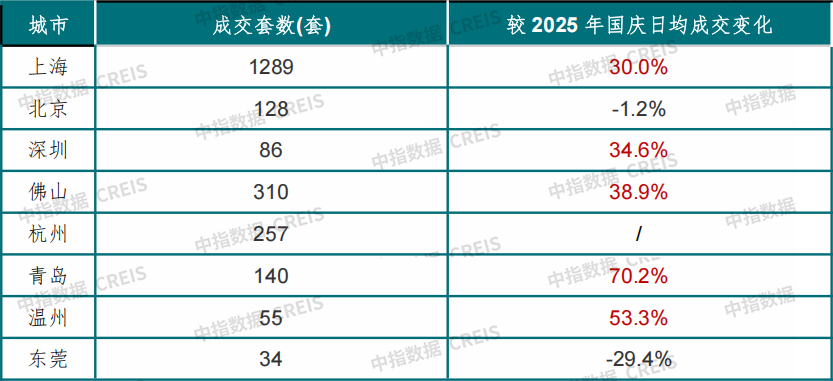
Figure: Number of second-hand housing units signed online in 11 key cities during the 2024-2026 National Day
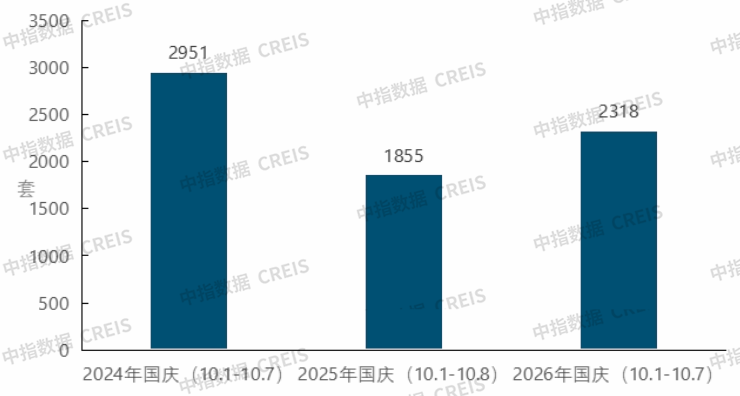
Table: Number of second-hand housing units signed online during the “National Day” holiday in some key cities
Data source: Middle Index Data CREIS
Beijing: In terms of new homes, the supply of new homes in Beijing increased in September, and several hot projects have been popular since the mid to late stages. During the National Day holiday, driven by the combination of favorable policies and promotions from housing enterprises, the popularity of the market continued, the number of visits to various real estate properties rebounded markedly, and there was a queuing phenomenon in model rooms for some hot projects. Housing companies generally launch themed events and exclusive National Day offers, such as exclusive holiday discounts, free property fees, parking space discounts, etc., to attract interested customers. Judging from online signing data, the average number of newly built commercial residential buildings in Beijing was signed online every day during the National Day holiday, an increase of 176% and 157%, respectively, over the same period last year. Market differentiation is still obvious. High housing rates, quasi-existing housing, and “good houses” along subway lines are better being upgraded and eliminated, and weak supporting projects in remote suburbs are still exchanging price for volume.
In terms of second-hand housing, there was some recovery during the holiday season. The number of inquiries about new properties in the main urban area increased, but online transactions were relatively lackluster. The average number of second-hand commercial housing units signed online per day during the National Day holiday was 18.3, which is basically the same as the same period last year. At the price level, owners' offers have stabilized and the bargaining space has narrowed, but there has been no general price increase, and the market is still a buyer's market; among them, high quality, sub-new, and mature housing offers strong prices, and there is still plenty of room for bargaining for older buildings with poor supporting facilities.
Shanghai: Under the continuing influence of policies such as the “Shanghai Eight Rules”, the Shanghai property market replacement chain has accelerated, and the “gold nine silver ten” market is developing steadily. In September, 1.179,000 square meters of newly built commercial housing were sold in the city, up 22.1% year on year; the second-hand housing market continued to be active. In September, 24,000 second-hand commercial housing units were signed online, up 17.2% year on year, reaching a record high for the same period in the past six years. This upward trend continued until the National Day holiday, and both new and second-hand housing transactions increased year-on-year. Overall, the Shanghai property market is in a gentle recovery phase, and there is still room for replacement demand.
Shenzhen: Before the National Day holiday, Shenzhen's policies and home purchase promotion activities were intensively launched. The city's “Golden, Jiu, and Silver Top 10 Housing Carnival” showcased nearly 80 projects. Nanshan, Futian, Guangming and other districts respectively launched consumer voucher subsidies, “buy old and new” subsidies, and “good house carnivals”. Developers also took advantage of the momentum to speed up sales. Around the end of September, about 1,229 residential units were concentrated on the market, and promotions were generally adopted using tiered discounts and 15% off for a limited time. Driven by the above factors, market performance picked up moderately during the holiday season. New housing project visits and contracts increased compared to before the holiday season. The number of visits to various properties in Guangming and Baoan increased by about 30% compared to weekdays, and the share of overseas customers viewing homes increased. However, the overall differentiation of the market continues. Improving housing transactions in the core area is relatively good, and peripheral demand is dependent on discount promotions.
Guangzhou: During the National Day holiday, Guangzhou mainly promoted sales. Many properties launched promotions such as limited-time discounts, free branded home appliances, and one-price properties. Some properties also proposed “starting to be offered after completion and filing” to ease buyers' concerns about delivery progress. Transaction performance was clearly divided: the core area relied on location and supporting advantages, and the number of visits and transactions increased markedly; some suburban areas attracted a number of newly needed customers to enter the market due to lower total prices and meeting the interest rate discount policy threshold for home purchase loans; most real estate was relatively stable.
Hangzhou: Market activity picked up during the holiday season. On the demand side, the number of visitors to projects with a total price of less than 1.5 million yuan increased markedly. Some projects visited more than 100 groups per day, and small units accounted for a relatively high share. Some remote owners took the initiative to adjust prices to match interest rate policies; improving demand was released simultaneously, and projects in Xihu District and Xiaoshan North had a large number of visitors on open days. The average daily sales volume of leading housing enterprises exceeded 100 million yuan during the holidays. On the supply side, housing enterprises have generally stepped up their marketing efforts, and measures such as special discounts, visiting gifts, and incentives for new and old people have been introduced intensively. The holiday market is still dominated by flat sales, and there are few swing projects. Overall, “Silver Ten” started well, but the popularity was highly concentrated on the immediate demand market and the core improvement market. The COSCO suburbs and middle price segments are still under pressure, and the pattern of market differentiation continues.
Chengdu: During the holiday season, activity in the Chengdu property market improved, and second-hand housing performance was even more obvious. On the policy side, on August 25, the new policy of the four departments reduced the minimum down payment ratio for provident fund loans for the purchase of newly built commercial housing to 15% and granted a one-year interest subsidy of 20% (maximum 25,000 yuan for a single household). Starting at the end of September, 16 districts and counties across the city jointly launched more than 30 Mid-Autumn Festival National Day real estate promotions, which continued until October 18, gathering popularity in the holiday market. During the holiday season, there was an increase in second-hand housing sales. Among them, second-hand homes with a total price of less than 2 million yuan and a relatively new construction period were more popular; second-hand housing transactions accounted for more than 80% of the city's housing market and were still the main players of transactions, while the supply of new housing continued to increase, and transactions continued to decline year on year. Overall, the popularity of the Chengdu market picked up during the holiday season, but new homes are still in the restoration channel, and market stabilization still requires further policy effects.
Wuhan: During the holiday season, 783 commercial residential units were sold in Wuhan, with a transaction area of 94,700 square meters. The average daily turnover increased 25% compared to the same period last year, and market activity increased. The reason for this is the centralized collection of evidence for new homes in Wuhan at the end of September. Many projects were launched and promoted during the holiday season, and market supply was sufficient; second, on October 1, Wuhan issued the “Implementation Opinions on Implementing the 'Notice on Improving the Commercial Housing Sales System'”. The 8 · 28 New Policy Rules arrived just in time for the first day of the holiday. The document clearly capped pre-sales, promoted existing housing sales, and allowed guarantees to replace supervisory funds. In addition, it was superimposed with the national housing purchase loan discount policy that came into effect on the same day to help stabilize market expectations; furthermore, “Livable Wuhan · Quality of Life” was used as the “Livable Wuhan · Quality of Life” Theme 2026 Wuhan Autumn Home Buying The “Family” Festival opened on September 30 at Beibei Lake Park in Hankou. The “1+15+N” exhibition system brought together 75 boutique properties and 20,000 units. The exhibition continued until October 7, gathering popularity in the holiday market.
Tianjin: During the holiday season, Tianjin developers intensively launched marketing activities such as visiting gifts and National Day specials, and visits to core projects were very popular; during the latter half of the holiday season, market activity declined somewhat due to residents' outings, but overall performance was still better than in the same period last year. It should be pointed out that the popularity of this round of holidays is mainly driven by marketing activities, and the sustainability of subsequent market repairs still depends on the pace of implementation of Tianjin's policies and rules and the restoration of housing companies' investment confidence.
Suzhou: In September, the pace of promotion of new homes in Suzhou accelerated markedly, and sufficient housing reserves were available for the National Day holiday; during the holiday period, the number of visits to popular properties was high, improving demand became an important support for this round of market restoration, and the second-hand housing market also maintained a certain degree of resilience. Judging from market activity, Suzhou launched the “Golden Autumn Home Buying Season” campaign. The popularity of house viewing has rebounded, and real estate promotion is increasing at the same time. However, its impetus for transactions is now more reflected in house visits and visits, and the continuous improvement in transaction volume still needs to be observed. Overall, the Suzhou property market is still in the process of bottoming out. The current recovery is a structural trend rather than a trend reversal. The overall stabilization of the market still requires continued policy effectiveness and further recovery on the demand side.
Zhengzhou: In September, we entered a buffer period for the implementation of the New Deal on August 28. Buyers increased their wait-and-see attitude, and the pace of entry of new projects into the market slowed down. A new fourth-generation housing project in the core area entered the market, with an opening and removal rate of over 70%. Many projects under the old regulations continued the “price reduction and commission” promotion initiative. The mortgage interest rate discount policy was implemented at the end of the month. The scope of the interest rate discount was highly consistent with the Zhengzhou market. It directly benefited customers who just needed a home, combined with policy support such as early mortgage extensions and provident fund withdrawals. During the National Day holiday, the popularity of housing viewing by many real estate customers in Zhengzhou increased, and the decision cycle for some buyers to buy homes was shortened, but the overall wait-and-see sentiment remained.