
Learn Why The Bull Case For Aflac (AFL) Could Change Following AI Benefits Tool Launch
- In early October 2026, bswift announced a new AI-powered carrier configuration toolset and selected Aflac as its exclusive launch partner, using Emma Intelligence to automate plan, rate, and rule setup from Aflac specific documents for human review.
- The exclusive role with bswift positions Aflac closer to the core of benefits administration workflows, which can influence how efficiently partners configure complex voluntary products and potentially affect Aflac’s operating costs and client experience over time.
- We will now examine how this exclusive AI configuration partnership with bswift could influence Aflac's broader investment narrative and execution.
Aflac Investment Narrative Recap
To own Aflac, investors need to believe the insurer can offset pressure in Japan and slower expected revenue and earnings over the next few years with better product mix, investment income and disciplined costs. The bswift AI configuration launch with Aflac supports that story at the margin, but appears more like incremental plumbing than a major earnings swing factor in the near term.
The bigger swing issues remain in Japan. Premiums there have been under pressure and the benefit ratio has drifted toward the top of guidance, while a recent cybersecurity incident adds operational and reputational risk. In contrast, portfolio repositioning, U.S. group expansion and capital flexibility are currently the more important near term catalysts.
The Aflac Life Insurance and Legacy Planning Study, and the partnership with Empathy for legacy planning and bereavement support, tie directly into the same employer benefits ecosystem as the bswift collaboration. Both moves push Aflac deeper into workplace wellness and benefits infrastructure rather than remaining solely a claims paying insurer.
This has implications for execution. Deeper integration with HR platforms and end of life services can support cross sell opportunities, help defend existing group relationships and partly counter softer top line expectations. The operational risk is that management must juggle product complexity, remediation work in Japan after the cyber breach and multiple partnership rollouts without allowing service quality or benefit ratios to erode further.
What The Aflac Forecasts Actually Assume
Aflac's analyst playbook points to revenues of US$17.4b and earnings of US$3.6b by 2029, based on a 1.2% yearly decline in revenue and a drop in profit from US$4.9b today. The earnings outlook therefore implies a US$1.3b decrease from current levels, even as the business leans on tools like the bswift AI configuration rollout to keep its operations tighter.
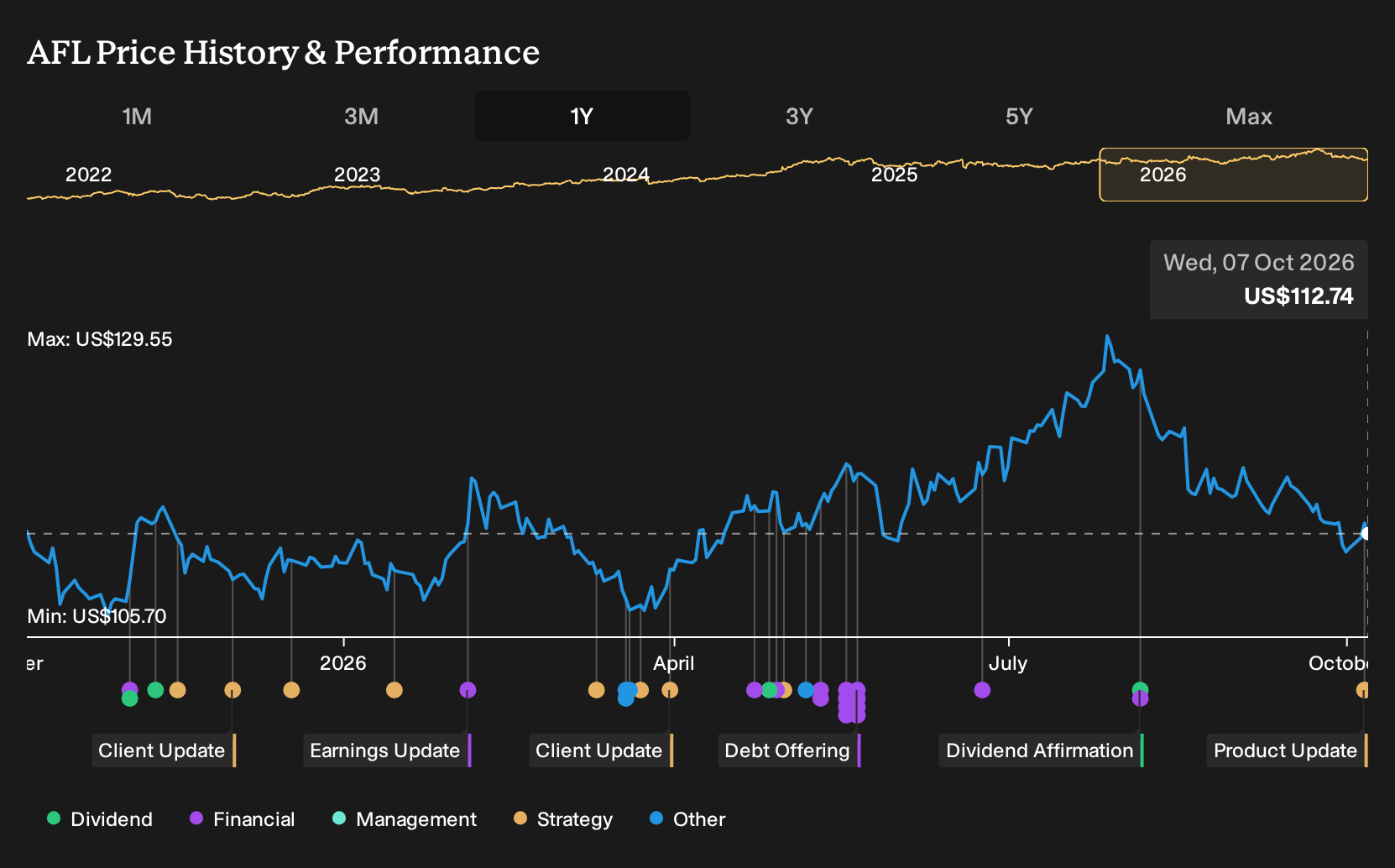
Uncover why Aflac's fair value indicates a 5% potential upside to its current price that may not last much longer.
Exploring Other Perspectives
The Simply Wall St Community offers only two fair value estimates for Aflac, spanning a wide band from about US$118.5 to almost US$169.7 per share. That spread shows how far opinions can diverge, especially when Japan premium pressure, higher benefit ratios and lingering cyber risks are weighed against portfolio moves and U.S. group growth. Use these contrasting views as a prompt to explore several alternative angles before deciding where you stand.
Explore another Aflac fair value estimate, including one that suggests it could be worth just $118.53.
Reach Your Own Conclusion
Disagree with existing narratives? Extraordinary investment returns rarely come from following the herd, so go with your instincts.
- A great starting point for your Aflac research is our analysis highlighting 3 key rewards and 2 important warning signs that could impact your investment decision.
- See our latest analysis for Aflac. The report includes a comprehensive fundamental analysis summarized in a single visual, the Snowflake, making it easy to evaluate Aflac's overall financial health at a glance.
Looking For More Investment Ideas Beyond Aflac?
Aflac might fit your current watchlist, but your portfolio probably needs more than a single insurer. Use the Simply Wall St Screener to spot other companies where the numbers and story line up for you.
- Prefer to anchor your research in value and quality together, rather than chasing headlines? You can start with a focused set of 29 high quality undervalued stocks that combine cash generation with balance sheet strength.
- If income is your priority and you want potential cash flow from holdings, consider screening for 7 dividend fortresses that aim to pair higher yields with resilient fundamentals.
- For a steadier ride across cycles, you could concentrate on resilience first by scanning a 31 resilient stocks with low risk scores and then filtering for the business models that make the most sense to you.
This article by Simply Wall St is general in nature. We provide commentary based on historical data and analyst forecasts only using an unbiased methodology and our articles are not intended to be financial advice. It does not constitute a recommendation to buy or sell any stock, and does not take account of your objectives, or your financial situation. We aim to bring you long-term focused analysis driven by fundamental data. Note that our analysis may not factor in the latest price-sensitive company announcements or qualitative material. Simply Wall St has no position in any stocks mentioned.
Have feedback on this article? Concerned about the content? Get in touch with us directly. Alternatively, email editorial-team@simplywallst.com