
Anta (02020) officially became Puma's largest shareholder, further advancing its multi-brand and global strategy
In October, the global layout of Anta Sporting Goods Co., Ltd. (02020), the largest multi-brand sporting goods group in China and the third largest in the world, fell to a critical position.
The Zhitong Finance App learned that on October 7, Anta Group officially announced that it had completed a transaction to acquire 29.06% of the shares in PUMA SE belonging to the global iconic sports brand PUMA (PUMA) from Artémis SAS, an investment company under the Pinault family, with a cash consideration of 1,505.5 billion euros, and has obtained approval from all relevant regulators and met customary delivery conditions. Anta Group officially became Puma's largest shareholder.
This strategic acquisition of Puma's shares is a new milestone in Anta Group's “single focus, multiple brands, and globalization” strategy. The two sides will achieve complementary advantages in core dimensions such as category layout, regional channels, and operational capabilities: Puma can use Anta Group's multi-brand operation experience, DTC capabilities, and back-office support in the supply chain to unlock growth potential and usher in major opportunities in the Chinese market; Anta Group relies on Puma's channel base, top competitive sports resources, and influence of trendy brands in mature markets in Europe and the US to accelerate the pace of global penetration.
Ding Shizhong, chairman of the board of directors of Anta Group, emphasized in particular that Anta Group is a multi-brand enabling enterprise. The value of the multi-brand strategy is to activate the value and potential of these outstanding brands through group empowerment. Puma's brand heritage and values are very attractive. Anta Group has full confidence in the Puma management team and supports its ongoing strategic transformation plans. As a long-term investor, Anta Group will empower the Puma brand with retail and operational expertise, fully unleash its brand value and development potential, and create long-term value for global consumers.
The “trilogy” of globalization gradually consolidates the foundation of multi-brand empowerment
As a multi-brand sports group with the world's top three market capitalization and more than 10 international brands, Anta Group's ambition to increase its global layout is rooted in continued positive business performance.
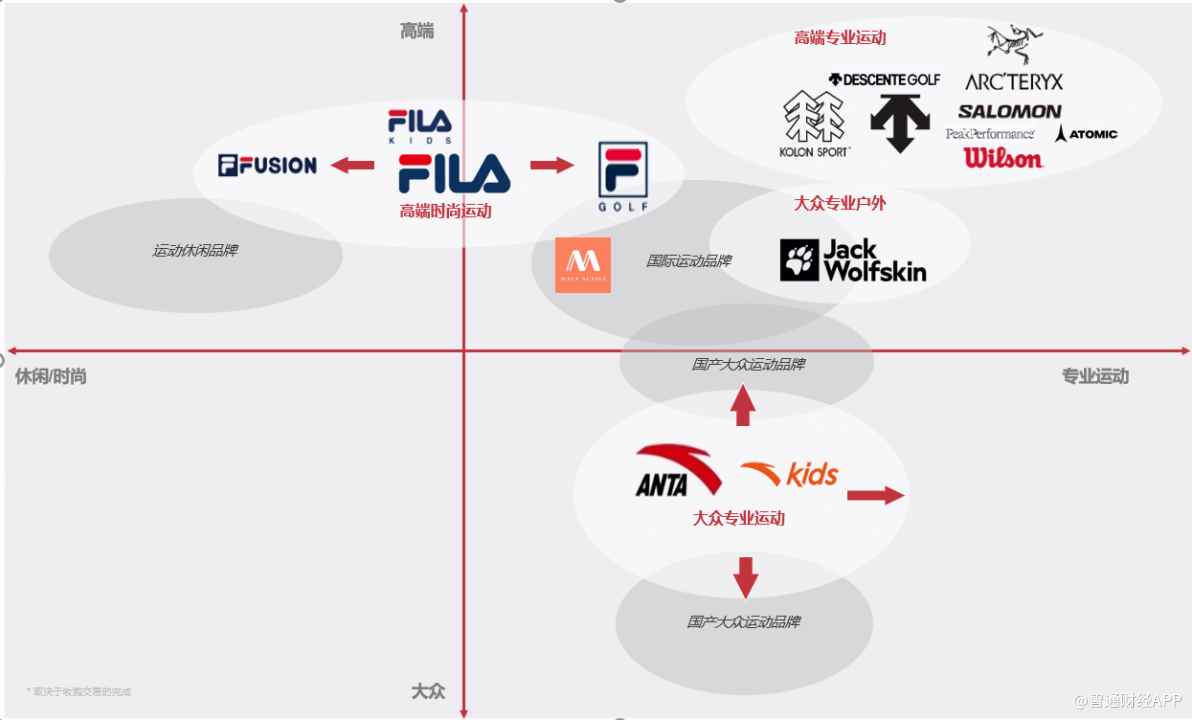
Multi-brand matrix under Anta Group and Amalfin Group (excluding Puma)
In the first half of 2026, Anta Group achieved revenue of 43.51 billion yuan (RMB, same below), an increase of 12.9% over the previous year. The revenue growth rate is still leading the industry under extremely large volumes. The revenue scale is about 2.2 times that of Nike China and 2.7 times that of Adidas China. Over the same period, the Group's operating profit margin increased 0.7 percentage points to 27%, a seven-year high; free cash inflows exceeded 11.63 billion yuan, and the net cash volume reached 39.1 billion yuan. It is worth noting that in the first half of 2026, the combined revenue of Anta Group and Amalfin Group reached about 67.98 billion yuan.
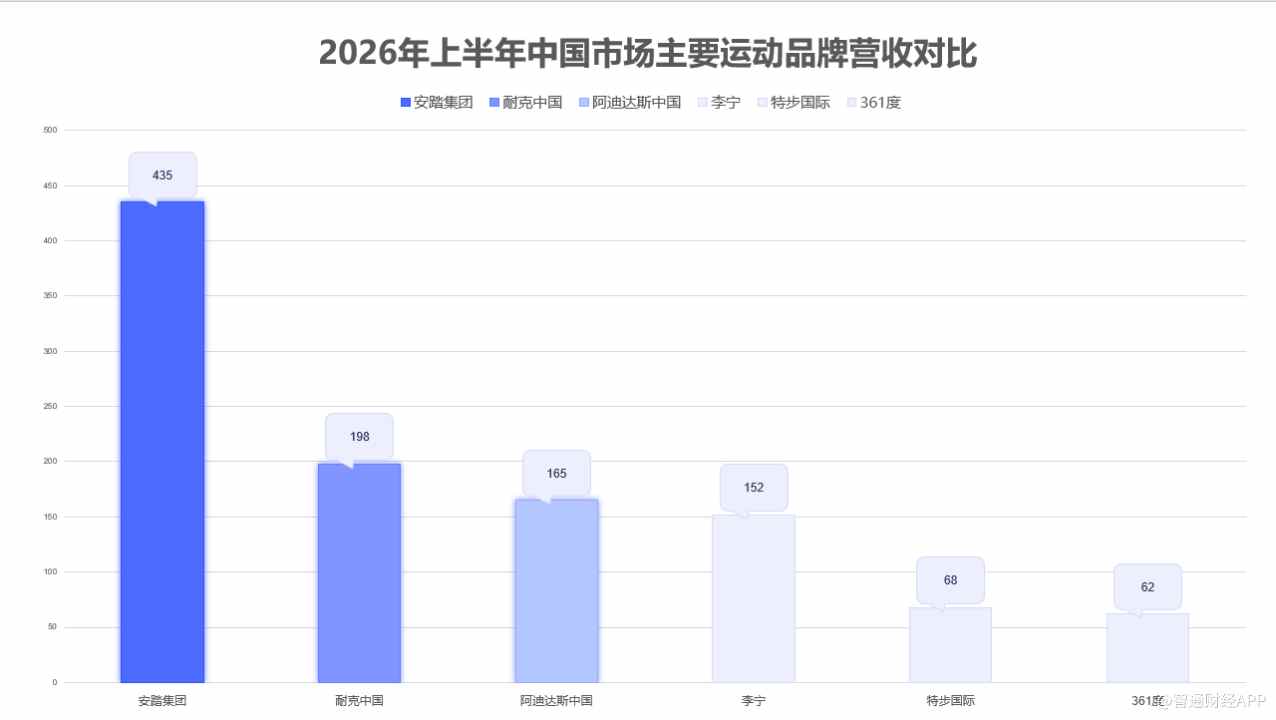
The Zhitong Finance App notes that Anta Group's business performance remains industry-leading, and the traction of its global strategy is getting stronger. This systematic layout, which has been tested repeatedly by the market, gradually completes the transformation from a local brand operator to a global industrial resource integrator, following the three-step path of “doing a good job as an international brand in China, going out to operate a global brand, and taking the Chinese brand to the world”.
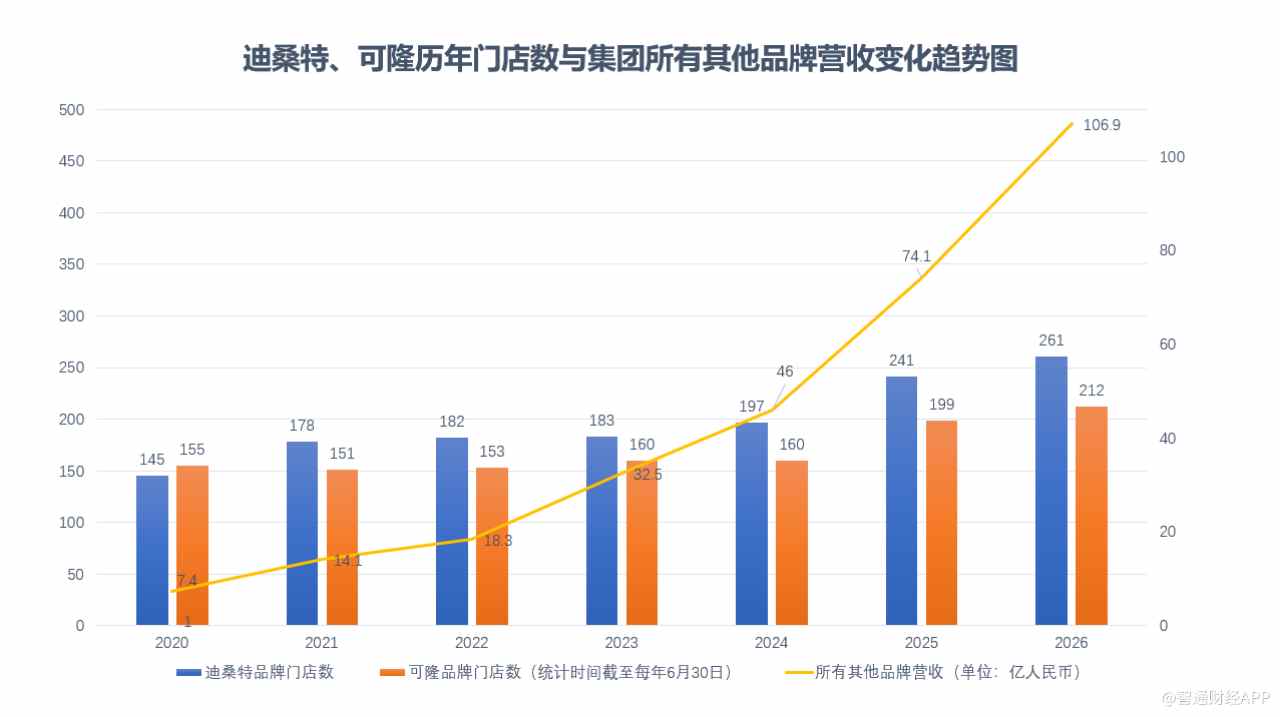
The first step is to build an international brand in China and refine global operation capabilities. In 2009, Anta Group purchased the trademark rights and operating rights of FILA Greater China, which is on the verge of marginalization, for 332 million yuan, opening the prelude to a multi-brand strategy. In the first half of 2026, FILA's revenue exceeded 15 billion yuan, accounting for more than 30% of the group's revenue. Meanwhile, overseas brands such as Descente and Colon entered a strong growth cycle in the Chinese market, driving other brand segments to achieve revenue of 10.69 billion yuan in the first half of the year, an increase of 44.2% over the previous year, and the revenue scale exceeded the full year of 2024.
The second step is to go out and operate a global brand, marking the entry of globalization into the deep-water zone. In 2019, Anta Group led a consortium to acquire Finland's Amalfin Sports for 4.66 billion euros, and included many top international brands such as Archaeopteryx, Salomon, and Willson under its command, making it the world's largest shareholder. Faced with the complex challenges of cross-cultural management and multi-brand collaboration, Anta Group adopted an integrated strategy of “consensus over control”, fully empowered Amafen's original management team, and injected the efficiency advantages and strategic planning capabilities of Chinese enterprises.
By formulating a “five billion euro” global strategy focusing on the three core markets and main brands, Amalfin Sports went from low unit growth before the merger and acquisition to 2025 revenue of US$6.566 billion, up 27% year on year. Greater China's annual revenue growth was as high as 43.4% year on year, and the overall strategic target was achieved two years ahead of schedule.
The third step, getting the Chinese Anta brand to go global and become the world's Anta, is the ultimate concept of a global strategy. After the release of the new 10-year strategy in 2021, Anta's main brand accelerated overseas expansion. The Southeast Asian market launched the “Thousand Stores Plan” in 2025. The plan is to open up 1,000 retail outlets in the next three years to open up a growth curve through the dual layout of physical stores and e-commerce platforms; the first flagship store in North America settled in Beverly Hills, Los Angeles, entering mature markets with a high-end attitude; and the Middle East successfully entered the United Arab Emirates, Saudi Arabia and other countries to complete breakthroughs in emerging markets. Unlike traditional brand product exports, Anta's main brand goes overseas with proven business models and operational capabilities.
Multi-brand collaborative evolutionary experience brings room for imagination to Puma's cooperation
The brand is the core key to Anta Group's steady and far-reaching globalization. As Chairman Ding Shizhong of the Group said in the 2026 semi-annual report “Chairman's Message”: “The brand is the most important asset of Anta Sports.” In Ding Shizhong's business philosophy, only a high-quality brand foundation is far from enough. Global strategic mergers and acquisitions must not only “buy well”, but also “manage well” and “collaborate well” to enhance market competitiveness.
In order to manage the complex multi-brand system, Anta Group has built the three core pillars of “multi-brand collaborative management capability,” “multi-brand retail operation capability,” and “global resource integration capability,” and has achieved “one by one” merger and acquisition results.
Multi-brand collaborative management capabilities help Anta Group break traditional sports giants' “single brand, multi-category” path dependency and build a differentiated and clear brand matrix. Anta's main brand focuses on popular professional sports. FILA focuses on high-end fashion sports. Descente specializes in high-quality professional sports. Kolon is deeply involved in the outdoor scene, Maya focuses on women's sports, and Wolf Claw covers the mass outdoor market. Puma, on the other hand, positions itself in the field of crossing the border between professional sports and fashion, focusing on Gen Z youth and street culture enthusiasts. It is based on German street mix and match, and has a deep heritage in professional categories such as soccer, basketball, running, and racing. The multi-brand business model allows each brand to operate independently, maintain cultural tension, and at the same time share the group's major middle and back-office resources such as innovation, digitalization, supply chain, logistics, etc., to form an ecological pattern of independent positioning and shared infrastructure, which not only avoids internal competition, but also achieves scale effects.
Starting with FILA, the Group established a “brand+retail” direct management model to achieve deep control over the brand through control terminals. The advantages of this model are becoming more prominent in the digital age. The DTC model allows brands to directly reach consumers, and accumulated user data feeds back product development and marketing decisions; full direct management enables brands such as FILA to respond quickly to the market and lead the industry in inventory turnover efficiency. Meanwhile, Puma's DTC business has been very effective. In the 2024 fiscal year, sales increased 16.6% to 2,425 billion euros, accounting for 27.5% of total sales. In the future, the two parties can learn from each other in direct operation and digital transformation. Anta Group can share its mature DTC experience with Puma to help it unleash its potential in the Chinese and Asian markets, while absorbing Puma's retail experience in mature global markets and feeding back the overseas expansion of its brand.
The ability to integrate global resources has achieved deep integration of global resources. Puma's distinct brand genes and values, and its global sports resources, technology accumulation and brand influence will further enrich the Group's global resource pool. Puma complements Anta's brands in professional sports fields such as soccer, basketball, athletics, and racing. The Anta Group can benefit from Puma's huge brand influence in the North American and European markets. It is also expected to share its mature European and American channels, accelerate global layout, and export China's flexible supply chain and localized operation capabilities to help Puma optimize efficiency. The capital market generally believes that this share acquisition brings great room for imagination for future cooperation between the two sides.
“Ecological going overseas” defines a new paradigm of globalization
The deep value of Anta Group's globalization is that it has pioneered a new paradigm of “ecological going overseas”, achieved comprehensive export of business models, management experience, and cultural ideas, and provided new inspiration for the globalization of Chinese enterprises. Ecological going out to sea is reflected in the export of transportable capacity. Anta Group will systematically replicate proven successful brand remodeling, DTC operations, and closed-loop capabilities in the local market to overseas brand operations.
This collaboration with Puma is an advanced form of ability output. Anta Group will share its growth experience in the Asian market to help Puma expand into emerging markets such as China, while Puma's global brand operation experience and mature channels will also provide lessons for other Anta Group brands to expand overseas. Through a model of capacity transfer and local adaptation, Anta's globalization is not simply copying and pasting, but rather value creation adapted to local conditions, forming a virtuous cycle of “cooperation — empowerment — growth — backfeeding”.
The core of ecological going overseas is a cross-cultural management philosophy that places equal emphasis on respect and empowerment. Anta Group has always implemented the integrated idea of “consensus is greater than control”, and insists that empowerment is not lacking regardless of control or decentralization. In global mergers and acquisitions and cooperation, the Group respects the independent cultural genes and governance systems of each brand, retains the original core management team, and coordinates the overall situation with strategic consensus. This “loose control” model, which focuses on results and is relaxed, not only fully unleashes the innovative vitality of each brand, but also guarantees the group's overall strategic collaboration, forming a mature governance paradigm adapted to global multi-brand operations.
The profound impact of ecological going overseas is reflected in the reshaping of the global sports industry pattern. The rise of the Anta Group has impacted the global sporting goods duopoly pattern dominated by Nike and Adidas for a long time. This collaboration with Puma is expected to further change the competitive landscape of the industry. This also confirms the ability of Chinese enterprises to create global value. In addition to traditional manufacturing advantages, Chinese enterprises have built core capabilities in high-value-added fields such as brand operations, cross-border mergers and acquisitions, and cross-cultural management. “China Operation” has gradually gained recognition from international brands, reversing the external stereotype that Chinese brands are only good at manufacturing.
Conclusions
From FILA's nirvana rebirth to Amafen's gorgeous transformation, from the Anta brand's thousand store layout in Southeast Asia to a high-end breakthrough in the North American market, to now joining hands with Puma to achieve global resource integration, Anta Group's globalization journey is the evolutionary history of Chinese companies from “integrating globally” to “empowering the world.”
Along with the gradual cultivation of globalization, Anta Group's long-term investment logic is gradually shifting from growth dividends of local brands to ecological compound benefits of multi-brand matrices. Every merger and acquisition of the Group is not simply a large-scale superposition, but rather an amplification of the value of ability reuse, that is, using a set of market-proven Chinese and Taiwanese capabilities, retail experience and governance philosophy to activate the growth potential of different brands and regional markets, cross the industry cycle, and give back to the capital market.
Looking at the larger global industrial coordinate system, Anta Group holding hands with Puma is more like a dividing point in an era. Over the past few decades, the global sporting goods industry has been dominated by European and American giants, following the one-way logic of exporting brand value from west to east. With an “ecological overseas” approach, Anta Group integrates into the global core market as an equal industrial integrator with operational efficiency, digital capabilities, and Oriental management wisdom refined in the Chinese market, pushes the industry towards a new pattern of multi-polar coexistence, and kicks off a new cycle of value growth.