
American Express (AXP) Stock May Be 27% Undervalued Following AI Card Launch
American Express has delivered a 108.1% share price gain over the past 3 years, and the recent pullback has investors asking whether that run is supported by the returns the business earns on its capital. With new product launches and a wider merchant footprint reshaping how the company makes and deploys money, the key issue is whether those capital returns still justify the current US$304.55 price tag.
- The 108.1% return over 3 years puts real weight on the question of whether American Express is earning enough on its capital base to support that kind of share price reset.
- The launch of AI-enabled corporate cards and expense tools can influence future capital returns by affecting how much high-value spend flows across the network and how efficiently the company can scale that spending without matching cost growth.
- Prefer to judge American Express on earnings? See why American Express's 18.2x P/E tells a different valuation story.
The issue now is whether the returns American Express earns on the capital it invests are strong enough to make today's market valuation look reasonable.
If you want to test the same capital return question that surrounds American Express across a broader set of opportunities, scan through 27 high quality undervalued stocks.
Does American Express Look Undervalued on Excess Returns?
The Excess Returns model estimates what American Express can earn above its cost of equity on each dollar of book value, then prices the stock off those surplus profits. In this framework, the model uses a Book Value of $50.79 per share and a Stable EPS estimate of $21.88 per share, with those earnings guided by a weighted set of future Return on Equity forecasts from 13 analysts. The implied Cost of Equity is $5.01 per share, which leaves an Excess Return of $16.86 per share, supported by an average Return on Equity assumption of 36.76% and a Stable Book Value of $59.52 per share based on nine analyst estimates.
That combination suggests American Express is treated as a mature, high-return franchise where value is driven more by sustained profitability on capital than by rapid balance sheet expansion. Because the Excess Returns projections put American Express' estimated intrinsic value meaningfully above the current share price of $304.55, the stock screens as undervalued on this lens. The launch of AI enabled corporate cards and expense tools helps explain why the market is still assigning some headroom relative to what the model says the business could be worth over time. Find out what American Express could be worth using our Excess Returns estimate.
The American Express Narrative: What Would Justify Today's Price?
Simply Wall St Narratives for American Express pick up where the valuation puzzle stops and spell out what growth, margin and earnings paths would need to play out for the stock to end up meaningfully above or below today's market price, all on the Community page. Rather than focusing on a single multiple or model line, each narrative lays out the assumptions behind its view of fair value so you can compare those expectations with how American Express' results evolve over time.
Community views on American Express split between those who see more upside in the current setup and those who think the recent run already prices in a lot of good news.
Bull case: 19% undervalued
"International billed business growth of roughly 50% over three years, alongside card acceptance at more than 190 million merchant locations…"
Discover why this Narrative puts American Express at 19% undervalued.
Bear case: roughly fairly valued
"Please remember that the fair value estimate is just a number and, probably, a very wrong number…"
Explore why this Narrative puts American Express at roughly fairly valued.
One more American Express puzzle the valuation does not answer
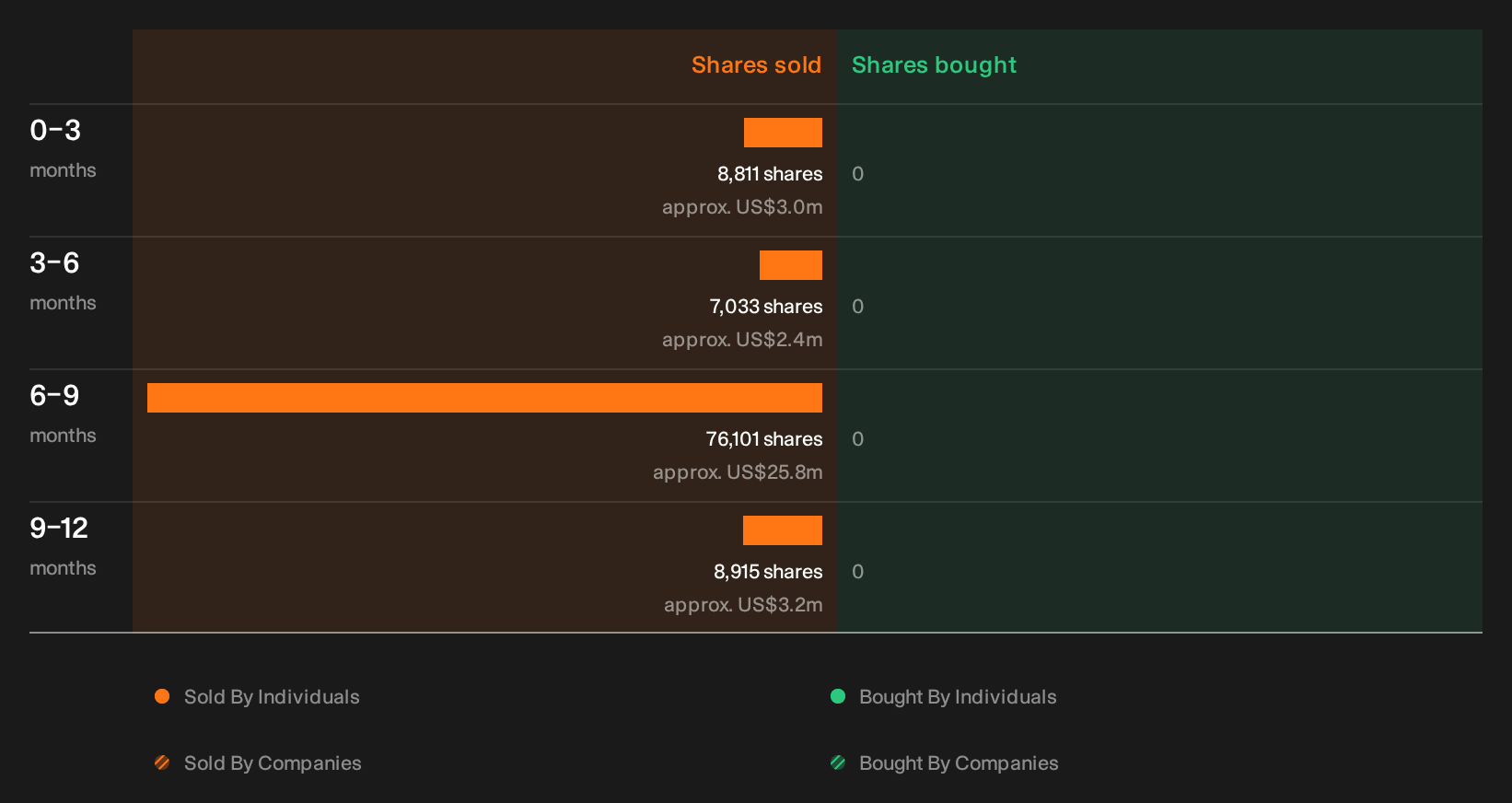
Price, profits and models tell only part of the American Express story. Recent transactions by people inside the business add another layer that deserves a closer look. See the recent insider selling flagged for American Express.
This article by Simply Wall St is general in nature. We provide commentary based on historical data and analyst forecasts only using an unbiased methodology and our articles are not intended to be financial advice. It does not constitute a recommendation to buy or sell any stock, and does not take account of your objectives, or your financial situation. We aim to bring you long-term focused analysis driven by fundamental data. Note that our analysis may not factor in the latest price-sensitive company announcements or qualitative material. Simply Wall St has no position in any stocks mentioned.
Have feedback on this article? Concerned about the content? Get in touch with us directly. Alternatively, email editorial-team@simplywallst.com