
3 Indian Bank Stocks With Funding Strength As RBI Rates Rise
RBI has just nudged the repo rate up to 5.5%, and that small 25 bps move could quietly reshape where returns are made and where they leak away. Higher rates often squeeze borrowers but can open a window for lenders that manage funding costs well. This article breaks down how that shift might play out and outlines 3 Indian banking and financial stocks with clear exposure to this new rate cycle.
The three stocks below are just a sample from this rate-sensitive theme. The full screen surfaced 9 more Indian banking and financial companies with equally compelling stories that are not covered here. To identify and analyze your own highest-conviction ideas from this group, head straight to the Indian Banking and Financials Benefiting from Rising Interest Rates screener.
Ujjivan Small Finance Bank (NSEI:UJJIVANSFB)
Ujjivan Small Finance Bank is closely tied to the rising rate story, since it takes deposits and lends into higher-yield niches where repricing can be quick. Its mix of mass-market borrowers makes those interest spread moves especially important for investors tracking this RBI cycle.
Ujjivan Small Finance Bank runs a broad retail-focused franchise across India, anchored in retail banking that brings in about ₹73.2b, alongside treasury income of roughly ₹9.1b and wholesale banking of ₹2.3b. The stock now carries a market value near ₹127.0b.
"Rapid shift to secured lending, expanded rural reach, and proactive credit management position the bank for faster margin growth and profitability than industry peers."
The key factor to watch is how one quiet change in the loan mix interacts with higher policy rates to shape those margins over the next phase of this cycle.
That margin story is only half the picture, and the full narrative for Ujjivan Small Finance Bank shows how repricing, credit costs, and funding trends could be quietly accelerating the Ujjivan Small Finance Bank thesis.

AU Small Finance Bank (NSEI:AUBANK)
AU Small Finance Bank plugs directly into the rising rate theme through its mix of deposits and lending, and its wide banking platform now gives that rate sensitivity multiple ways to show up in day to day earnings power.
"Rapid scaling of AU Small Finance Bank’s gold loan offering, which doubled in FY26 and then grew 130% year on year to about ₹4,500 crores in Q1 FY27 with yields near 15.5% and presence in more than 1,300 branches, creates room for a higher share of granular, high-yield secured assets that can support revenue growth and fee income beyond current expectations."
What happens to those returns if one quiet shift in the funding mix starts to change the direction of margins?
AU Small Finance Bank is a full service lender and deposit taker that fits the rising rate screen through its role as a large, listed Indian bank with a broad deposit base and lending book. Most income comes from retail banking at about ₹165,781 million, with wholesale banking at roughly ₹22,793 million and treasury close to ₹30,290 million, while other banking operations add around ₹5,307 million, and the stock carries a market value near ₹770.6 billion.
That kind of funding shift is exactly what the full narrative for AU Small Finance Bank unpacks in detail, highlighting where AU Small Finance Bank’s earnings power could be quietly accelerating.
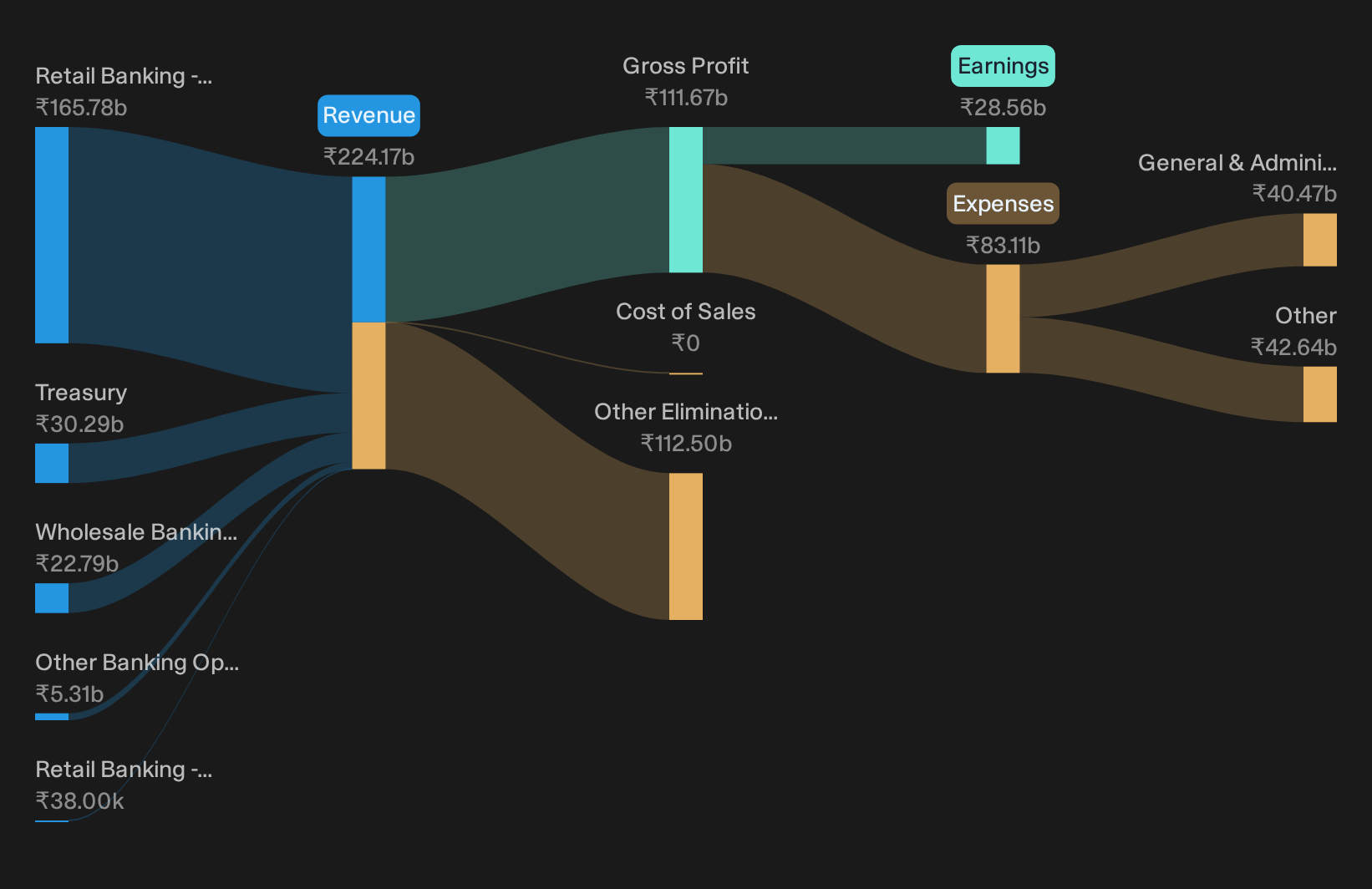
Bank of Maharashtra (NSEI:MAHABANK)
Bank of Maharashtra is a full service public sector lender that sits in the sweet spot of this rising rate theme, with a large deposit base and broad loan book that tie its earnings closely to RBI moves on the repo rate.
Bank of Maharashtra provides retail, corporate, treasury and digital banking services across India, linking its income closely to RBI rate decisions through both deposits and lending activity, and currently carries a market value of about ₹621.5b.
"The strategy of maintaining a high CASA (Current Account Savings Account) ratio and consciously avoiding reliance on high-cost bulk deposits helps to structurally lower funding costs as rates fluctuate, preserving net interest margins and supporting earnings stability."
What matters from here is how one quiet shift in where new deposits come from shapes those margins as rates keep edging higher.
That quiet shift is exactly what the full narrative for Bank of Maharashtra lays out, revealing how funding costs, credit risk and earnings momentum could be quietly decoupling from headline expectations.

Curious About What Else You Might Be Missing?
Fresh ideas move first. By the time momentum is flying, the cleanest entry points are often gone. Scan these under the radar lists before the crowd and get in early.
- Spot cash rich businesses quietly building strength before momentum screens catch up by running the list of solid balance sheet and fundamentals (206 results) while the data still feels fresh and under followed.
- Chase yield without guessing blindly and zero in on income opportunities using the curated 165 dividend fortresses before payout stories get fully priced into the market.
- Ride structural demand in critical materials and track potential supply squeezes ahead of the herd with the focused 33 best rare earth metal stocks while prices still lag the narrative.
This article by Simply Wall St is general in nature. We provide commentary based on historical data and analyst forecasts only using an unbiased methodology and our articles are not intended to be financial advice. It does not constitute a recommendation to buy or sell any stock, and does not take account of your objectives, or your financial situation. We aim to bring you long-term focused analysis driven by fundamental data. Note that our analysis may not factor in the latest price-sensitive company announcements or qualitative material. Simply Wall St has no position in any stocks mentioned.
Have feedback on this article? Concerned about the content? Get in touch with us directly. Alternatively, email editorial-team@simplywallst.com