
U.S. Bancorp (USB) Stock Still Looks Undervalued After A 100% Run
U.S. Bancorp has almost doubled investors' money over the past three years, so the real question now is whether the current share price lines up with the returns the bank earns on its capital. Recent swings and fresh headlines put a spotlight on how efficiently the institution turns its deposit base and loan book into long term value for shareholders.
- U.S. Bancorp has delivered a 99.7% share price gain over three years, which puts more pressure on the underlying returns on capital to carry that performance.
- Management's latest CFO survey points to corporate clients becoming more upbeat on growth, deal activity and AI related investment, which can influence demand for lending, advisory services and fee income and in turn shape how productively the bank can reinvest its capital.
- What if you looked at U.S. Bancorp through its earnings instead? See what U.S. Bancorp's 11.4x P/E says about the price.
The issue now is whether the returns U.S. Bancorp earns on its capital are strong and durable enough to justify where the stock trades today.
If you are weighing whether U.S. Bancorp's 99.7% three year return still lines up with the returns it earns on its capital, it can help to compare that question across 27 high quality undervalued stocks.
Is U.S. Bancorp Still Cheap on Excess Returns?
The Excess Returns model values U.S. Bancorp by comparing the profit it can earn on its equity base with the return investors demand. For this bank, the inputs point to a business expected to earn a stable EPS of $5.84 per share on a stable book value of $43.40 per share. That is built on an average forecast return on equity of 13.45%, while the estimated cost of equity sits at $3.42 per share. The gap between those two, an excess return of $2.42 per share, is what drives the intrinsic worth estimate rather than any simple P/E shortcut.
Because the latest Excess Returns projections put U.S. Bancorp's estimated intrinsic value substantially above the current share price of $57.29, the model is effectively saying the market is not fully crediting those forecast returns on capital. The recent U.S. Bank CFO Insights Report, which shows finance chiefs becoming more open to growth, dealmaking and AI investment, helps explain why analysts expect U.S. Bancorp to keep compounding that book value base over time. The issue for you is whether that spread between market price and model value compensates for the usual banking risks and regulatory swings that could change those projected returns on equity. Find out what U.S. Bancorp could be worth using our Excess Returns estimate.
The U.S. Bancorp Narrative: What Would Justify Today's Price?
U.S. Bancorp Narratives on Simply Wall St pick up where the valuation puzzle leaves off by spelling out which paths for growth, profitability and earnings would need to play out for the stock to be worth materially more or less than today’s price, and they sit on the Community page. Each one turns U.S. Bancorp's implied fair value into a specific, testable story about the business that you can watch evolve over time.
One of the top community narratives on U.S. Bancorp: roughly fairly valued
"Outsourcing backend brokerage ops to Fidelity likely reduces in-house labor, IT maintenance, and network/security costs for U.S. Bancorp..."
Discover why this Narrative puts U.S. Bancorp at roughly fairly valued.
For U.S. Bancorp, the share price is only one piece of the puzzle
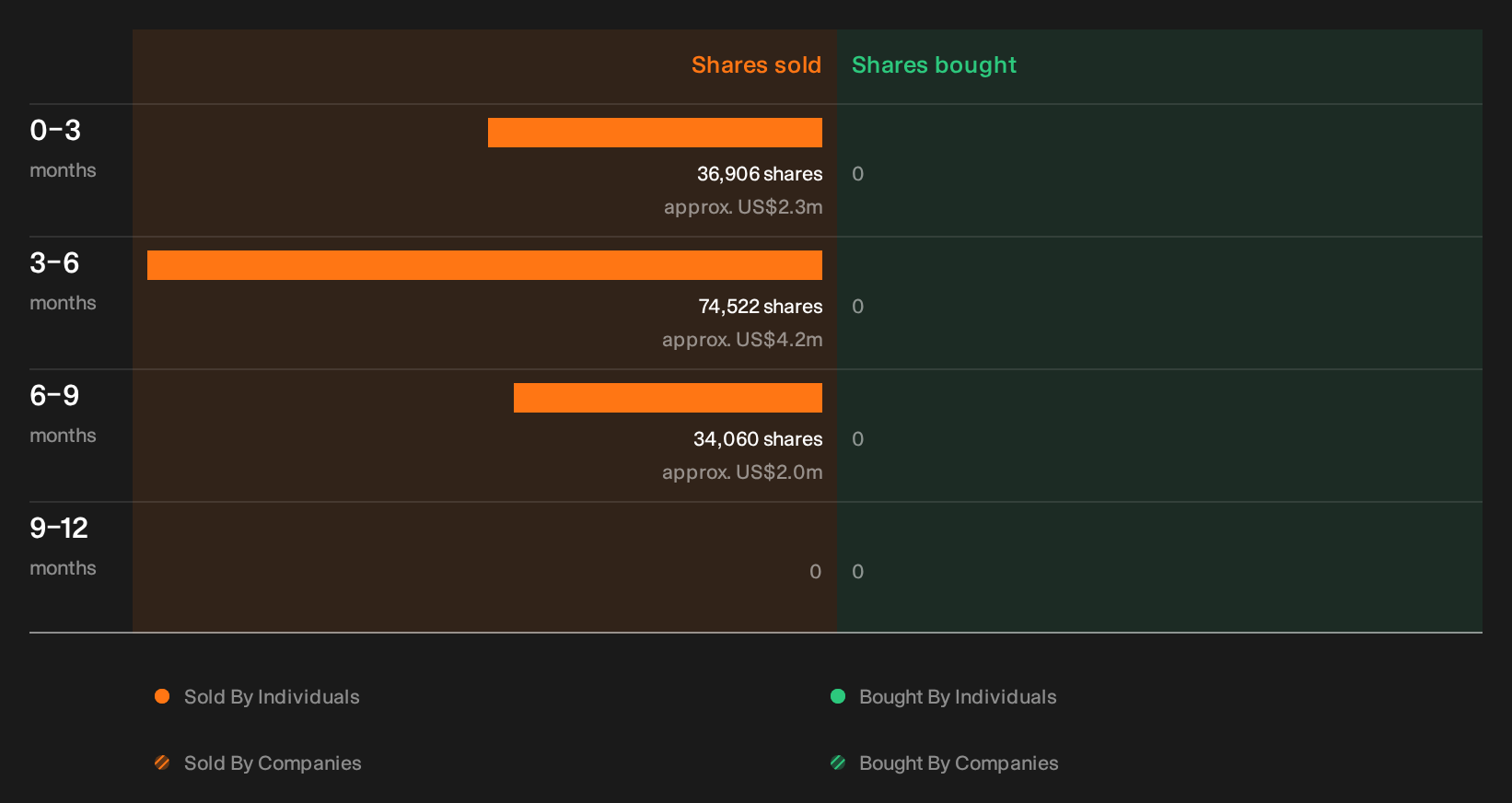
Valuation models tell part of the U.S. Bancorp story, yet recent share disposals by people inside the business add a different layer that readers may want to inspect more closely. See the recent insider selling flagged for U.S. Bancorp.
This article by Simply Wall St is general in nature. We provide commentary based on historical data and analyst forecasts only using an unbiased methodology and our articles are not intended to be financial advice. It does not constitute a recommendation to buy or sell any stock, and does not take account of your objectives, or your financial situation. We aim to bring you long-term focused analysis driven by fundamental data. Note that our analysis may not factor in the latest price-sensitive company announcements or qualitative material. Simply Wall St has no position in any stocks mentioned.
Have feedback on this article? Concerned about the content? Get in touch with us directly. Alternatively, email editorial-team@simplywallst.com