
3 UK Supermarket Stocks To Watch As Sainsbury Shares Stay In Focus
Merger talks between Sainsbury’s and Morrisons have gone quiet, but the idea of scale in UK supermarkets is very much alive in the market’s imagination. When potential deals pause, pricing often adjusts before the full story is clear, which can create opportunity or risk depending on where you look. This article walks through three UK supermarket stocks exposed to this news and how investors might think about their positioning now.
The stocks highlighted below are just a sample from this consolidation theme, and the full screen surfaced 9 more UK food retailers with equally interesting potential stories that are not covered here. To identify and analyze your own highest conviction supermarket ideas, head straight into the UK Supermarket Consolidation and Scale Players screener.
J Sainsbury (LSE:SBRY)
J Sainsbury is a pure play on UK grocery scale, with food, general merchandise, clothing and financial services all under one roof. This positioning puts it squarely in focus for investors tracking consolidation themes across the listed supermarket group.
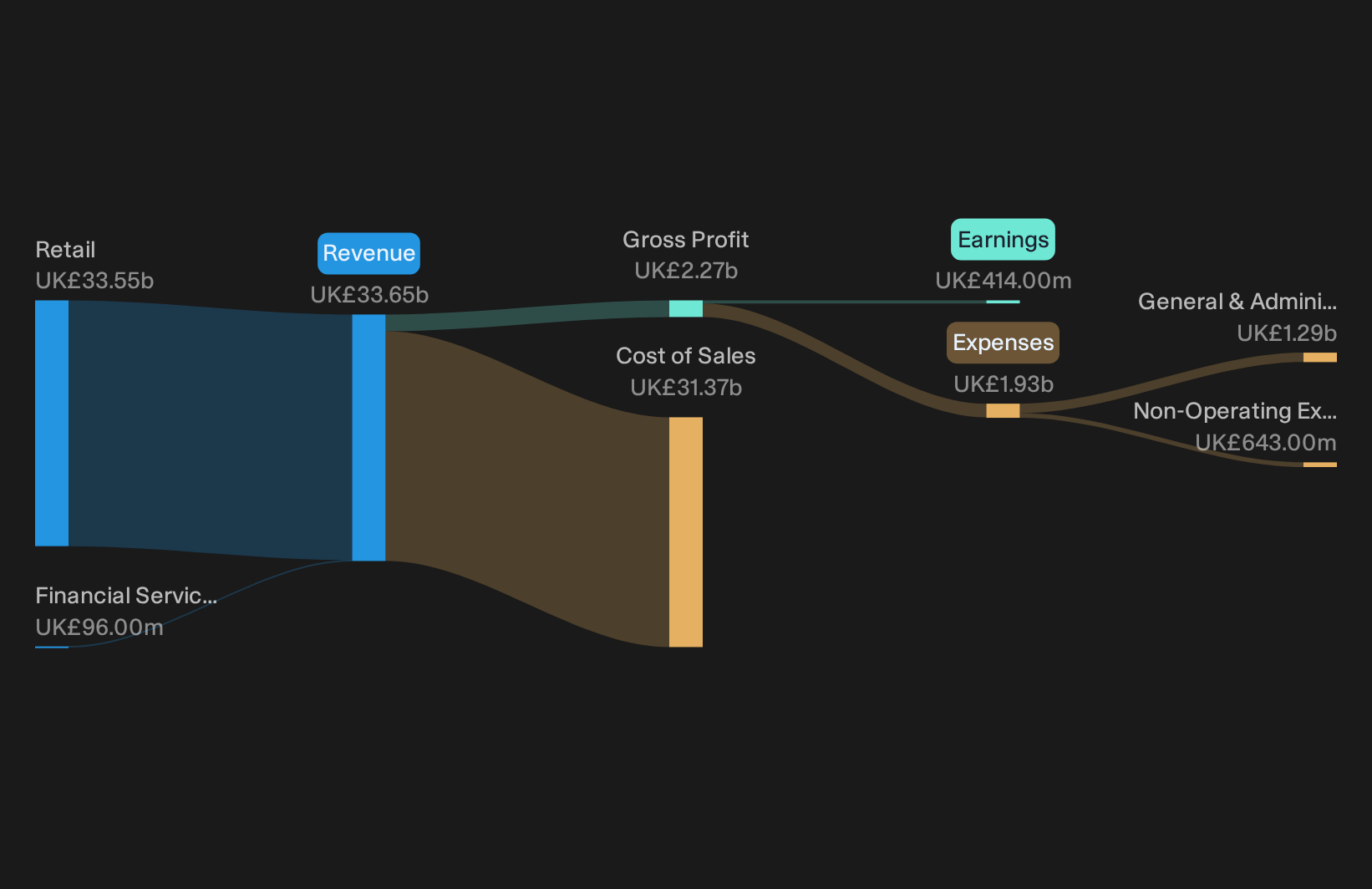
J Sainsbury generates almost all of its £33.6b revenue from UK retail, with £33.6b from Retail and £96m from Financial Services, and the group carries a market value of about £7b.
"Sainsbury's plans to deliver significant cost savings of £1 billion by 2027 through structural changes and investments in technology, enhancing operational efficiencies and potentially boosting net margins."
How far those gains reach will depend on one quiet shift in where future profits actually come from within the wider grocery ecosystem.
That shift is where the real story starts, and the full narrative for J Sainsbury unpacks how Sainsbury's scale, capital choices and consolidation optionality could be quietly accelerating or stalling value.
Tesco (LSE:TSCO)
Tesco is the heavyweight in this UK supermarket scale screen, with grocery, wholesale and convenience reach that makes it a natural reference point whenever investors think about consolidation pressure or shifting shopper loyalty.
"The strategic emphasis on Clubcard and personalized pricing strategies, coupled with expanded promotional offers, aims to deepen customer loyalty and increase sales volume, positively impacting both revenue and net margins."
What happens if one pressure point in that equation quietly shifts the balance between holding market share and defending profitability?
Tesco runs supermarkets, convenience outlets, online grocery and wholesale operations across the UK, Ireland and Central Europe, generating about £58.8b from UK and Ireland retail, £9b from Booker wholesale and £4.6b from Central Europe, with a market value near £29.3b.
When that trade off between share and profitability matters to you, the full narrative for Tesco shows how Tesco’s loyalty engine could be accelerating or masking future returns.

Marks and Spencer Group (LSE:MKS)
Marks and Spencer Group brings a hybrid of premium food retail and general merchandise to this supermarket scale theme. Its growing grocery and convenience arm gives it meaningful exposure to supplier terms, store economics and any future shift in how UK food chains chase size.
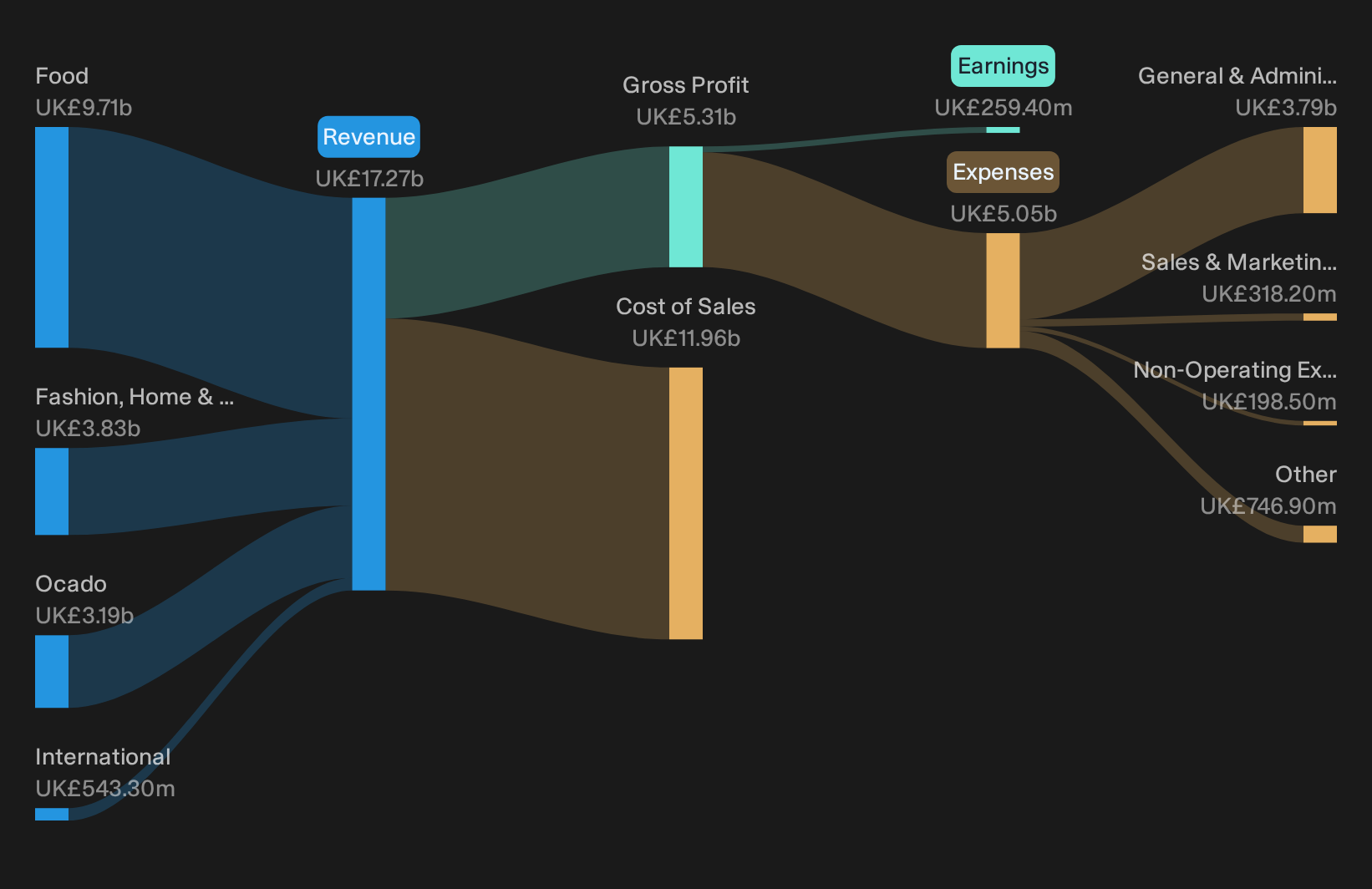
Marks and Spencer Group generates most of its income from Food at £9.7b, with £3.8b from Fashion, Home & Beauty, £3.2b from Ocado and £543 million from International operations, and the group carries a market value of about £7.8b.
For investors watching UK supermarket consolidation, Marks and Spencer Group is interesting because its food business is increasingly the anchor for the whole organisation. Clothing, home and Ocado add extra levers if scale in grocery starts to matter even more.
"The strategic investment in digital and technology initiatives is expected to enhance the online shopping experience, increasing digital sales and potentially raising overall revenue from the online segment."
The real swing factor is how one quiet shift in where future profits are earned ultimately filters through to margins and bargaining power.
That profit mix question is exactly what the full narrative for Marks and Spencer Group tackles, showing how Marks and Spencer Group’s food strength and digital push could be accelerating or masking future upside.
Seeking Fresh Alternatives Beyond Supermarkets
Fresh opportunities move fast. Some stocks are building quiet momentum while others risk getting caught before any breakout. Scan these ideas that are under the radar for now and consider them carefully.
- Spot resilient cash generators early by screening for a curated list of solid balance sheet and fundamentals (9 results) that can handle shocks while weaker peers are still dropping.
- Target reliable income streams by zeroing in on a hand picked set of 1 dividend fortresses before yield-focused investors reassess valuations.
- Review carefully filtered 33 best rare earth metal stocks linked to structural demand in critical materials that may attract attention when supply headlines increase.
This article by Simply Wall St is general in nature. We provide commentary based on historical data and analyst forecasts only using an unbiased methodology and our articles are not intended to be financial advice. It does not constitute a recommendation to buy or sell any stock, and does not take account of your objectives, or your financial situation. We aim to bring you long-term focused analysis driven by fundamental data. Note that our analysis may not factor in the latest price-sensitive company announcements or qualitative material. Simply Wall St has no position in any stocks mentioned.
Have feedback on this article? Concerned about the content? Get in touch with us directly. Alternatively, email editorial-team@simplywallst.com