China IoT: China's commodity price index rose 4.1% month-on-month in September
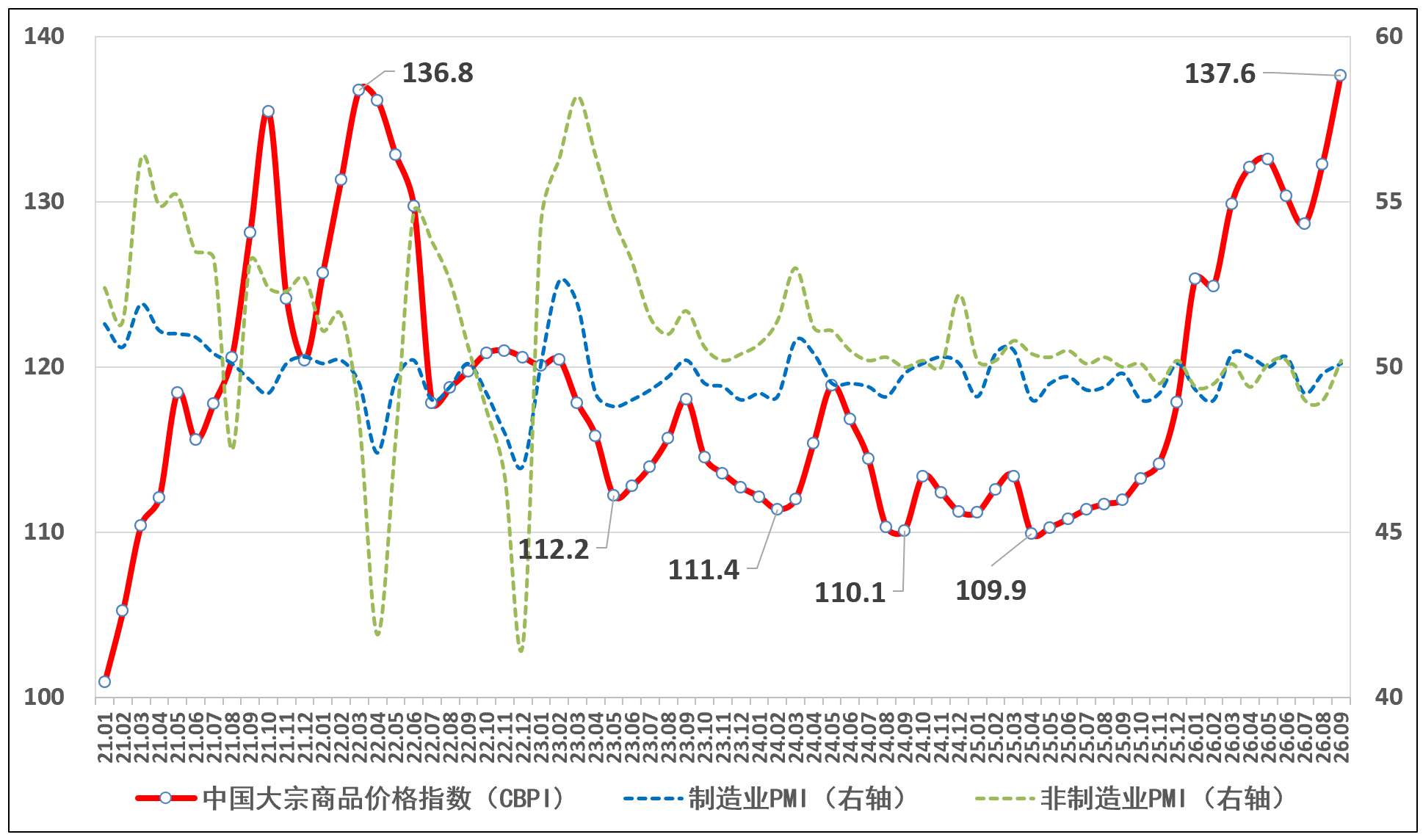
The Zhitong Finance App learned that on October 5, a joint survey was conducted by the China IoT Commodity Distribution Branch and Shanghai Steel Federation and other organizations. The China Commodity Price Index (CBPI) for September 2026 released by the China Federation of Logistics and Purchasing was 137.6 points, up 4.1% month-on-month and 22.9% year-on-year. Judging from the index's performance, with the arrival of the peak season for traditional production and construction, the accelerated implementation of major projects, and continuous improvement in manufacturing production and market demand, the commodity market sentiment level further improved, laying a good foundation for the smooth operation of the economy in the fourth quarter. However, at present, the risk of external imports is still high. Prices of raw materials in some industries are rising rapidly, and the pressure on downstream enterprises to produce and operate is increasing. To consolidate the positive trend of the market, it is still necessary to strengthen monitoring the operation of key commodity markets, enhance risk prevention and mitigation capabilities, and further release the endogenous driving force of economic growth.
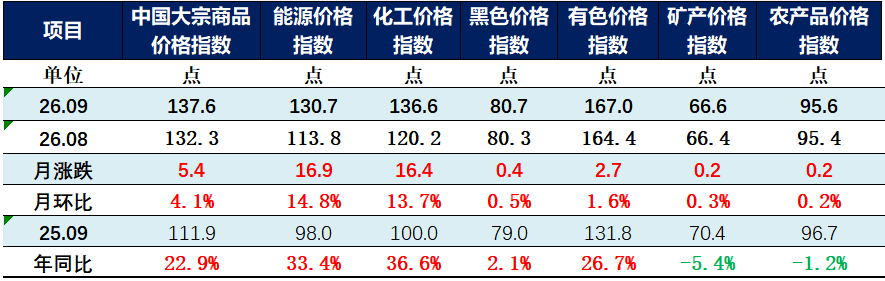
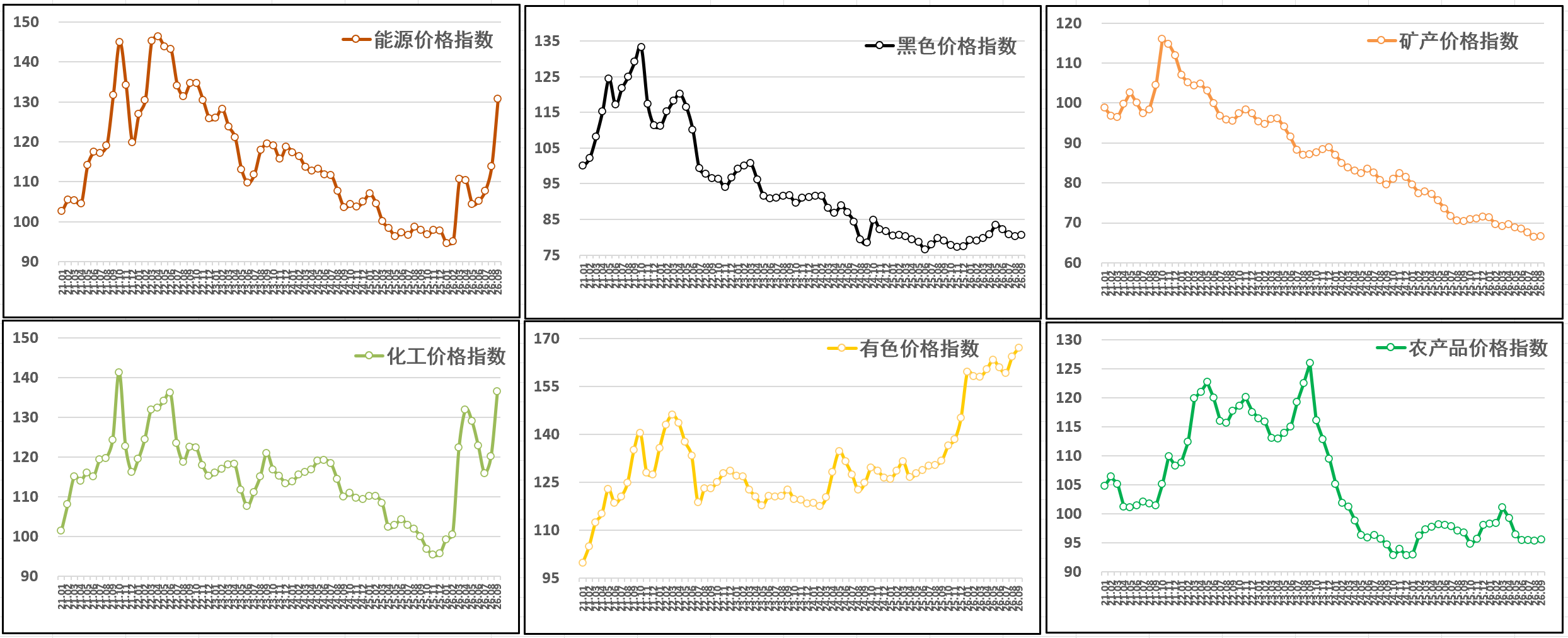
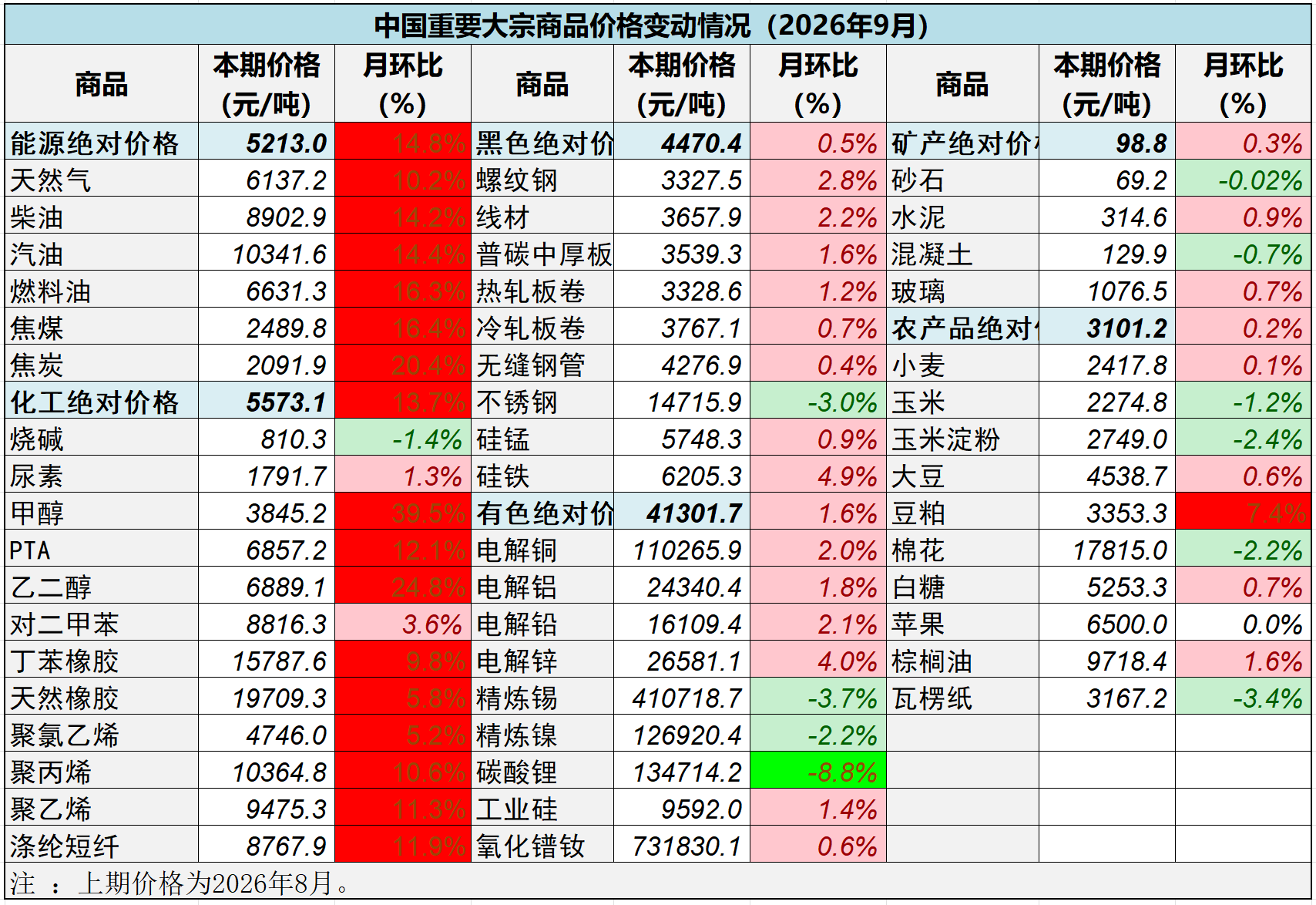
By industry: the energy price index rose sharply, at 130.7 points, up 14.8% month-on-month and 33.4% year-on-year; the chemical price index rose rapidly, at 136.6 points, up 13.7% month-on-month and 36.6% year-on-year; the non-ferrous price index continued to rise, at 167.0 points, up 1.6% month-on-month and 26.7% year-on-year; the black price index rose slightly, to 80.7 points, up 0.5% month-on-month and 2.1% year-on-year; the mineral price index stopped falling and rebounding. The report was 66.6 points, up 0.3% month-on-month, and 5.4% year-on-year; the agricultural product price index rebounded slightly to 95.6 points, up 0.2% month-on-month and 1.2% year-on-year.
By commodity: Among the 50 commodities monitored by the China Federation of Logistics and Purchasing, compared with the previous month, the prices of 38 commodities (76%) rose, the prices of 11 commodities (22%) fell, and the price of 1 (2%) commodity remained flat. The top three commodities that rose this month were methanol, ethylene glycol, and coke, which rose 39.5%, 24.8%, and 20.4% month-on-month respectively; the top three declines were lithium carbonate, refined tin, and corrugated paper, which fell 8.8%, 3.7%, and 3.4%, respectively.
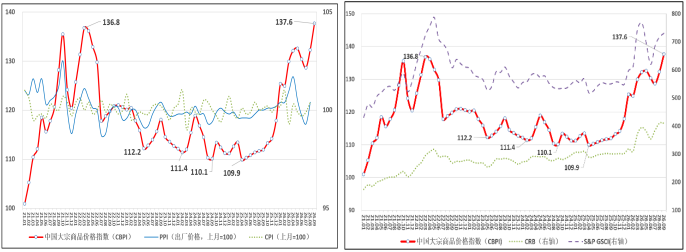
Comparing domestic and foreign indices: The CBPI trend is basically the same as last month's PPI and CPI. PPI rose 0.4% month-on-month in August; among them, the price of means of production rose 0.4% month-on-month and the price of means of living rose 0.2% month-on-month. In August, CPI rose 0.4% month-on-month; among them, food prices rose 0.4% month-on-month and non-food prices rose 0.3% month-on-month. CBPI is in line with S&PGSCI trends and is somewhat differentiated from CRB. International energy and chemical commodity prices have fluctuated higher due to repeated developments in the Middle East and the intertwined effects of Houthi attacks on Saudi Arabia and negotiations between the US and Iran. As inflationary pressure rises and international energy prices rise, the Federal Reserve restarted interest rate hikes after a lapse of three years, putting pressure on global basic metals prices. China and the US have completed the eighth round of economic and trade negotiations, and reached a reciprocal tax reduction arrangement of about 30 billion US dollars, involving commodities such as agricultural products and coal, which is conducive to stabilizing related trade and market expectations.