
3 U.S. REIT Stocks to Watch as Lower Rates Lift Income Plays
Interest rate chatter moved from theory to your portfolio when the latest jobs report pointed to softer hiring, calmer wages, and a Federal Reserve that looks in no rush to tighten aggressively. That mix can quietly reshape which U.S. stocks tied to domestic demand and income hold up best. This article walks through three specific companies exposed to that news backdrop and explains how their stories might benefit or disappoint depending on where rates go next.
The three stocks discussed below are just a starting sample from this rate sensitive theme, and the full screen surfaced 9 more companies with equally detailed stories that are not covered in this article.
To go beyond the short list here, head straight into the Interest-Rate-Sensitive U.S. Equities (Domestic Demand & Income Sectors) screener to analyze the wider universe, apply your own filters, and identify the interest-rate plays that best fit your portfolio.
Sun Communities (SUI)
Sun Communities slots neatly into this interest rate sensitive income theme as a large residential REIT tied to everyday housing demand, with cash flows anchored in ground rents rather than high end development risk.
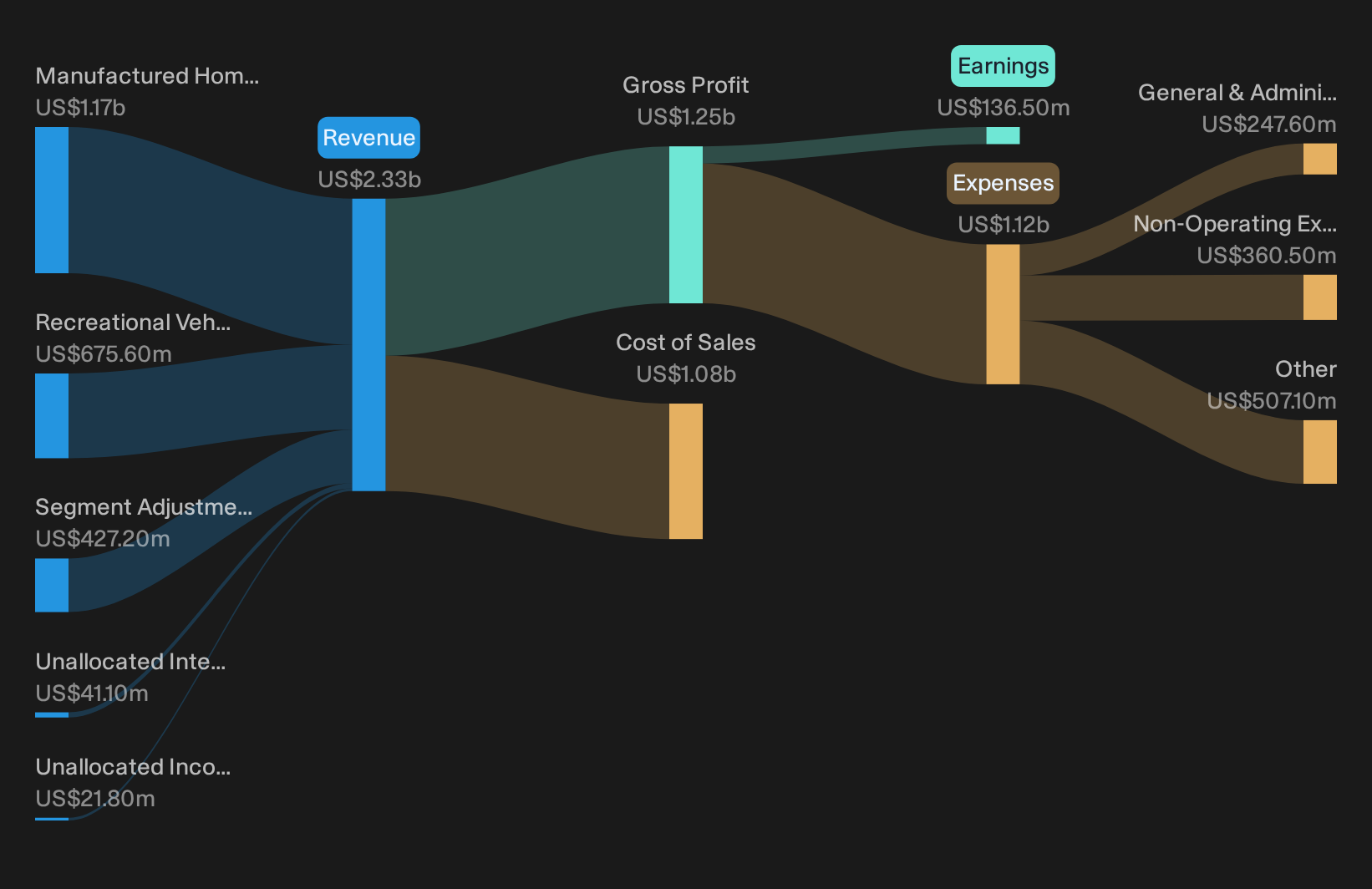
Sun Communities is a fully integrated REIT focused on manufactured housing and RV communities, primarily serving North American households that rely on stable employment and accessible housing. It generated about US$1.2b from manufactured home communities and US$675.6 million from RV resorts, alongside smaller unallocated items, and the stock is valued around US$13.7b.
"Ongoing structural U.S. housing affordability pressures and limited new manufactured housing supply, combined with occupancy above 98% in Sun Communities’ manufactured housing portfolio, are key factors that support the potential for sustained rent growth and stable site revenue that can feed into long term NOI and earnings."
The key question now is how one less visible funding and balance sheet pressure shapes those future margins and cash flows.
Those funding pressures are precisely why reading the full narrative for Sun Communities can help you see where Sun Communities’ earnings path might be quietly accelerating or stalling next.
American Tower (AMT)
American Tower plugs into this rate sensitive income theme as a REIT that turns long leases on wireless towers and data centers into steady cash flows. Its U.S. exposure means Fed policy and employment trends matter directly for how that income is valued.
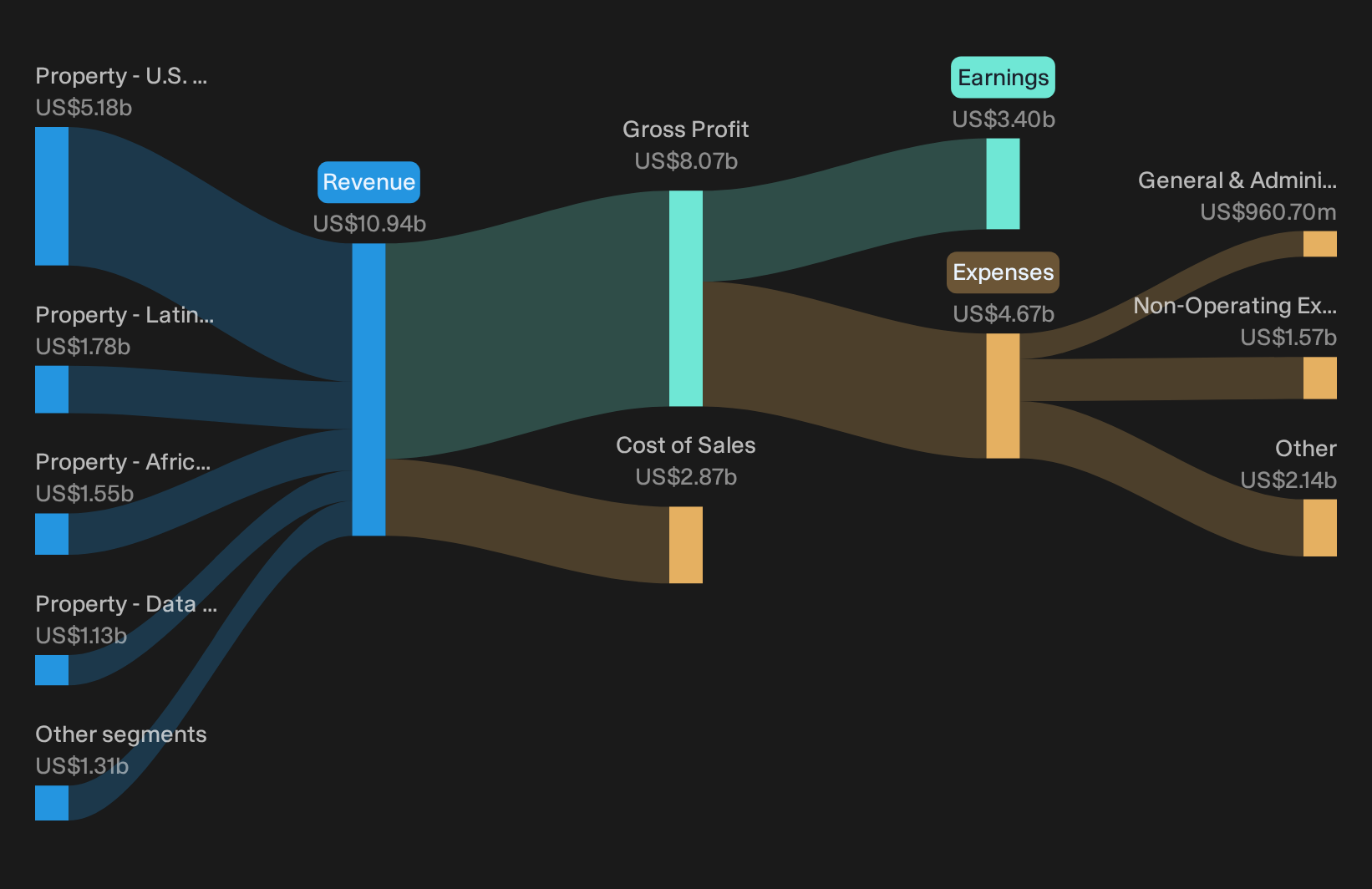
American Tower runs more than 148,000 communications sites and interconnected U.S. data centers, earning about US$5.2b from U.S. and Canadian properties, US$1.8b from Latin America, US$1.5b from Africa and Asia Pacific, US$1.0b from Europe, US$1.1b from data centers and about US$294 million from services, and the stock is valued around US$75.0b.
"The transition from early 5G coverage builds to the capacity and densification phase, combined with roughly 800 megahertz of new spectrum expected over the coming years, points to more equipment on existing towers and selective new builds, which can lift organic tenant billings and tower cash EBITDA margins."
What really tests that income story is how one quiet financing pressure interacts with those long leases if the rate path shifts even slightly.
If that subtle funding squeeze matters to you, read the full narrative for American Tower to see how American Tower’s tower cash flows and refinancing risks might be decoupling.
Public Storage (PSA)
Public Storage fits this interest rate sensitive income theme as a large self storage REIT tied to everyday U.S. household and small business demand, where steady employment and a measured Fed path both influence how its rent checks and dividend stream are valued.
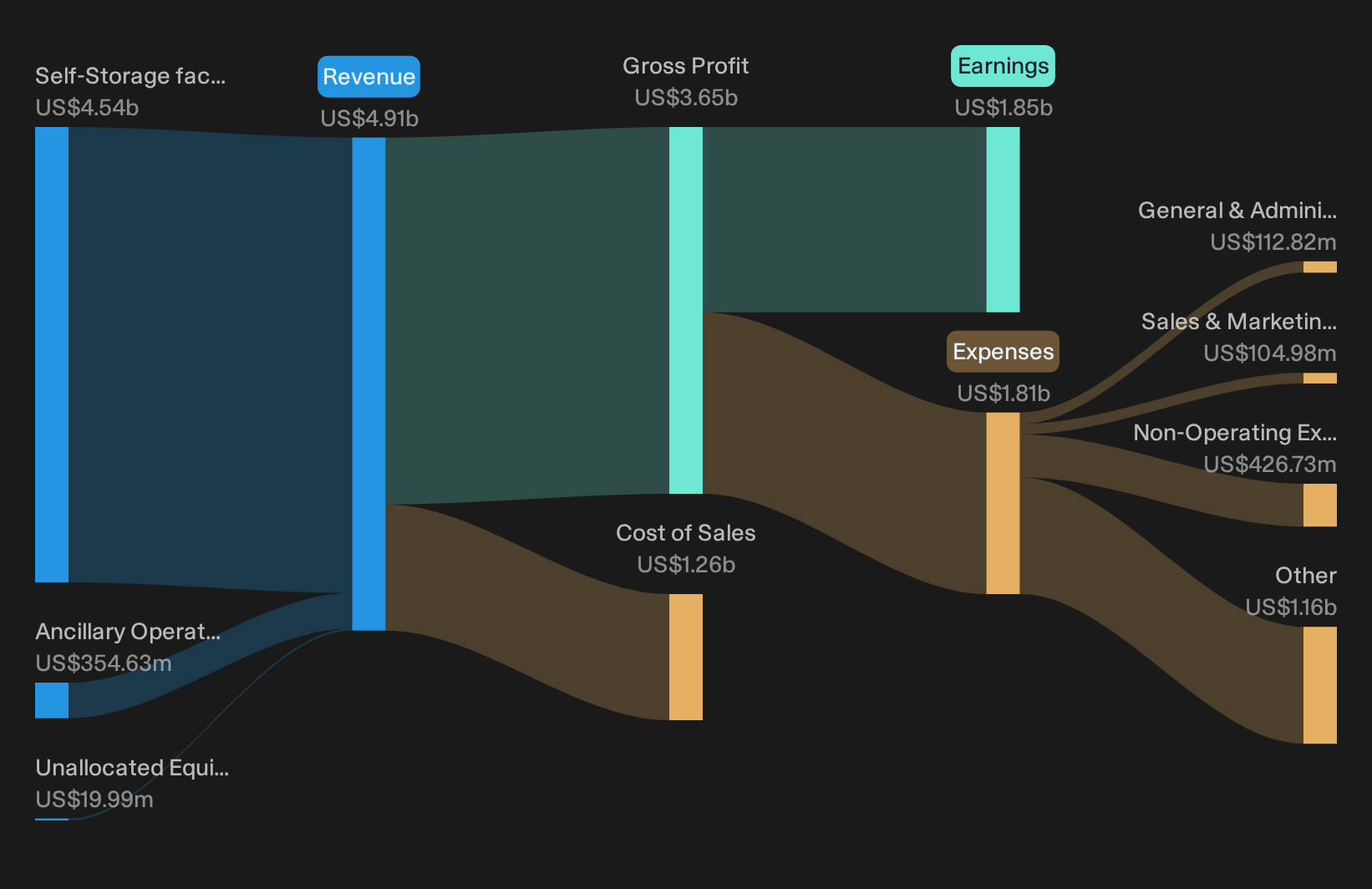
Public Storage, a US$55.1b REIT in the S&P 500, runs about 3,584 U.S. self storage sites and owns 35% of Shurgard in Western Europe, generating roughly US$4.5b from self storage facilities, US$355 million from ancillary operations, and US$20 million from equity earnings.
Public Storage taps directly into domestic demand for storage space, and the current soft but solid jobs backdrop plus a less aggressive rate outlook provide additional context for how its scale, balance sheet, and cash payouts might appeal to income focused investors.
"Expansion of PS Next and PS4.0 initiatives, such as high digital adoption, AI assisted customer service, and machine learning based staffing that has reduced field labor hours and payroll expense, is expected to support operating efficiency and margin resilience as the platform matures."
The real swing factor now is how one large integration effort ultimately shows up in future margins and cash flow per share.
If that integration swing factor matters to you, read the full narrative for Public Storage to see whether Public Storage’s efficiency push is quietly accelerating or masking bigger risks.
Seeking Fresh Alternatives Before They Fly
Fresh stock themes can move from quiet to breakout quickly. Momentum often rewards those who spot ideas while they stay under the radar for now. Act now.
- Spot resilient payout potential early by scanning income plays in the 7 dividend fortresses before yields compress and prices start chasing the story.
- Track the next wave of infrastructure momentum through the 90 AI infrastructure stocks while these enablers of data growth are still being priced like slow movers.
- Catch accelerating demand for critical materials with the 16 top copper producer stocks before renewed spending or supply shifts get fully caught in consensus models.
This article by Simply Wall St is general in nature. We provide commentary based on historical data and analyst forecasts only using an unbiased methodology and our articles are not intended to be financial advice. It does not constitute a recommendation to buy or sell any stock, and does not take account of your objectives, or your financial situation. We aim to bring you long-term focused analysis driven by fundamental data. Note that our analysis may not factor in the latest price-sensitive company announcements or qualitative material. Simply Wall St has no position in any stocks mentioned.
Have feedback on this article? Concerned about the content? Get in touch with us directly. Alternatively, email editorial-team@simplywallst.com