
Why It’s Time to Load Up on Micron Stock Before it Touches $2,000
Micron Technology (MU) reported yet another outstanding quarter, forcing investors to rethink what a “cyclical” memory stock is supposed to look like. Revenue exploded 379% from the year-ago quarter to $54 billion, gross margin reached 87%, and the company is already guiding to an even bigger quarter amid a memory shortage. And still, the valuation carries the fingerprints of the old Micron, as investors expect this memory stock to boom, bust, and eventually disappoint.
Wall Street, however, sees the AI opportunity growing, with the most bullish estimate implying that the stock could more than double from here. MU stock is up 237.6% year to date, so is it time to load up on Micron stock?
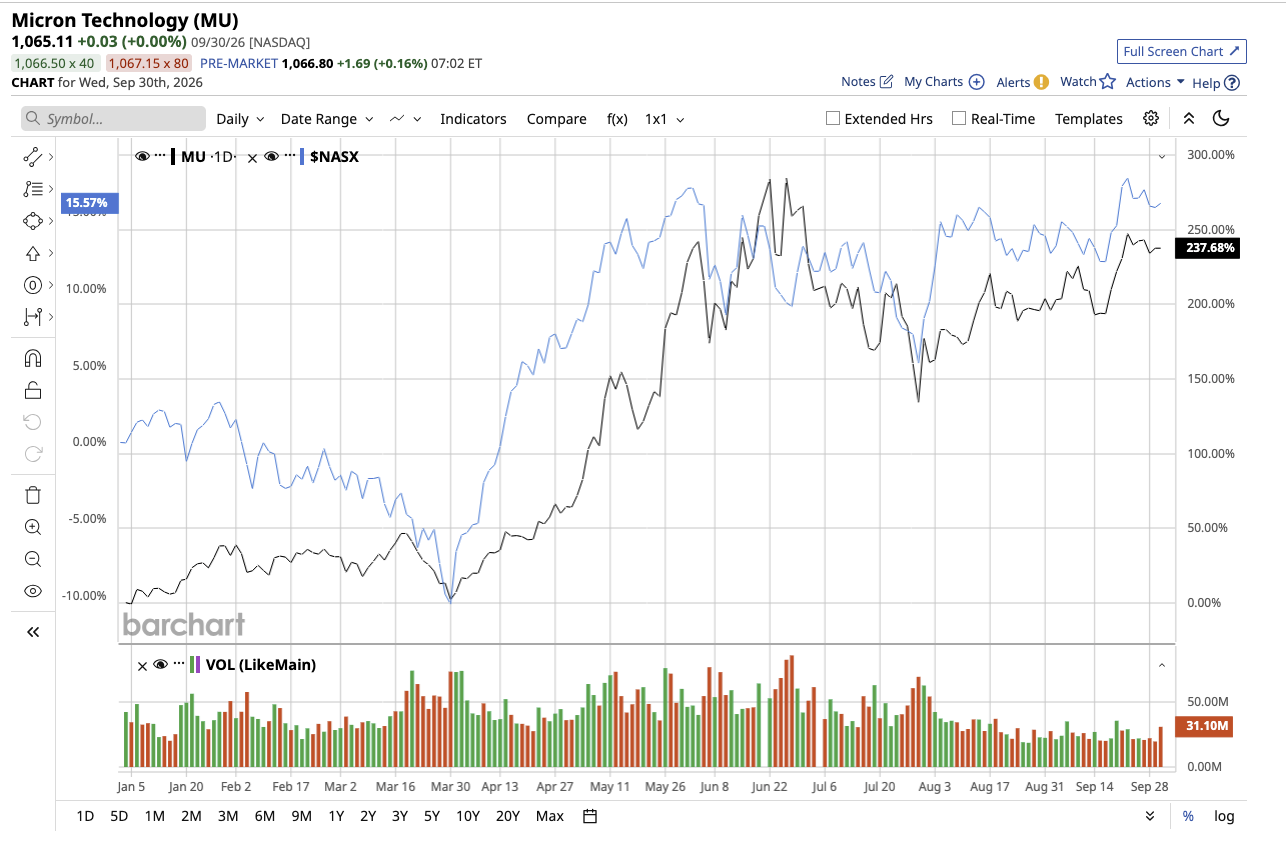
Memory Shortage Is Working in Micron's Favor
Micron's revenue didn't just skyrocket. Adjusted earnings also increased from $3.03 a year ago to $33.42 in the fiscal fourth quarter. The company beat Wall Street estimates on both the top and bottom lines. But the extraordinary part is Micron expects fiscal 2027 to set another revenue record, with sequential growth expected in every quarter.
This doesn’t appear to be a normal memory-cycle rebound. AI is changing the story this time by increasing memory content per server, while hyperscalers continue pouring money into infrastructure
Micron also achieved an adjusted gross margin of 87%, which is remarkable for a memory-chip manufacturer. Interestingly, Micron is generating these kinds of margins amid a demand-supply imbalance. The memory shortage is giving Micron pricing power. And the company is using the imbalance to hike prices, sell more high-value products like HBM and data-center SSDs, and generate monster margins.
Customers are paying substantially more to secure memory. In fiscal Q4, DRAM sales jumped 27% from the previous quarter, while the average selling price rose by a high-teens percentage. NAND was even stronger, with revenue increasing 42% as pricing climbed roughly 30%. HBM is adding another layer to the story. Its revenue growth outpaced Micron's overall business as the company expanded shipments, while stronger HBM pricing is helping improve its profitability relative to standard DRAM.
There are few signs that this pricing environment is about to disappear. On the earnings call, CEO Sanjay Mehrotra stated that the company expects the supply-demand balance for both memory and storage to become even tighter in fiscal 2027 and 2028 compared with fiscal 2026. In other words, Micron is entering the next two fiscal years expecting demand to remain ahead of the industry's ability to supply it. Micron guided for fiscal Q1 2027 revenue of $61.5 billion, plus or minus $1.5 billion, and adjusted EPS of $38.15, plus or minus $1.00. It expects an adjusted gross margin of approximately 86.25%.
Interestingly, management believes Q1 will act as the gross-margin floor for fiscal 2027 and expects margins to improve after that. This sends an important message to investors skeptical of memory industry cycles. Micron is not expecting this extraordinary profitability to peak yet. If pricing, product mix, and supply-demand conditions continue to improve, earnings could keep expanding even after the company has already reached record margins.
The Risk Is Still Very Real
Micron's customers are actually asking for more supply than Micron can currently provide. Management said its Strategic Customer Agreement (SCA) customers are requesting additional supply, while non-SCA customers are also placing purchase orders. Although the company is spending aggressively to address the shortage, the problem may take years to fix. The company expects capital expenditures of about $11.5 billion in fiscal Q1 alone. Its new Singapore HBM packaging facility is expected to begin initial output in early 2027, while the New York facility is not expected to begin initial wafer output until 2030.
The market is still assigning Micron a low forward multiple of around 6x, partly because investors remember what happened in previous memory cycles and worry that AI demand could fall. But there is little evidence that AI's appetite for memory is fading. If anything, TrendForce expects AI to remain the primary driver of memory demand in 2027, while Gartner predicts AI spending to jump 49.5% this year and 50% next year. Analysts expect Micron’s earnings to increase 133% in fiscal 2027.
Although the market remains skeptical, Micron’s bull case got stronger after this quarter. The company is doing far more than simply riding the current memory shortage. It is generating extraordinary margins, locking in future demand, and investing ahead of a shortage that management still does not see ending.
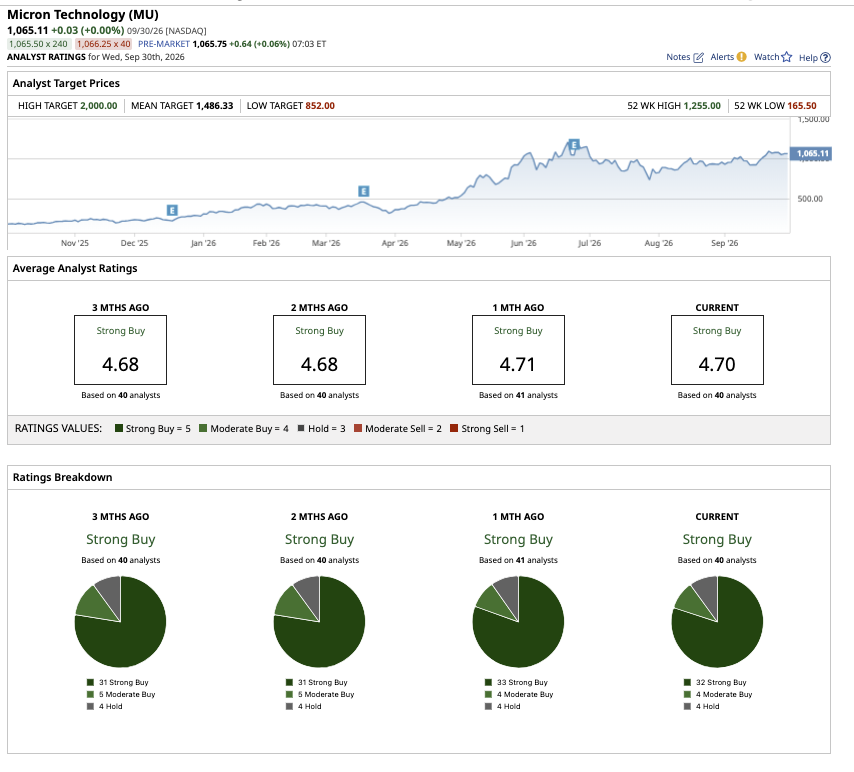
Just four months ago, the bullish estimate for MU stood at $852. The stock has surged 96% since then, with the high estimate now sitting at $2,000. Wall Street remains strongly bullish about MU stock. Of the 40 analysts covering the stock, 32 rate it as a “Strong Buy,” four have a “Moderate Buy” rating, and four analysts offer a “Hold" rating.
On the date of publication, Sushree Mohanty did not have (either directly or indirectly) positions in any of the securities mentioned in this article. All information and data in this article is solely for informational purposes. For more information please view the Barchart Disclosure Policy here.