
Designer Brands Holders Are Up 78% On A Case Revenue Never Proved
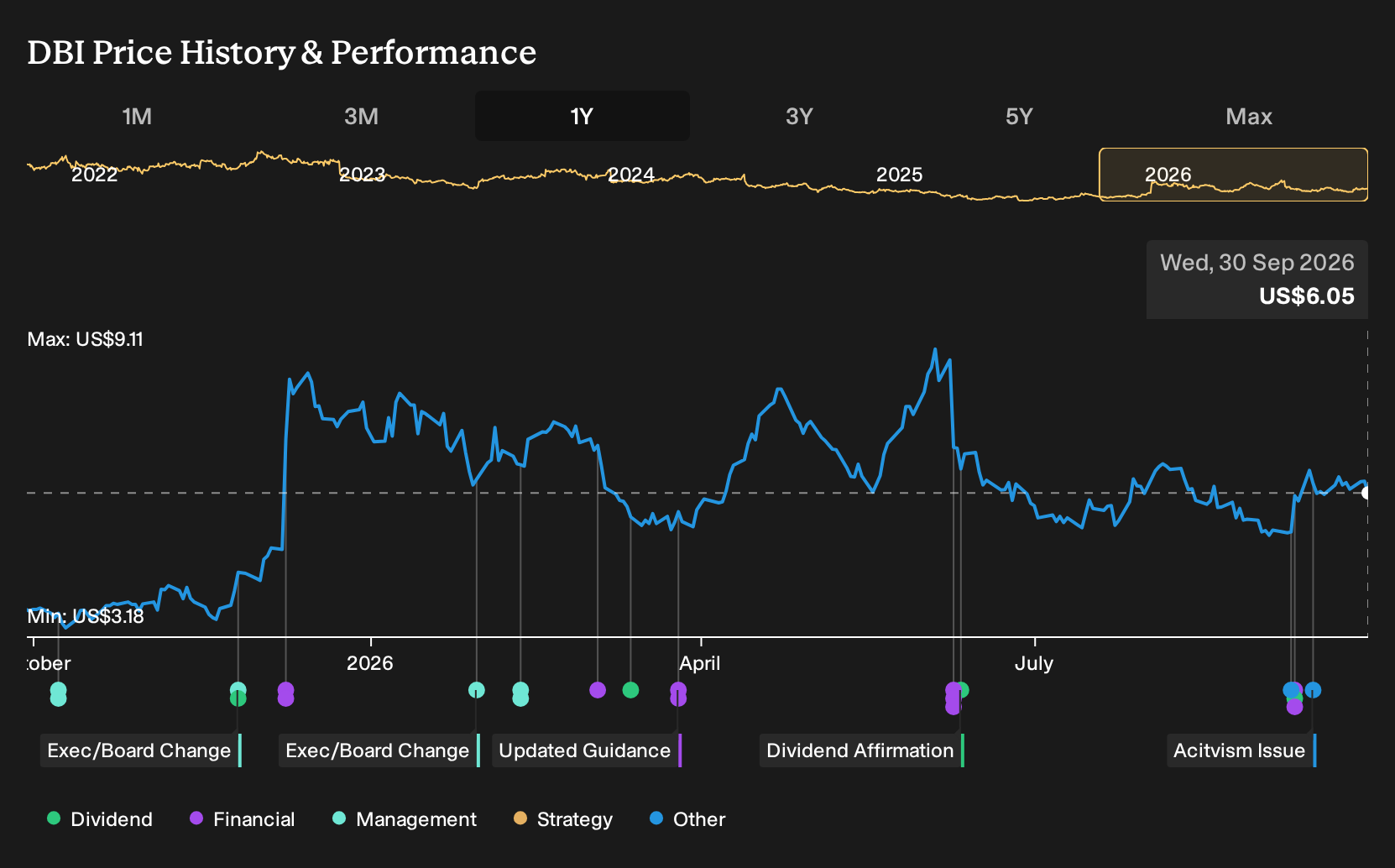
Designer Brands spent the year wrestling with weak traffic, cautious shoppers and pressure on its large store base, yet the share chart told a very different story. Investors who held Designer Brands over the past year are up 78.2%, including dividends. If you had bought at the start of the period, that gap between soft fundamentals and strong return would raise a simple question: What did the earlier evidence really suggest about this retailer’s prospects?
On Simply Wall St, a Narrative is an investor's thesis written down: the reasoning, plus the numbers it rests on. Run those numbers and you get an estimated Fair Value.
If the move has made Designer Brands harder to judge, start where the gap is still open and scan 31 high quality undervalued stocks.
The Two Stories Designer Brands Investors Had To Weigh
The shares cost US$3.54 at the start of the period, and anyone looking at Designer Brands then had to choose between two very different stories.
On the bullish side, the narrative put fair value at US$5, or 41% above the start price. This view hinged on revenue growth of 1.1% and profit margins rising toward 4.4% over three years.
The bearish view pointed to a fair value of US$3, or 15% below the start price. This perspective stressed weak demand, an 8% drop in comparable sales, and pressure on a large physical retail footprint.
What The Designer Brands Results Actually Tested
The clearest new fact for Designer Brands investors was that quarterly revenue moved from US$739.762m in Q2 2026 to US$730.631m in Q2 2027, which challenged the bullish hope for steady top-line progress. Net income rose from US$10.535m to US$17.557m and net margin improved from 1.4% to 2.4%, which lent some support to the cost focused, cautious case. Overall, the evidence cut both ways.
The main lesson is simple. When a thesis hinges on margin repair while sales stay under pressure, track net income and net margin alongside revenue each quarter and check whether profitability is improving for the reasons the original story claimed.
What Designer Brands’ Price Seems To Assume Now
Designer Brands now trades at US$6.05, while the most recent report showed revenue at US$730.631m and net income at US$17.557m in Q2 2027. The key shift in the story is not sales, which moved lower year on year, but profitability, with net margin at 2.4% compared with 1.4% a year earlier.
That mix suggests belief in further margin resilience even if demand stays soft. The valuation tool can help you evaluate how much ongoing profit improvement is already reflected in the current price.
One number the run does not answer is what Designer Brands is worth today. Zero in on our valuation.
Where Designer Brands’ Shoppers Also Look
Designer Brands lives in a world where the aisle is no longer just physical. Your customer can compare options in seconds.
That same shopper is used to a retailer that blends media, subscriptions and delivery into one constant storefront.
Behind that experience sits an online operation that refines logistics, data use and merchandising to keep people engaged longer.
The more comfortable customers become with that always on model, the harder it is for any traditional chain to ignore the pull.
It is written up in full, assumptions and all. → Explore the Narrative that puts this company 81% above its price
This article by Simply Wall St is general in nature. We provide commentary based on historical data and analyst forecasts only using an unbiased methodology and our articles are not intended to be financial advice. It does not constitute a recommendation to buy or sell any stock, and does not take account of your objectives, or your financial situation. We aim to bring you long-term focused analysis driven by fundamental data. Note that our analysis may not factor in the latest price-sensitive company announcements or qualitative material. Simply Wall St has no position in any stocks mentioned.
Have feedback on this article? Concerned about the content? Get in touch with us directly. Alternatively, email editorial-team@simplywallst.com