
How Investors Are Reacting To Meta Stock After Muse AI Launch
- Meta Platforms has launched its Muse personal AI agent and the Meta Enterprise Platform, while extending Muse into AI glasses and partnerships with Dolby, EssilorLuxottica, HighLevel, and Shopify to support both consumer and business use cases.
- The company is reshaping its operating model around agentic AI, pairing heavy data center and subsea infrastructure spending with new enterprise tools such as Muse Business Agent and Muse API that aim to plug directly into existing corporate workflows.
- We will look at how Meta Platforms' investment narrative is affected by this Muse centered AI push across enterprise software and wearables.
Scan how Meta Platforms’ Muse pivot compares with other AI heavyweights by reviewing a hand picked set of 90 AI infrastructure stocks that are riding the same surge in data center and enterprise demand.
What Is Meta Platforms' Investment Narrative?
To own Meta Platforms here, you have to believe the company can turn its massive social reach, AI infrastructure spend, and hardware footprint into durable cash flows without letting capital intensity overwhelm returns. The Muse push and the new Meta Enterprise Platform sit right on that fault line. Chirantan Desai joining from MongoDB, Cloudflare, and ServiceNow signals a serious attempt to turn agentic AI into a repeatable software business, not just a product launch pop. In the short term, the key test is whether Muse and Muse Business Agent drive real usage and paid adoption that justifies rising data center and subsea cable outlays.
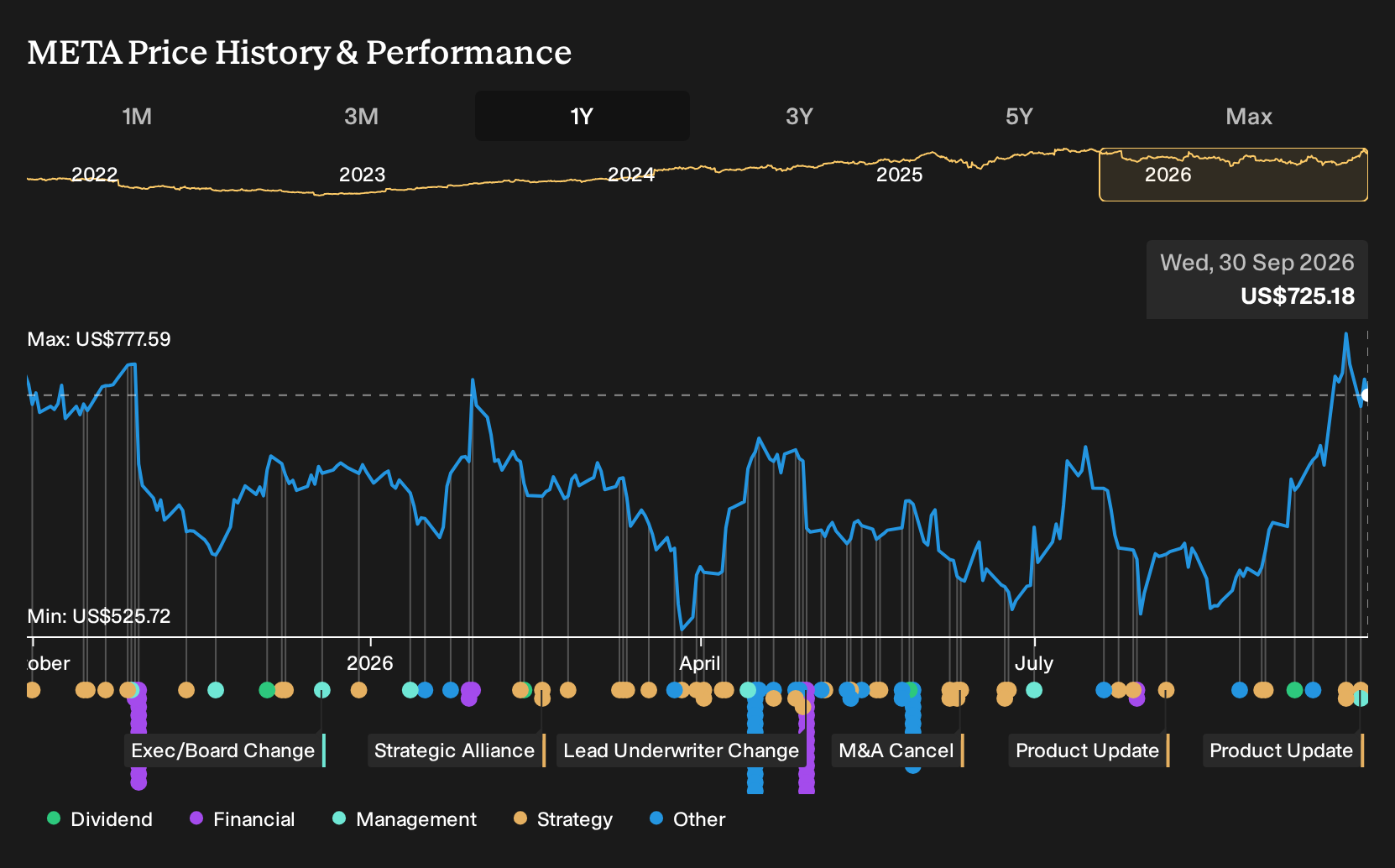
The Muse story also intersects directly with risk. Reality Labs still consumes cash, earnings growth over the last year went backwards, and profit margins sit below last year’s level even with revenue at about US$228.2b and net income near US$68.1b. Heavy AI spending and research tax credit scrutiny raise the stakes if enterprise demand disappoints or if pricing power on ads and AI tools softens. With META stock up about 26.7% over 30 days and trading on a P/E of roughly 27x, execution on this enterprise pivot and wearables ecosystem needs to support that enthusiasm rather than just the story around it.
That said, there is a less comfortable angle to Meta’s AI buildout that rarely fits into the upbeat Muse narrative...
There's only one way to know the right time to buy, sell or hold Meta Platforms. Head to Simply Wall St's company report for the latest analysis of Meta Platforms's Fair Value.
Exploring Other Perspectives
You might see Meta Platforms’ Muse expansion as a growth story. The lowest analysts focus on balance sheet strain instead. They highlight Q2 2026 free cash flow of US$784m on US$60.8b of revenue and model profit margins easing from 29.8% to 24.6%. That group expects earnings of about US$89.3b by 2029, well below the most optimistic forecasts. Their view could shift as the new enterprise platform and Muse rollouts play through, so treat it as one lens and compare it with other interpretations.
Explore 58 other Meta Platforms fair value estimates, including one that suggests as much as 19% downside from the current price.
Reach Your Own Conclusion
Don't just follow the ticker; dig into the data and build a conviction that's truly your own.
- A great starting point for your Meta Platforms research is our analysis highlighting 2 key rewards that could impact your investment decision.
- See our latest analysis for Meta Platforms. The report includes a comprehensive fundamental analysis summarized in a single visual, the Snowflake, making it easy to evaluate Meta Platforms' overall financial health at a glance.
Looking For More Investment Ideas Beyond Meta Platforms?
If the Muse story has you thinking more broadly about where to put fresh capital to work, it can help to scan a wider set of companies before making any decisions. The Simply Wall St Screener lets you quickly sort through hundreds of stocks by quality, valuation, income profile, and balance sheet strength so you are not relying on a single headline or theme.
- For investors who want mispriced quality rather than hype, you can use the screener to focus on businesses flagged as 31 high quality undervalued stocks that pair fundamentals with more modest expectations.
- If capital preservation matters just as much as upside, you can filter for companies with stronger finances through a list of solid balance sheet and fundamentals (25 results) that may help you steer toward sturdier profiles.
- Income focused readers can shift attention to cash returns by scanning a 7 dividend fortresses that screens for yield and stability together.
This article by Simply Wall St is general in nature. We provide commentary based on historical data and analyst forecasts only using an unbiased methodology and our articles are not intended to be financial advice. It does not constitute a recommendation to buy or sell any stock, and does not take account of your objectives, or your financial situation. We aim to bring you long-term focused analysis driven by fundamental data. Note that our analysis may not factor in the latest price-sensitive company announcements or qualitative material. Simply Wall St has no position in any stocks mentioned.
Have feedback on this article? Concerned about the content? Get in touch with us directly. Alternatively, email editorial-team@simplywallst.com