
Tencent Slid While The Story Changed Around It
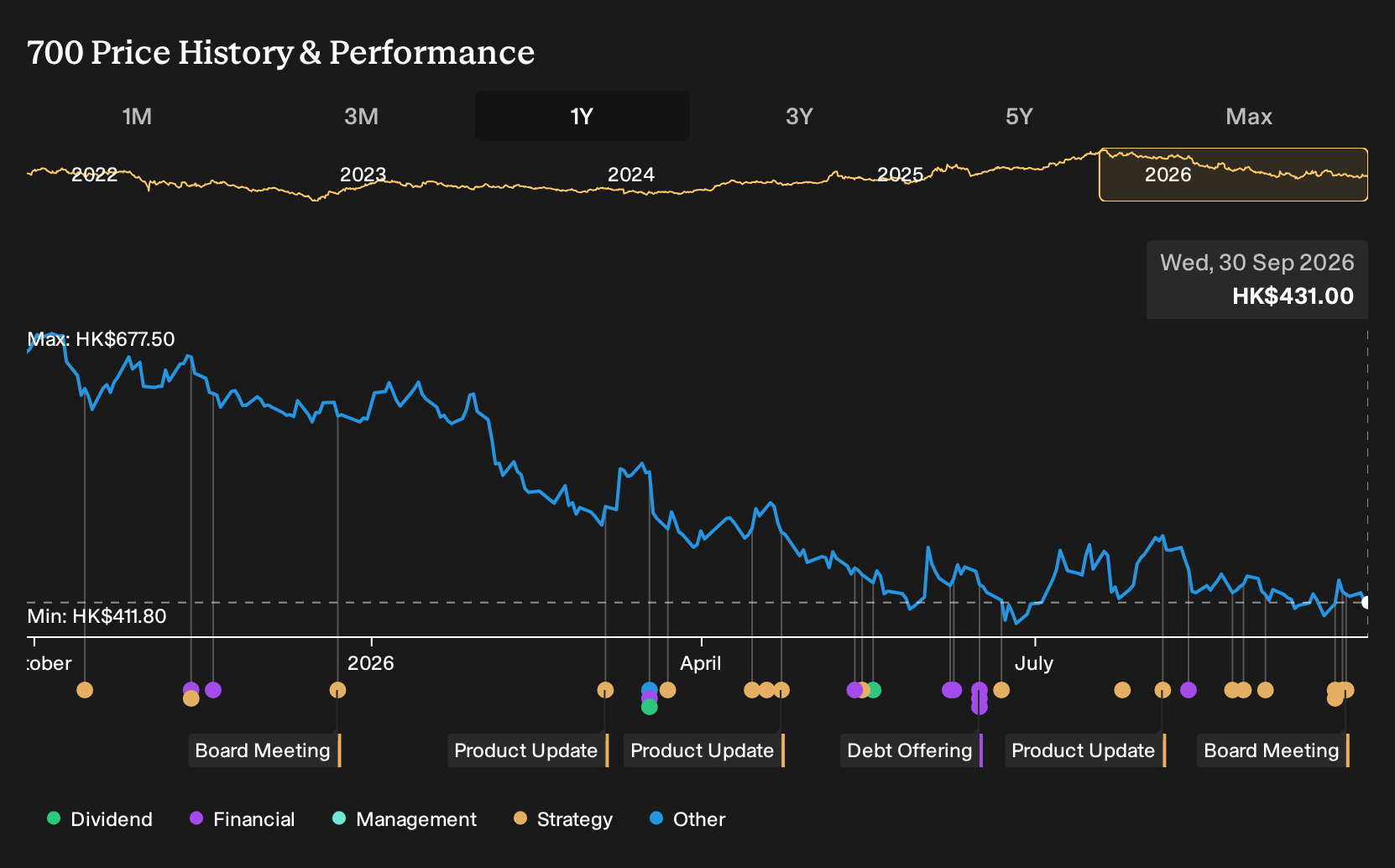
If Tencent kept reporting higher revenue and profit while the share price kept sliding, something in the story clearly did not match the script many investors had in mind. For Tencent shareholders, the loss over the past year was 34.2%, including dividends. If you had been weighing whether to buy in on 30 September 2025, with both bullish and cautious forecasts already on record, which signals would have seemed most important before that slide unfolded?
Tencent has already moved. Pinpoint other ways to investigate the theme among 89 AI infrastructure stocks.
The Two Tencent Stories Investors Were Arguing About
The shares cost HK$663 at the start of the period, and anyone looking at Tencent then had to choose which version of the future felt more convincing.
In the bullish story, a Fair Value of HK$814, the price implied by that growth path, rested on revenue rising 15.0% with profit margin at 31.0% as Weixin, games, fintech and AI tools pulled more cash from Tencent’s existing user base.
The cautious case pointed to a Fair Value of HK$508 and assumed 12.0% revenue growth, a 24.0% margin and heavier pressure from regulators and domestic competitors across gaming, cloud and payments.
What The Results Said About The Tencent Debate
Tencent leaned into AI, from rolling out its Hy3 model and WeChat AI agent to heavy cloud and chip spending, which lined up with the bullish focus on new tools and user monetisation. The hard numbers told a tougher story. Revenue moved from CNY184,504m in Q2 2025 to CNY204,785m in Q2 2026, profit edged up, yet net margin slipped from 30.2% to 27.4%. The evidence cut both ways.
The hinge assumption was not just higher turnover, but high quality earnings. When you assess another AI heavy group, check whether margin and cash generation hold up alongside capex and R&D, rather than treating top line growth as enough on its own.
What Today's Tencent Price Is Really Asking You To Believe
Tencent now trades at HK$431, after the share price declined 34.2% over the past year. The selected Narrative argues that its Fair Value sits above the current price and treats the recent slide as a mismatch between cash spending, reported numbers and what the valuation implies.
The core question for you is whether heavy AI and infrastructure spending is a one-off scare or a lasting drag. A buyer at today’s level has to believe that the capital outlay on chips, data centres and new AI products eventually earns enough to cover future depreciation and justify the recent fall as an opportunity.
"Run a discounted cash flow backwards. It is the only honest way to find out what a price is asking you to believe, because it removes your opinion from the exercise and leaves only the market's. Do that at HK$442.40, which is where Tencent closed on 18 August, and the answer comes out at revenue shrinking 0.3% a year, every year, for ten years."
That disagreement has a full argument behind it. → Uncover the higher Fair Value this Narrative argues for
Where Could You Get There Earlier?
The next headline does not have to be where your research begins. Go straight to the companies and see whether a contrarian opportunity could be taking shape.
- Company 1 - 39% below our estimate - focuses on complex data infrastructure builds while managing constrained specialist teams.
- Company 2 - 35% below our estimate - expands fee revenue by distributing energy-transition funds across new investor segments.
- Company 3 - 19% below our estimate - reduces staffing levels as digital platforms enable faster lending and leaner operations.
Three companies from the same screener. Open every one of the 189 undervalued companies on it →
This article by Simply Wall St is general in nature. We provide commentary based on historical data and analyst forecasts only using an unbiased methodology and our articles are not intended to be financial advice. It does not constitute a recommendation to buy or sell any stock, and does not take account of your objectives, or your financial situation. We aim to bring you long-term focused analysis driven by fundamental data. Note that our analysis may not factor in the latest price-sensitive company announcements or qualitative material. Simply Wall St has no position in any stocks mentioned.
Have feedback on this article? Concerned about the content? Get in touch with us directly. Alternatively, email editorial-team@simplywallst.com