
Paramount (PSKY.US) $110 billion merger and acquisition financing is long overdue: the issuance of the debt was delayed for three months, and an additional 500 million US dollars in interest may be required every year
The Zhitong Finance App learned that Paramount (PSKY.US) has continued to promote financing bonds to investors to acquire Warner Bros. Exploration (WBD.US) for several months, yet while the negotiation cycle has been lengthened, financing costs have also soared.
The $110 billion acquisition deal was finally able to proceed after being blocked by litigation. However, as growing concerns about global inflation are driving up borrowing interest rates, issuing bonds this week instead of three months ago will cause the company to bear hundreds of millions more in interest each year. According to multiple estimates, the additional annual interest burden ranges between US$250 million and more than US$500 million.
This is certainly a tough question for a company that will end up burdened with huge debts. According to CreditSights data, Paramount will issue about 42 billion US dollars in bonds and 9.5 billion US dollars in loans to finance the acquisition. After the acquisition is completed, the company will have more than 87 billion US dollars in investment-grade and high-yield debt, making it one of the largest borrowers in the Bloomberg junk bond sector.
To control debt, the merged company would need to generate sufficient profits, find enough cost savings, and possibly sell assets to repay debts. CEO David Ellison plans to cut costs by $6 billion a year, and Paramount hopes to achieve this goal within three years. However, the company is highly dependent on traditional TV network business, which means it may be difficult to significantly increase revenue.
“If overall debt spending increases, it could depress cash flow,” said industry research analyst Stephen Flynn. “This is an issue, and there are other issues that may complicate planned deleveraging.”
A Paramount representative declined to comment. Bank of America and Apollo Global Management also declined to comment, while Citi representatives did not immediately respond to requests for comment. These three companies are the main leaders in this debt transaction.
Not all investors are convinced that Paramount can achieve their goals. According to people familiar with the matter, some investors have given up participating in this debt transaction due to execution risks. Warner also adopted a similar plan when it acquired Exploration in 2022. As a result, the credit rating was downgraded to junk last year, and it is also considering splitting the business. This has undoubtedly made the situation even more unfavorable.
The merger and acquisition case is bleak
“The media's history of super mergers and acquisitions is terrible,” CreditSights analysts Hunter Martin and Brian McKenna wrote. The two analysts believe the merger is strategically reasonable, “but we are concerned about the overall debt burden and execution risk,” particularly Paramount's “very aggressive” goals in terms of cost reduction and synergy effects.
On Tuesday, Paramount began issuing its high-level bonds, which had the first claim on the company's assets when the company was in trouble. The company wants to issue approximately $30 billion of these bonds. In addition, it also issued about $12 billion in second-claim junk bonds and $9.5 billion in loans.
According to people familiar with the matter, the final cost of financing depends on the issuance results. Compared with expectations when the May financing plan is about to be implemented, the company's annual interest expenses may increase by up to 500 million US dollars. They estimate that the premium is about 0.5 to 1 percentage point, which is higher than the interest rate Paramount should have borne when issuing bonds in the middle of the year. Flynn, on the other hand, said that the additional interest cost of issuing bonds may be higher. It may be 100 to 150 basis points higher than the interest rate that Paramount should have paid, that is, about 450 million to more than 600 million US dollars per year.
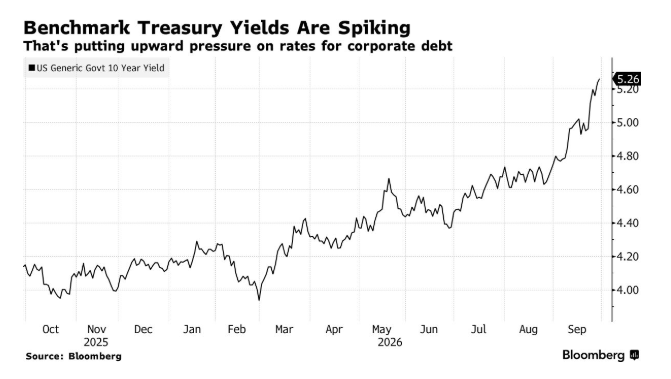
Interest costs could have been lower if financing had been finalized sooner, but initial plans were disrupted by legal and trade union challenges over the deal. The relevant dispute has now been resolved.
Meanwhile, 10-year US Treasury yields have soared to their highest level since 2007 over the past three months. Credit spreads — measuring the additional yield required by investors to buy corporate bonds compared to treasury bonds — have also widened, particularly for junk grade securities. Moody's expects Paramount's bond issuance to fall within this rating range, including a new first-lien note. However, the latter received investment grade ratings from Fitch Ratings and S&P Global Ratings.
In this context, Paramount's Ellison hosted a conference call with investors on Monday. According to people familiar with the situation, management received a large number of inquiries about cost coordination plans.
According to people familiar with the matter, some investors said they were skeptical about whether these goals could be achieved and decided not to participate in this bond issue, but the bond transaction pricing under discussion is attractive enough for some to offset these concerns.
On Monday, Moody's rated the newly issued first lien and second lien notes as speculative. Moody's rating logic is based on Paramount's cost coordination, debt repayment, and asset sales. It believes that these measures are expected to allow the company to significantly reduce leverage in the first few years, and mentions “the Ellison family's strong financial strength and public commitment to reduce debt” as supporting factors.
“High leverage, high concentration of equity, plans to weaken the payback position of existing senior unsecured bondholders, and management's mixed record of achieving financial goals reflect significant governance risks,” Moody's said.