
CITIC Construction Investment: Cost support and supply disturbance factors, nickel prices showed strong performance and rose slightly
The Zhitong Finance App learned that CITIC Construction Investment released a research report saying that due to cost support and supply disturbances, nickel prices have shown strong performance recently. On the supply side, due to the El Niño drought in Indonesia, the RKEF nickel and iron plant in the IMIP park began to cut production due to tight production and water supply. The operating load was reduced by about 30%-40% compared to the previous one. If it continues for half a month, it is expected to affect the production of high-nickel pig iron by about 50,000 to 70,000 physical tons, equivalent to 5,500-7,700 nickel tons. The consumer side ushered in “gold, nine, silver, ten”. Demand improved marginally, and pre-holiday preparations supported delivery. Domestic refined nickel continued to be removed from storage, and both the stock of nickel and society declined in the previous period.
CITIC Construction Investment's main views are as follows:
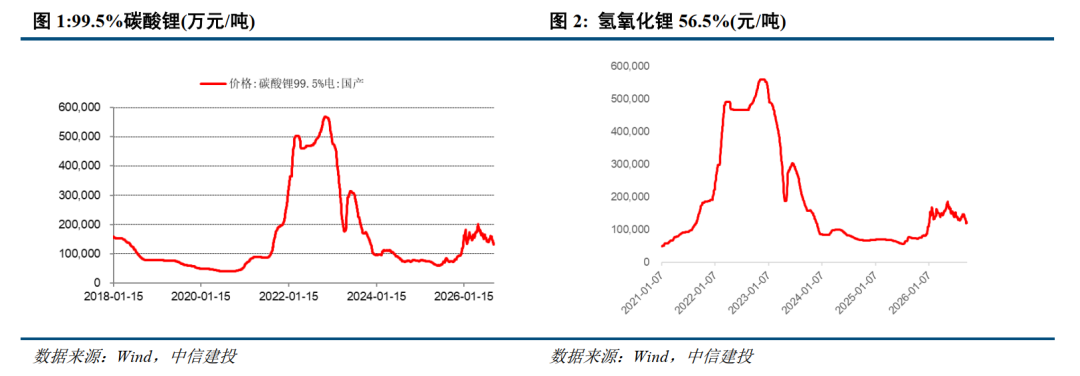
Lithium: According to Baichuan Yingfu, the average price of industrial grade lithium carbonate was 130,000 yuan/ton this week, up 3.2% from last week; the average price of battery-grade lithium carbonate was 133,000 yuan/ton, up 3.1% from last week. On the supply side, lithium carbonate production is expected to maintain a slight increase trend this week. Production capacity of lithium salt plants during early maintenance continued to recover, production lines started steadily, lithium salt plant directors cooperated at a steady pace of shipment, prices picked up, and some lithium salt plants were willing to ship loose orders. In addition, Zimbabwean lithium concentrate continued to arrive in Hong Kong to supplement domestic spodumene raw materials, and industry supply grew steadily. In terms of inventory, the industry continued its stock removal trend this week. Lithium salt plants maintained long-term cooperative delivery, spot inventory remained low, term traders had a positive mood to replenish stocks during the week, and downstream material manufacturers continued their low procurement strategy. There was a large amount of removal in futures warehouse receipts. The volume of warehouse orders on the previous trading date was 35,858 tons.
On the demand side, market demand was lackluster this week, and the pace of downstream procurement has slowed down. Since cathode materials and downstream battery manufacturers did not prepare double units in the early stages, raw material stocks were sufficient in the short term, and companies often kept purchasing at low prices. However, demand in the energy storage sector continued to improve, and the operating rate of lithium iron phosphate companies remained high, continuing to support demand for lithium carbonate; news broke that orders had been cut on the ternary battery side, and production schedules declined sequentially this month. According to a sample survey of 27 battery companies in Baichuan Yingfu, in September 2026, the total production schedule of Chinese battery companies was 317.9 GWh, an increase of 4.48% over the previous month. On the resource side, the significance of autonomous and controllable domestic lithium resources is highlighted.
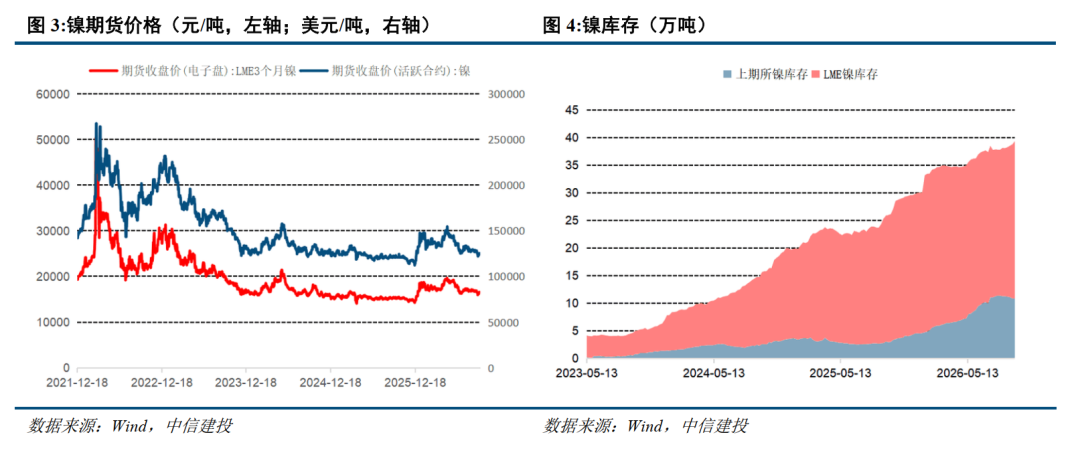
Nickel: This week's LME nickel price was 16,385 US dollars/ton, up 0.92% from last week; the nickel price for the previous period was 125,320 yuan/ton, up 0.99% from last week. This week, SHFE's nickel inventory was 108,900 tons, and LME nickel inventory was 284,900 tons, with a total inventory of 393,000 tons, up 1.5% from last week. On the supply side, the nickel sulphate smelting side was dragged down by continued inversion of profits this week. Some manufacturers continued their cautious production pace in the early stages, and discontinued manufacturers have yet to resume production. However, some manufacturers have also stopped production. Nickel sulfate production has increased, and the overall supply in the market has risen slightly. On the demand side, demand for battery-grade nickel sulfate remained in a state of immediate procurement this week. The three precursor companies only implemented established long-term agreements, and their willingness to actively replenish stocks before the holiday season was low. Downstream cathode factories adhere to the sales and production model, and raw material inventories remain low. Facing continuous price pressure in the face of lower upstream prices, the scale of loose order transactions in the market has shrunk. Demand for electroplating-grade nickel sulfate is also lackluster. PCB and hardware companies are just in need of purchasing, and there are few new batch orders.
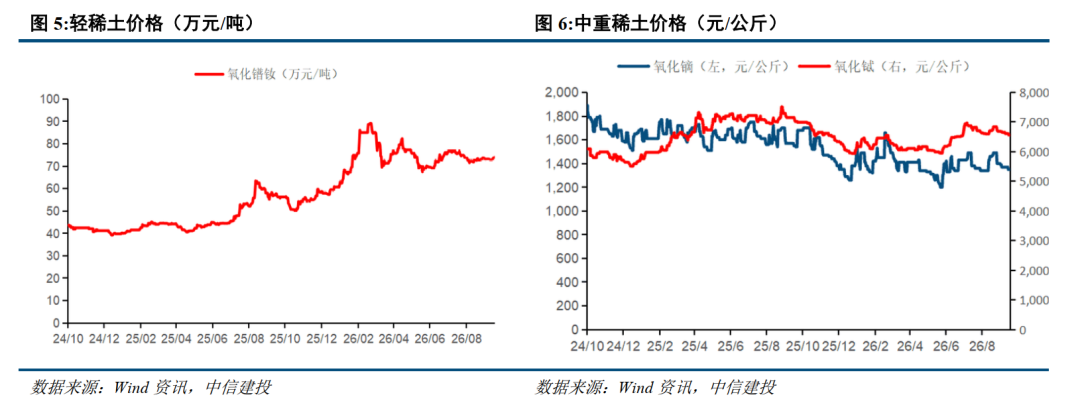
Rare earths & magnetic materials: The price of praseodymium rose this week, and the price of dysprosium and terbium fell. As of this Wednesday, the average price of praseodymium oxide in the market was 735,500 yuan/ton, up 0.89% from last Friday; the average price of dysprosium oxide was 1,435,000 yuan/ton, down 0.35% from last Friday's price; and the average price of terbium oxide was 6.575 million yuan/ton, down 0.75% from last Friday's price. Judging from the fundamentals of supply and demand, the supply side is stable: separation enterprises are starting construction normally, the supply of oxide supplies is still tight. As the holiday season approaches, prices from upstream suppliers are strong, there are few shipments at low prices, the number of stocks in the market is limited, the overall construction of metal factories is stable, and the supply of oxides and metals markets is relatively stable before the holiday season. Demand-side releases are limited: On the eve of the Mid-Autumn Festival and National Day, magnetic materials companies are just in need of a small amount of replenishment. Small and medium-sized manufacturers are purchasing, downstream orders are generally released, and the number of pre-holiday restocks is limited. Most of the magnetic materials consume inventory. Holidays are taken according to production schedules, and procurement and replenishment are cautious.
Risk warning:
The global economy has declined sharply, and consumption has shrunk in a cliff-style manner; US inflation is out of control, the Federal Reserve's monetary tightening has exceeded expectations, and a strong dollar suppresses the price of equity assets.