
3 Logistics Stocks That Could Benefit First From Lower US China Tariffs
Tariffs on billions of dollars of goods are being cut, supply chains are reshuffling and global trade exposed stocks are suddenly back in focus. When costs fall and cross border volumes start to thaw, some industrials and logistics companies can see their earnings profile change faster than headlines catch up. This article discusses 3 stocks from our Global Trade Exposed Industrials and Logistics screener that appear most directly exposed to the latest U.S. China tariff deal.
The three stocks below are just a sample from the idea. The full screen surfaced 29 more industrials and logistics companies with equally interesting trade exposure stories that are not covered here. To go straight to the source, use the Global Trade-Exposed Industrials and Logistics screener to identify, analyze and prioritize the trade exposed industrials and logistics candidates that fit your conviction level.
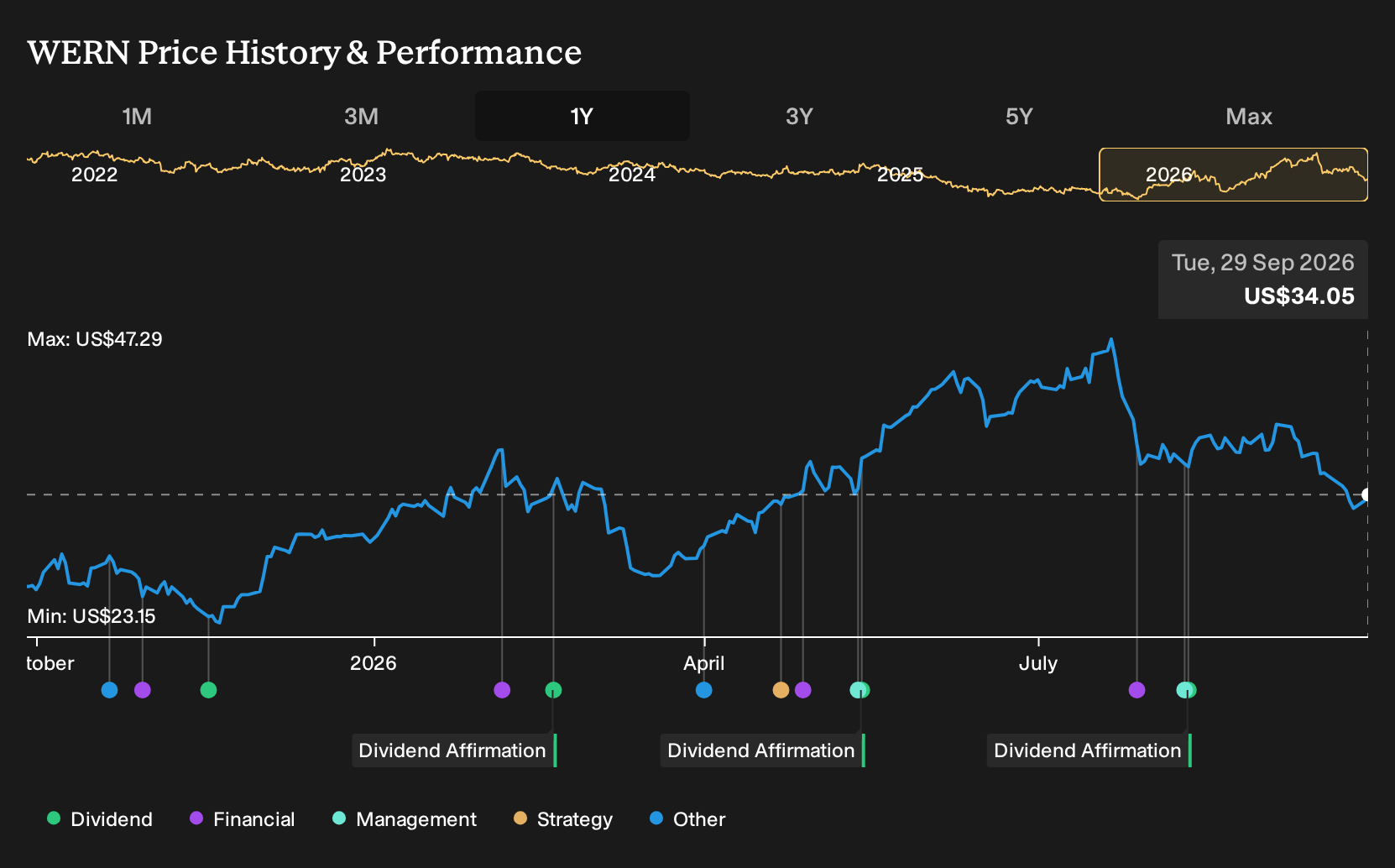
Werner Enterprises (WERN)
Overview: Werner Enterprises is a North American truckload and logistics carrier that moves everyday goods across the U.S., Mexico, Canada and select international lanes.
Operations: Werner generates about US$2.3b from Truckload Transportation Services and US$848m from Werner Logistics, with most of its roughly US$3.3b revenue earned in the United States and meaningful trade-linked exposure in Mexico.
Market Cap: US$2.0b
Werner Enterprises sits close to the action for this screener theme, moving imported and exported goods by truck across key North American trade corridors and quietly wiring much of that freight with technology that investors now care about a lot more.
"While Werner Enterprises is rolling out AI projects across shipment optimization, load planning, maintenance, safety and recruiting, the scale and complexity of these tools mean the company must keep investing heavily just to maintain current gains."
What happens to Werner Enterprises’ margins if one unseen cost pressure linked to this trade driven freight network refuses to cooperate?
If that pressure point matters to your thesis, read the full narrative for Werner Enterprises to see how Werner Enterprises’ trade lanes and tech spending could be decoupling.
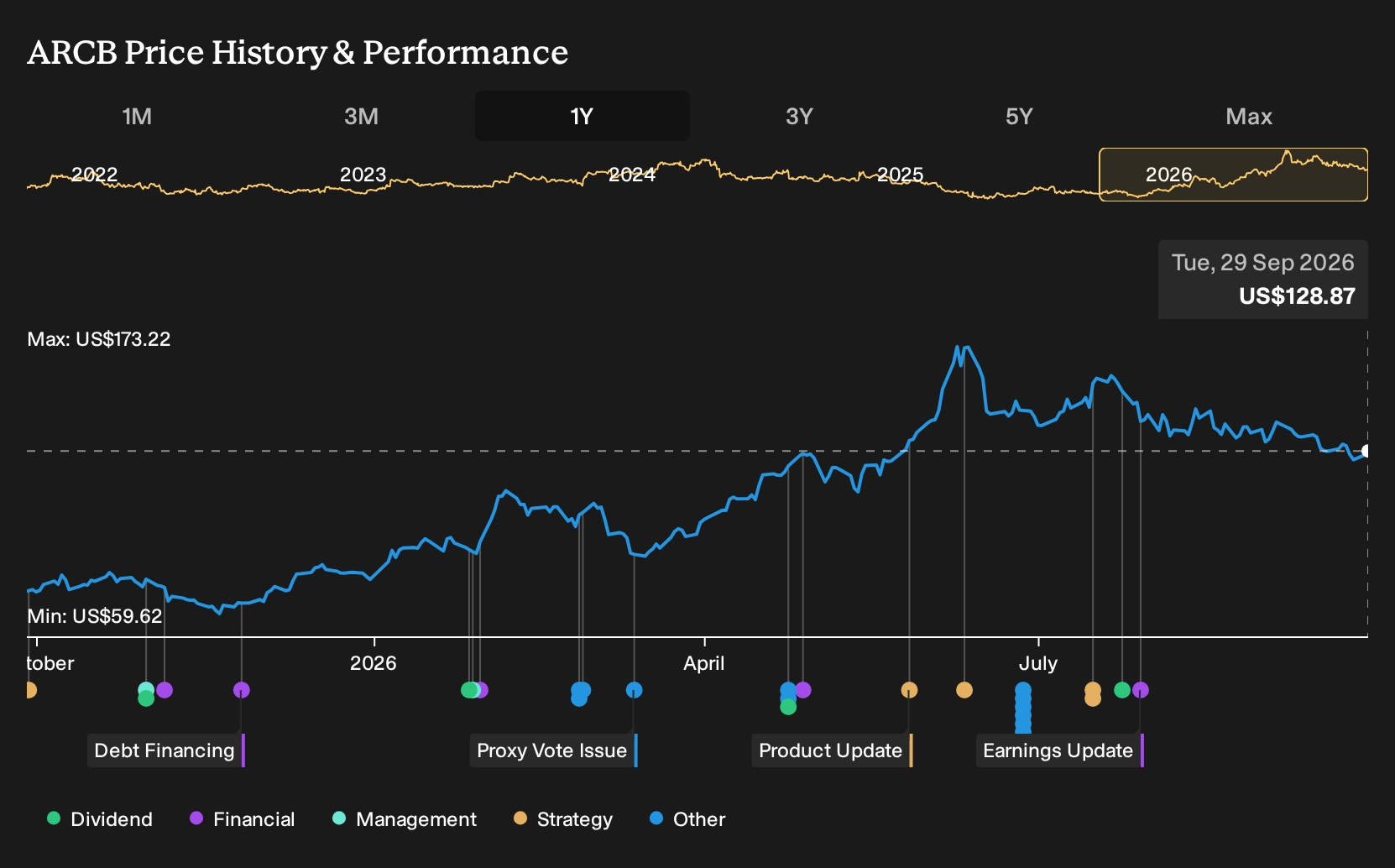
ArcBest (ARCB)
Overview: ArcBest runs an integrated logistics platform that arranges ground, air and ocean freight worldwide, closely tied to global trade flows.
Operations: ArcBest generates about US$2.8b from Asset-Based services and US$1.5b from Asset-Light solutions, almost entirely from customers in the United States.
Market Cap: US$2.8b
ArcBest plugs directly into the screener theme because it connects U.S. shippers to global supply chains. As a result, changes in tariffs and cross border freight demand can show up quickly in how its network is used and what it earns on each load.
"Although ArcBest is reporting quantified cost savings from AI route optimization and other productivity tools, the same digitalization makes it easier for shippers to compare options and push pricing, which can cap the benefit of these systems and limit future gains in net margins and earnings."
The bigger question now is what happens to ArcBest’s margin story if one key assumption about customer behavior in this new digital freight market fails.
If that assumption feels fragile, read the full narrative for ArcBest to see whether ArcBest’s digital freight model is quietly masking a stronger earnings engine.
Knight-Swift Transportation Holdings (KNX)
Overview: Knight-Swift Transportation Holdings runs one of North America’s largest truckload, LTL, logistics and intermodal freight networks across the U.S. and Mexico.
Operations: Knight-Swift generates about US$5.0b from Truckload, US$1.5b from LTL, US$568m from Logistics and US$397m from Intermodal, almost entirely in the United States.
Market Cap: US$10.3b
Knight-Swift Transportation sits squarely in the Global Trade-Exposed Industrials and Logistics theme because its trucks, trailers and LTL terminals are tied into the same cross border freight flows that could pick up speed as U.S.-China tariffs ease and inventory rebuilds begin.
"The continued expansion and integration of the LTL (less-than-truckload) segment is driving shipment and customer growth, with significant operating leverage expected as new facilities and network investments mature, supporting long-term revenue growth and eventual margin improvement."
What investors really need to watch is how one unresolved cost and pricing balance inside that freight network ultimately shapes those margin ambitions.
That cost and pricing balance is exactly what the full narrative for Knight-Swift Transportation Holdings unpacks, highlighting where Knight-Swift Transportation could see earnings acceleration if freight mix and pricing power shift in its favor.

Seeking Fresh Alternatives Before They Fly
Fresh ideas move first. Once momentum builds, prices can run and the best entry points get caught in the rear-view mirror. Scan under the radar for now and act now.
- Spot resilient cash generators early by reviewing the list of solid balance sheet and fundamentals (25 results) before the market fully prices in their strength and tighter balance sheets.
- Ride potential AI momentum by filtering through the 37 profitable AI stocks that aren't just burning cash while these cash-producing operators are still priced like experiments, not established platforms.
- Target future infrastructure demand by scanning the 39 power grid technology and infrastructure stocks before grid upgrades move from policy talk to hard contracts and revenue momentum.
This article by Simply Wall St is general in nature. We provide commentary based on historical data and analyst forecasts only using an unbiased methodology and our articles are not intended to be financial advice. It does not constitute a recommendation to buy or sell any stock, and does not take account of your objectives, or your financial situation. We aim to bring you long-term focused analysis driven by fundamental data. Note that our analysis may not factor in the latest price-sensitive company announcements or qualitative material. Simply Wall St has no position in any stocks mentioned.
Have feedback on this article? Concerned about the content? Get in touch with us directly. Alternatively, email editorial-team@simplywallst.com