
Should Phase III Cancer Trial Win Require Action From Akeso Stock Investors?
- Akeso reported that its bispecific antibody ivonescimab achieved statistically significant and clinically meaningful superiority in overall survival, progression free survival, and objective response rate versus a durvalumab based regimen in the Phase III HARMONi-GI1 biliary tract cancer trial, with full data selected for a Presidential Symposium at ESMO 2026.
- The cluster of nearly 30 ESMO 2026 presentations on ivonescimab, cadonilimab, and early ADC assets, plus fresh Phase I clearance for bispecific ADC AK158D1, underscores how heavily Akeso is investing in a bispecific and ADC platform that could reshape its future product mix and R&D spending profile.
- We now examine how Akeso's investment narrative could shift in light of ivonescimab's HARMONi GI1 Phase III results and its ESMO spotlight.
Scan how Akeso's bispecific and ADC initiatives compare by reviewing hand-picked oncology developers in the 133 healthcare AI stocks that are shaping the next wave of data driven cancer treatment.
Akeso Investment Narrative Recap
Owning Akeso is essentially a bet that a focused bispecific and ADC pipeline can turn a loss making drug developer into a diversified oncology platform. Management is still running annual operating and EBITDA losses, so the near term story is about converting heavy R&D and commercial spend on ivonescimab and cadonilimab into broader, reimbursed usage and ex China partnerships.
The key near term swing factor is execution on late stage programs and real world uptake of ivonescimab in existing indications. HARMONi GI1 success looks relevant for that effort. The biggest risk remains concentration in a few lead assets combined with aggressive trial expansion and pricing pressure, which could keep profitability under strain.
The HARMONi GI1 Phase III data and ESMO 2026 presidential slot are probably the single announcement that matters most right now. Ivonescimab already has commercial use in non small cell lung cancer in China, so a strong first line biliary tract cancer dataset could influence how physicians and partners view the broader PD 1 or VEGF platform.
For investors, this event ties directly into Akeso execution risk and pipeline depth. A clean, well received readout could support the case that the PD 1 or VEGF backbone is scalable into more tumors and combinations, including ADC regimens and Summit led global trials. Any concerns on safety, durability, or regional generalisability would reinforce the dependence on a small set of high profile programs.
Akeso's current analyst narrative points to CN¥11.8b in revenue and CN¥3.7b in earnings by 2029. This is based on an assumed 50.6% yearly revenue growth rate and requires an earnings swing of roughly CN¥4.7b from a loss of CN¥967.2m today.
Uncover why Akeso's fair value indicates a 46% potential upside to its current price, which could narrow quickly.
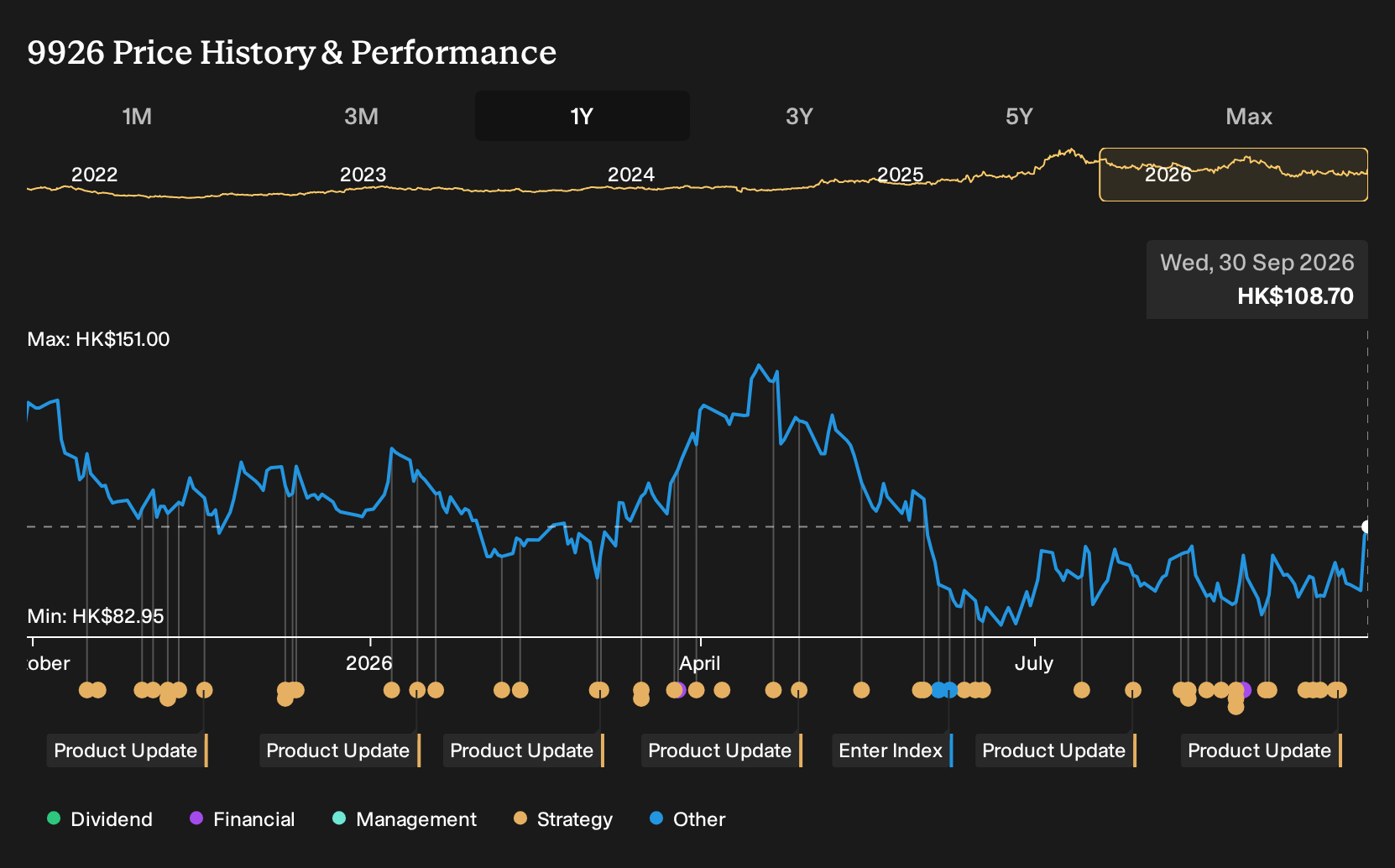
Exploring Other Perspectives
One sharp contrast in the alternate Akeso narrative is how bullish analysts view product uptake. Where the baseline focuses on execution risk and losses, the most optimistic group emphasizes the idea that faster NRDL driven adoption could support revenue of about CN¥16.2b and earnings near CN¥5.7b by 2029. Those projections were set before this HARMONi GI1 news, so you may see opinions evolve and will need to decide which perspective you find more convincing.
Explore 3 other Akeso fair value estimates, including one that suggests as much as 57% upside from the current price.
Form Your Own Verdict
Don't just follow the ticker. Dig into the data and build a conviction that's truly your own.
- A great starting point for your Akeso research is our analysis highlighting 2 key rewards that could impact your investment decision.
- See our latest analysis for Akeso. The report includes a comprehensive fundamental analysis summarized in a single visual, the Snowflake, making it easy to evaluate Akeso's overall financial health at a glance.
Looking for more Akeso investment ideas?
If the Akeso story has sharpened your thinking about oncology risk and reward, you can use that same lens to scan a wider field of opportunities with the Simply Wall St Screener.
- For investors who want a margin of safety backed by quality, start with companies that pass a rigorous value and fundamentals test via the 195 high quality undervalued stocks.
- If capital protection matters just as much as upside, consider resilient businesses flagged by our low risk filters in the 226 resilient stocks with low risk scores.
- To broaden your watchlist with less crowded stories, look at financially sound smaller players surfaced through the 621 high quality undiscovered gems.
This article by Simply Wall St is general in nature. We provide commentary based on historical data and analyst forecasts only using an unbiased methodology and our articles are not intended to be financial advice. It does not constitute a recommendation to buy or sell any stock, and does not take account of your objectives, or your financial situation. We aim to bring you long-term focused analysis driven by fundamental data. Note that our analysis may not factor in the latest price-sensitive company announcements or qualitative material. Simply Wall St has no position in any stocks mentioned.
Have feedback on this article? Concerned about the content? Get in touch with us directly. Alternatively, email editorial-team@simplywallst.com