
What UBS Group Holders Had To Stomach, And Where That Fight Is Live Now
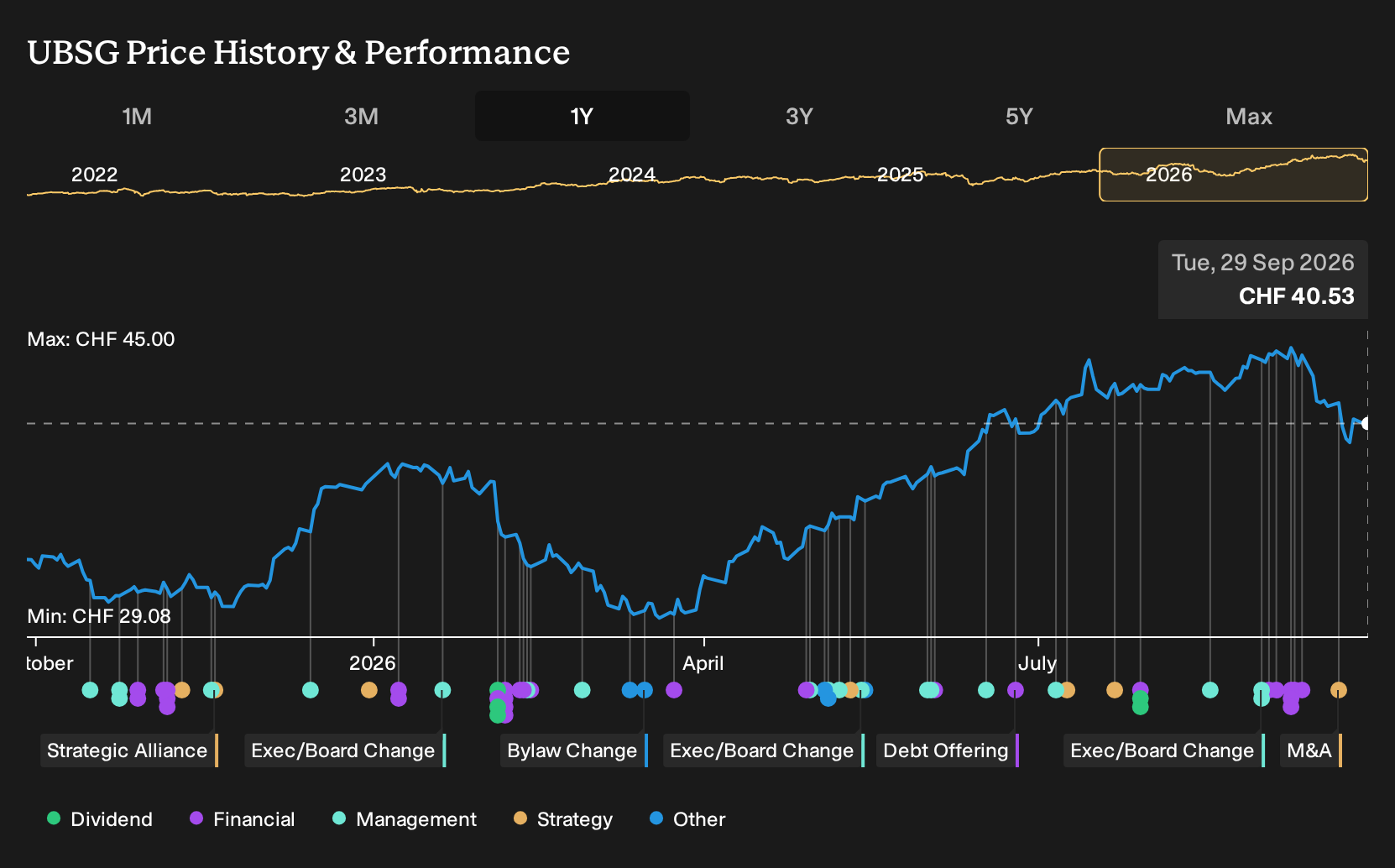
If you had looked at UBS Group in late 2025, headlines were already dominated by tighter Swiss capital proposals and the heavy lifting of the Credit Suisse merger, hardly a setup that screamed easy win. Investors who held UBS Group over the past year are up 27.9%, including dividends. That payoff came alongside fresh regulatory fines, cost cuts, and strong 2026 earnings updates. What exactly was knowable at the start that could have justified taking that risk?
UBS Group has already moved. Pinpoint other ways to investigate the theme among 19 cryptocurrency and blockchain stocks.
The Argument UBS Investors Actually Faced
The shares cost CHF32.53 at the start of the period, and anyone looking at UBS Group then was choosing between two very different stories about where the bank could go next.
On the optimistic side, the bullish narrative argued for a Fair Value of CHF37, a price implied by assumptions that Credit Suisse integration would run ahead of schedule and that UBS Group would ride global wealth transfer and digital banking trends to faster asset gathering.
The bearish view pointed to a Fair Value of CHF21, a level tied to concerns that tougher Swiss capital rules and up to $42b of extra required capital would weigh on returns and constrain shareholder payouts.
What The UBS Evidence Actually Tested
The clearest update for UBS Group investors was Q2 2026, when revenue reached US$13,581m and net income came in at US$2,800m. Both figures were higher than Q2 2025, and net margin edged up from 20.2% to 20.6%. That supported the more optimistic view that the Credit Suisse integration and core franchises could underpin stronger profitability. The large US$125m AML fine and ongoing Swiss capital debate tempered that view and highlighted the more cautious perspective, so the evidence pointed in both directions.
The decision in 2025 essentially depended on whether UBS could grow profit while absorbing higher capital and compliance demands. For any other bank, you would test the same point by tracking net income, margin, and announced capital requirements in each results season, then assessing whether the additional regulatory burden is being offset by business performance or is simply compressing returns.
What UBS Group's Price Already Assumes
UBS Group now trades at CHF40.53, with this Narrative’s Fair Value sitting below that level. The gap reflects concern that heavier capital rules, rising compliance costs, and the Credit Suisse integration keep pressuring what shareholders can ultimately take out of the bank.
For today’s price to hold up, investors need confidence that integration progress, cost cuts, and technology spending continue to offset higher required capital and structural expense, so UBS can keep profitability resilient even if regulatory and competition headwinds persist.
"Stringent regulatory changes and operational cost pressures are expected to limit profitability while weakening UBS's ability to return capital to shareholders. Integration risks, legal overhang from Credit Suisse, demographic challenges, and competition from digital entrants threaten organic growth and undermine fee-based revenue models."
Not everyone reads the same price the same way. → See the lower figure this Narrative lands on, and how it gets there
Find Your Own Contrarian Opportunity
You may be late to this rally, but that does not have to mean arriving late to every opportunity. Start with companies whose prices leave room for a different view of their future. Here are three trading below our estimates.
- Company 1 - 20% below our estimate - cuts headcount while keeping asset growth high to reshape operating leverage.
- Company 2 - 40% below our estimate - scales transplant-focused platforms that build recurring revenue from long-term hospital partnerships.
- Company 3 - 36% below our estimate - shifts capital into battery metals and recycling while managing key commodity oversupply.
Three companies from the same screener. Open every one of the 198 undervalued companies on it →
This article by Simply Wall St is general in nature. We provide commentary based on historical data and analyst forecasts only using an unbiased methodology and our articles are not intended to be financial advice. It does not constitute a recommendation to buy or sell any stock, and does not take account of your objectives, or your financial situation. We aim to bring you long-term focused analysis driven by fundamental data. Note that our analysis may not factor in the latest price-sensitive company announcements or qualitative material. Simply Wall St has no position in any stocks mentioned.
Have feedback on this article? Concerned about the content? Get in touch with us directly. Alternatively, email editorial-team@simplywallst.com