
Missed Conduit’s 42% Run? What Holders Had To Believe
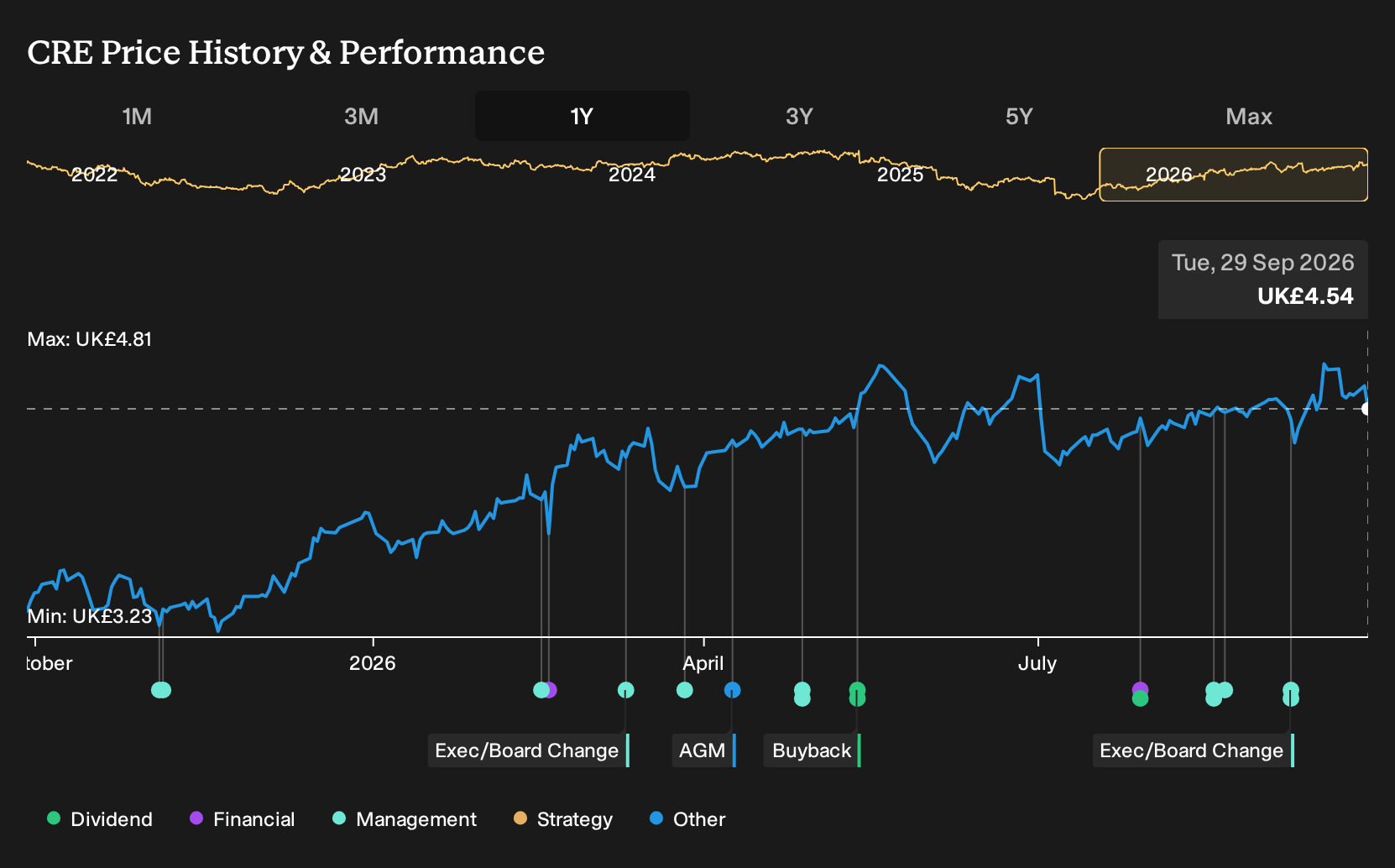
If you only looked at Conduit’s early 2025 headlines about climate losses, falling property rates and a young reinsurer still finding its footing, a double digit gain might have seemed unlikely. Holding Conduit over the past year would have returned 41.6%, including dividends. If you had bought on 29 September 2025 with those risks front and center, what exactly in the public record could have justified taking that leap?
If the move has made Conduit harder to judge, start where the gap is still open and scan 10 high quality undervalued stocks.
The Two Futures Investors Had In Mind For Conduit
The shares cost £3.35 at the start of the period, and any investor looking at Conduit then had to decide which future seemed more believable.
The optimistic story pointed to a Fair Value of £4.97, a notional target based on Conduit shifting further into excess of loss contracts and using digital analytics to support a 1.8% revenue growth assumption and a 30.8% profit margin.
The cautious view used a Fair Value of £3, an implied price built around climate driven North American catastrophe risk, intense competition, and an assumed 4.7% annual revenue decline even if margins reached 26.5%.
What The Results Changed For Conduit
Conduit’s H1 2026 numbers gave the optimistic camp fresh support. Reinsurance revenue edged down from US$402.8 million to US$394.6 million, yet the business moved from a net loss of US$13.5 million in H1 2025 to net income of US$80.3 million. Net margin swung from a 3.4% loss to a 20.3% profit, though this still falls short of either case’s long run margin hopes.
The key assumption under the spotlight was profit quality. For any other insurer you look at, compare the claimed margin path in the bullish story with the reported net margin each half year, then judge whether the shift toward that target looks repeatable or just one good season.
What Conduit’s Price Already Assumes
Conduit now trades at £4.54, with this Narrative’s Fair Value sitting below that level, so buyers are effectively siding against its caution in today’s valuation debate.
The Narrative leans on climate driven catastrophe risk, competition and costs as the key friction points. Anyone paying today’s price is effectively assuming that disciplined underwriting and technology can outrun those pressures. How does that view align with the source’s emphasis on earnings volatility and margin strain?
"Increased climate-related claims, intensifying competition, and limited global scale are driving earnings volatility and constraining premium growth, threatening sustained profitability. Elevated catastrophe exposure, high expenses, and ongoing regulatory pressures are compressing margins and limiting the company's ability to improve long-term earnings or efficiency."
That disagreement has a full argument behind it. → Uncover the lower Fair Value this Narrative argues for
Looking Beyond Conduit’s Storms
Conduit focuses attention on catastrophe risk and sharp underwriting swings. That is only one corner of the insurance map.
Step sideways and another group concentrates on large construction and data center projects. These contracts are multi line, complex and designed to run for years.
This insurer is also targeting middle market clients across key regions. It is moving deeper into specialist areas such as life sciences.
Life protection and farmer focused cover add another layer, spreading risks and fee streams across different cycles.
If Conduit shapes your view around reinsurance shocks, this other business highlights how infrastructure, protection and agency networks may redirect where steadier premiums emerge.
It is written up in full, assumptions and all. → Explore the Narrative that puts this company 41% above its price
This article by Simply Wall St is general in nature. We provide commentary based on historical data and analyst forecasts only using an unbiased methodology and our articles are not intended to be financial advice. It does not constitute a recommendation to buy or sell any stock, and does not take account of your objectives, or your financial situation. We aim to bring you long-term focused analysis driven by fundamental data. Note that our analysis may not factor in the latest price-sensitive company announcements or qualitative material. Simply Wall St has no position in any stocks mentioned.
Have feedback on this article? Concerned about the content? Get in touch with us directly. Alternatively, email editorial-team@simplywallst.com