
Top 3 Japanese Nuclear Stocks To Watch In September 2026
Oil prices have been climbing as worries over Middle East supply disruptions keep energy security in the spotlight, and that puts steady, low carbon power front of mind for policymakers in Japan. Reliable baseload electricity becomes more valuable when fuel markets look fragile, which turns Japanese nuclear related stocks into a theme many investors do not want to ignore. This article highlights three nuclear energy stocks from the screener to watch closely.
These three nuclear related ideas are only a starting sample, and the full screen surfaced 34 more companies with equally detailed narratives that are not covered below.
To go broader and identify your own highest conviction nuclear energy plays, head straight into the Nuclear Energy Stocks screener.
Marubeni (TSE:8002)
Marubeni is a broad Japanese trading and infrastructure group with businesses ranging from food and consumer goods to metals and mobility, and a dedicated nuclear power arm that develops, builds, and supplies materials and fuel for reactors. Revenue is led by Food & Agri Business at ¥3,848.8b and Energy & Chemicals at ¥1,522.0b, with a market value around ¥7,676.8b.
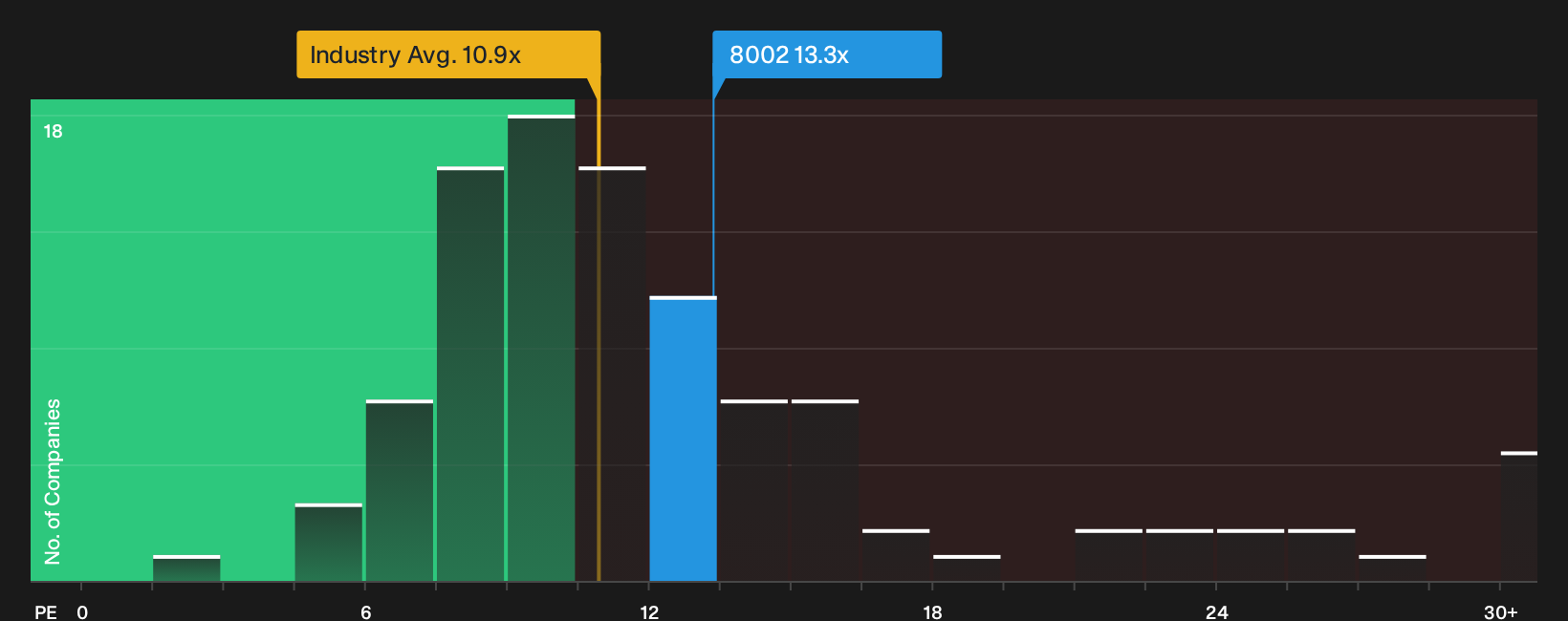
Marubeni provides exposure to nuclear reactors and fuel trading as part of a large global trading house that reported ¥2,609.2b in Q1 FY2027 revenue and trades on a P/E of about 13.3x. The potential appeal of this combination depends on how one unresolved pressure ultimately affects project economics.
That unresolved pressure is exactly why the 4 key rewards and 2 important warning signs can help you evaluate whether Marubeni’s mix of nuclear exposure and trading cash flows still aligns with your expectations.
ITOCHU (TSE:8001)
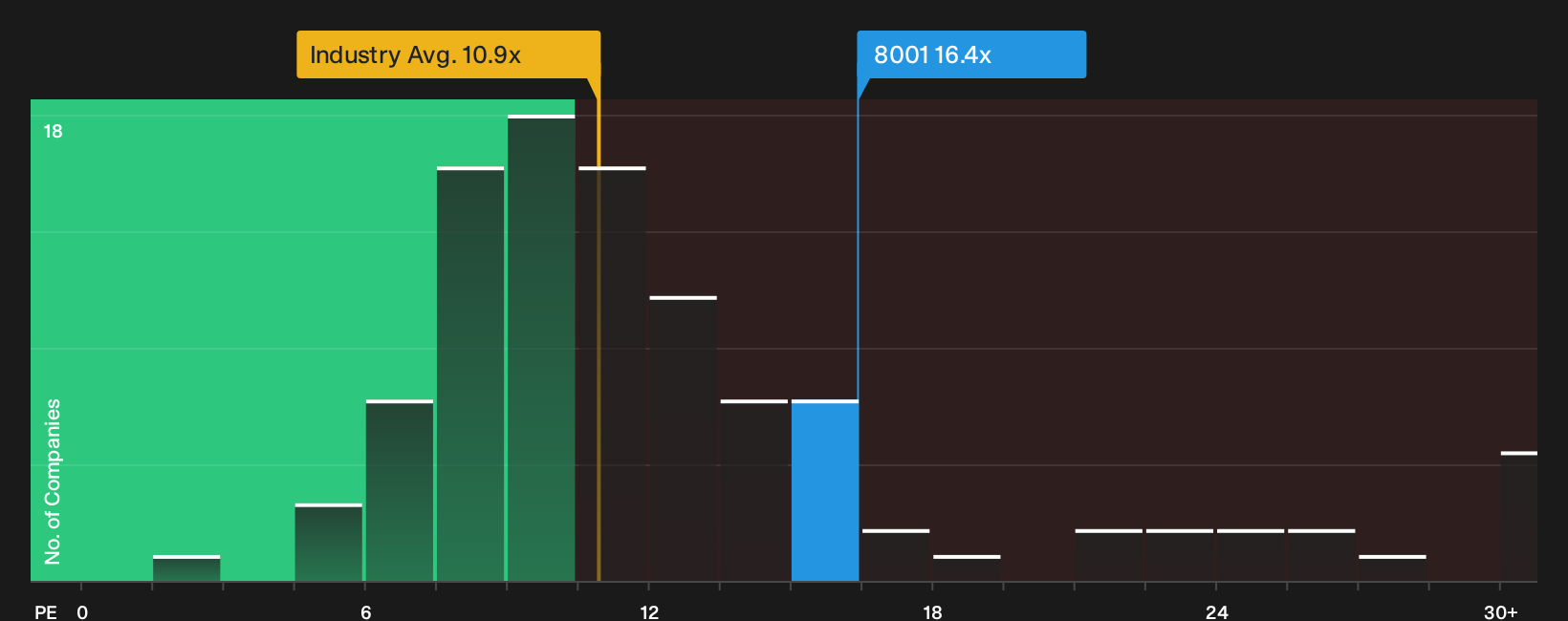
ITOCHU is a global trading and infrastructure group that handles everything from textiles and food to metals, energy and real estate, while also trading nuclear fuels and related materials that plug directly into the nuclear energy supply chain.
ITOCHU generates sizeable revenue across Food at ¥5,140.1b, Energy & Chemicals at ¥3,223.0b, Machinery at ¥1,526.5b, Metals & Minerals at ¥1,283.3b and other diversified segments, with a market value of about ¥14,912.5b.
For nuclear focused investors, ITOCHU matters because its vast trading network in fuels, metals and power infrastructure quietly links everyday consumer businesses with the specialised world of nuclear energy supply.
"Continued investment in sustainability, such as decarbonization and circular economy initiatives, is likely to generate new revenue streams as global demand for green energy and sustainable products increases."
What really moves the needle for ITOCHU’s role in nuclear will be how pressure on capital costs and balance sheet strength ultimately settles.
That balance sheet question is exactly where the full narrative for ITOCHU shows how ITOCHU’s capital discipline, nuclear exposure, and consumer engines might be quietly decoupling from headline fuel volatility.
Mitsubishi Heavy Industries (TSE:7011)
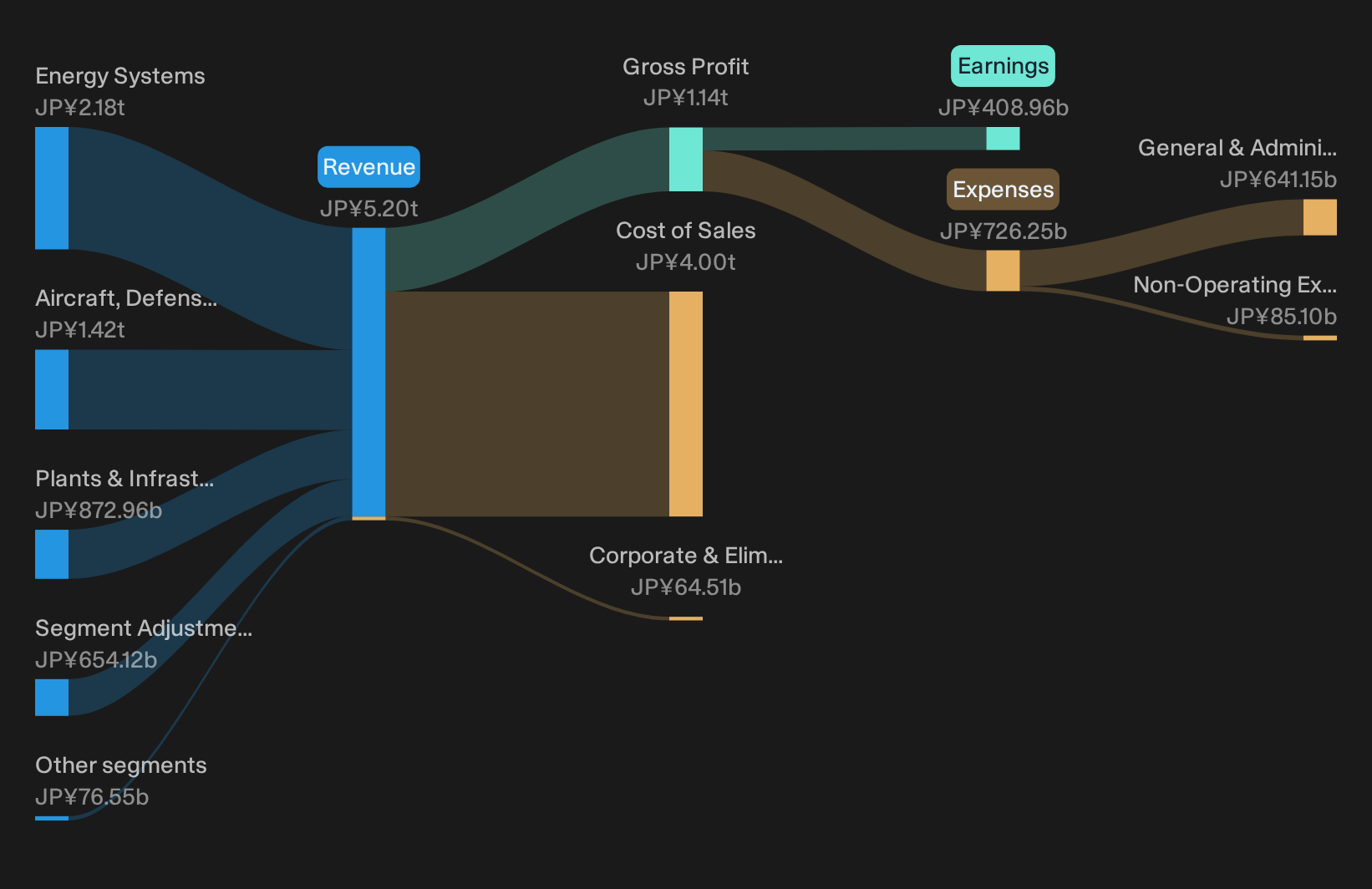
Mitsubishi Heavy Industries is a global engineering group that builds everything from power plants and aircraft engines to transport systems, while its nuclear reactors, fuel cycle technologies and post-operational services anchor its place in this nuclear energy screen alongside much larger Energy Systems revenue of ¥2,175.8b and a market value near ¥12.7t.
Mitsubishi Heavy Industries links nuclear reactors and fuel-cycle expertise with a broad low carbon toolkit, so its nuclear work sits inside a much wider push to decarbonize heavy infrastructure and energy systems.
"MHI's early-mover advantage and leadership in next-generation decarbonization technologies, particularly in hydrogen, ammonia, and carbon capture, are central to its positioning as global climate policy evolves and as governments and industry scale related investments."
What really shapes the long term payoff for Mitsubishi Heavy Industries’ nuclear angle is how one unseen pressure eventually feeds through to margins.
Those margin pressures are exactly why the full narrative for Mitsubishi Heavy Industries digs into where Mitsubishi Heavy Industries might be quietly leveraging its toolkit while others are stalled.
Seeking Alternatives Beyond Nuclear Plays
Fresh ideas move first. Slow research gets caught chasing momentum after prices are already flying. Scan these under the radar lists while it matters and get in early.
- Spot cash generative opportunities before the crowd by filtering for resilient balance sheets with the list of solid balance sheet and fundamentals (22 results) that are built to handle tougher conditions.
- Ride structural themes with businesses already funding themselves, not burning capital, by zeroing in on the 37 profitable AI stocks that aren't just burning cash before sentiment really starts to accelerate.
- Target steady income where payouts matter most by reviewing the curated 20 dividend fortresses that combine high yields with an emphasis on financial strength.
This article by Simply Wall St is general in nature. We provide commentary based on historical data and analyst forecasts only using an unbiased methodology and our articles are not intended to be financial advice. It does not constitute a recommendation to buy or sell any stock, and does not take account of your objectives, or your financial situation. We aim to bring you long-term focused analysis driven by fundamental data. Note that our analysis may not factor in the latest price-sensitive company announcements or qualitative material. Simply Wall St has no position in any stocks mentioned.
Have feedback on this article? Concerned about the content? Get in touch with us directly. Alternatively, email editorial-team@simplywallst.com