
Corn, Wheat, and Soybean Prices Face a Wet Blanket as Heavy Rains Disrupt Crops
Veteran grain futures traders know that weather is hands down the most influential fundamental element on the supply side of the balance sheet. And Mother Nature is presently dealing in spades for the grain futures markets. Following is a breakdown of the current weather impacting the major U.S. and South America crop-growing regions, which is in turn impacting futures prices.
“Heavy rain across the central and southern U.S. Plains is creating a mixed outlook for agriculture: improving moisture supplies for the 2027 winter wheat crop while interrupting planting and raising concerns about ponding and uneven emergence. The Weather Prediction Center’s Monday outlook reinforces the immediate threat, warning that repeated rounds of heavy rain will elevate flash-flood risk across portions of the central and southern High Plains through midweek,” said veteran market watcher and policy analyst Jim Wiesemeyer from “Wiesemeyer’s Perspectives” and Ag Bull Media.
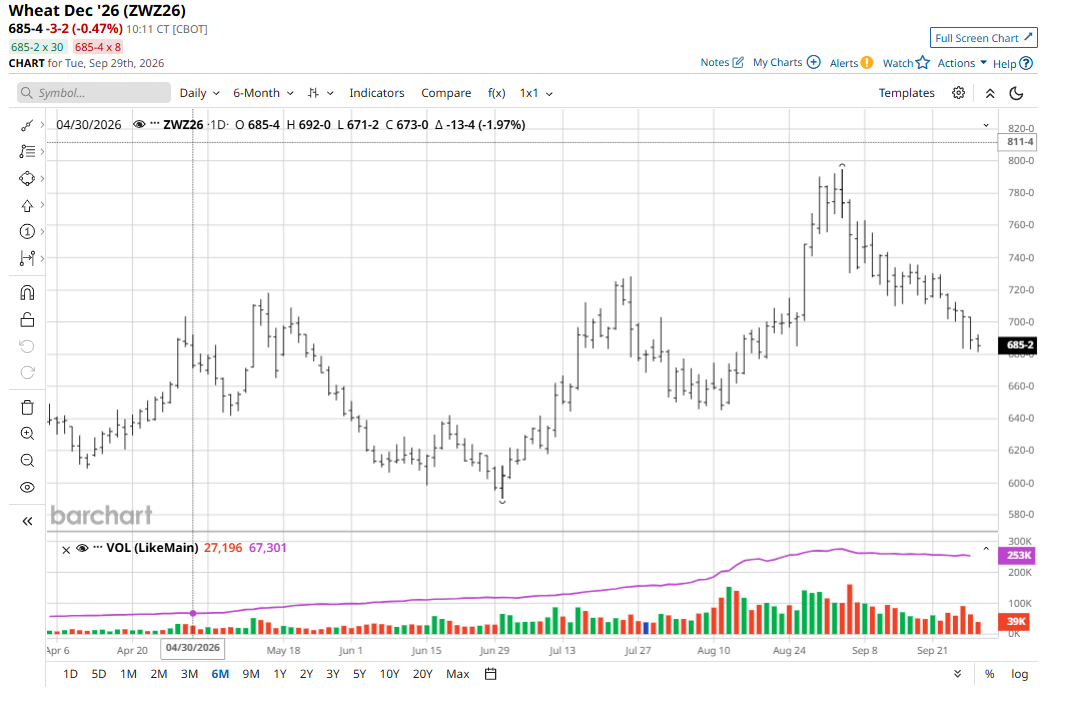
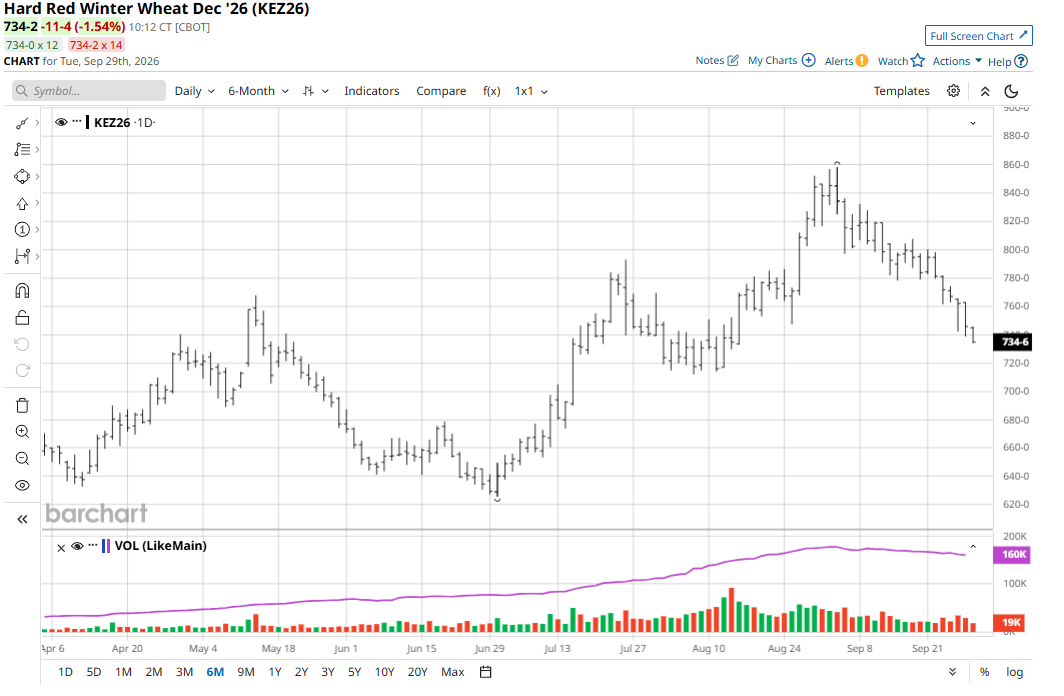
In the wettest areas, that would halt wheat drilling and interrupt corn (ZCZ26), soybean (ZSX26), and sorghum harvest, with standing water creating additional problems in low-lying fields. Where soil is already saturated, even modest rainfall can extend harvest and planting delays. The coming weekend offers a potential opening as precipitation shifts toward the Southeast, although clearing skies will not immediately restore field access in the Midwest and Plains.
“For wheat, the moisture benefit remains substantial — but its value depends on drainage and how quickly planting resumes. Where seedbeds had been dry, the rain can improve germination and support fall establishment once excess water drains. However, fields already planted face localized risks from prolonged saturation and surface crusting,” said Wiesemeyer’s report.
U.S. Corn and Soybean Harvesting Remains Well Behind Normal
Much of the western U.S. Corn Belt has been hit hard by seemingly unrelenting rains over the past two weeks. And more rain is in the forecast the next three days, including flood watches issued by the National Weather Service for western Iowa and eastern Nebraska. The eastern U.S. Corn Belt’s approaching harvest interruption looks less severe than in the western Corn Belt. The earlier-forecast 5-7-inch rain axis extending from south Texas toward Illinois has contracted to a smaller 3-4-inch core over east Texas and Louisiana. Illinois through Ohio are projected to receive roughly 0.75-1.50 inches Thursday into Saturday, enough to interrupt combining and slow crop drying, but posing a smaller threat of widespread, prolonged disruption than the earlier forecast suggested.
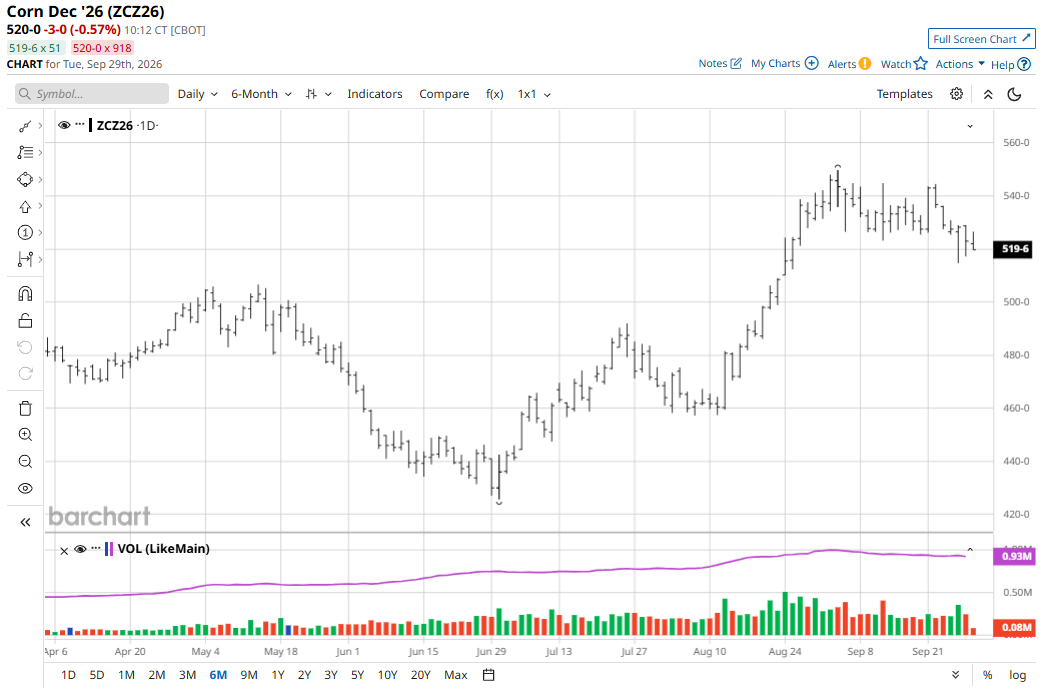
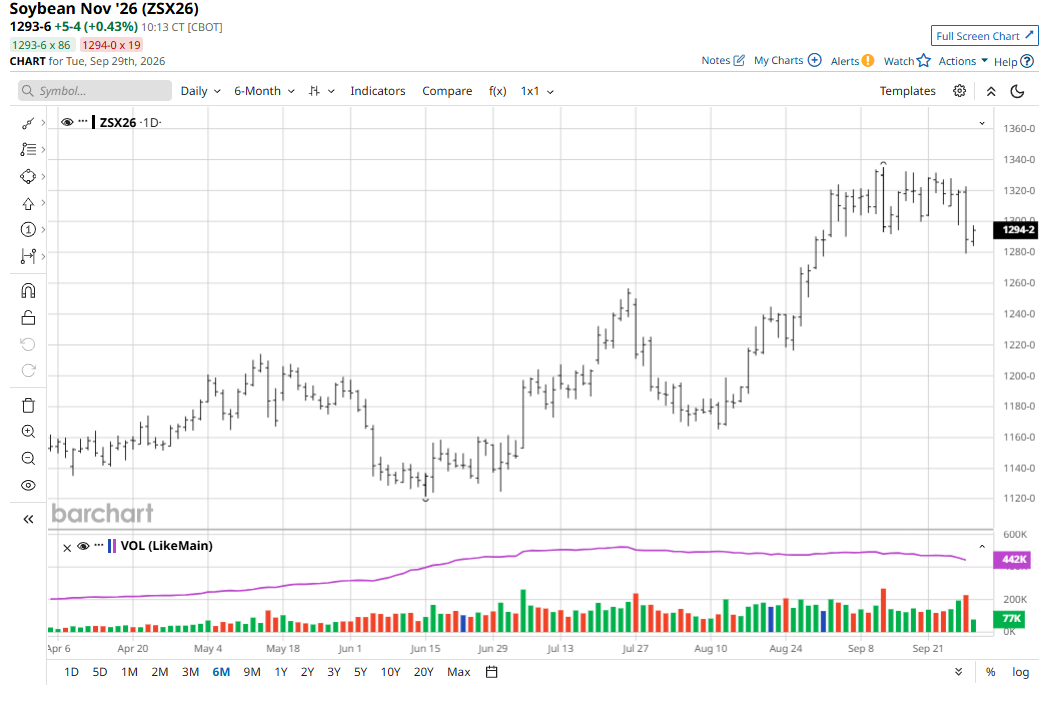
“For corn and soybeans, the main implication is a temporary slowdown in harvest and deliveries. Local cash markets could receive some support where incoming supplies pause, although a successful weekend drying trend would allow harvest pressure to rebuild. Rainfall totals alone do not establish a material production loss; the duration of wet conditions and any subsequent lodging or quality problems will determine whether the concern extends beyond fieldwork delays,” said Wiesemeyer’s report.
USDA’s Monday afternoon crop progress reports showed U.S. corn and soybean harvesting favoring the eastern Corn Belt. The agency said Illinois corn was 26% harvested as of Sunday, nine points ahead of average. Ohio corn lags at 3% harvested versus 7% on average. In the western Corn Belt, Iowa corn is only 5% harvested versus a 10% average and soybeans at 3% harvested versus 17% average. Nebraska corn is 11% harvested versus 15% and soybeans 5% versus 17%.
Wet Weather, High Temperatures in South America Corn and Soybean Regions
Meantime, southern Brazil and Paraguay have been persistently wet, with 5-10 inches of rain forecast over the next 15 days, maintaining excellent growing conditions but disrupting fieldwork in Paraná and Rio Grande do Sul during the 6-10-day period. Northern Brazil faces near- to below-normal rainfall, with temperatures above 100 degrees in the 1-5-day period and exceptional warmth again in days 11-15, so Mato Grosso and Goiás, despite recent notable thunderstorms, will struggle to establish early soybean plantings, said Wiesemeyer’s report.
Argentina will see near- to above-normal precipitation and notably cool temperatures through week two, removing any heat-stress threat for now.
As the U.S. corn and soybean harvests wind down in the coming weeks, the weather focus in the grain futures markets will shift to South America, namely Brazil and Argentina.
Let me know what you think. I enjoy hearing from my valued Barchart readers all around the globe. Email me at jim@jimwyckoff.com.
On the date of publication, Jim Wyckoff did not have (either directly or indirectly) positions in any of the securities mentioned in this article. All information and data in this article is solely for informational purposes. For more information please view the Barchart Disclosure Policy here.