
Should Multi Gigabit MDU Rollout Require Action From Harmonic (HLIT) Investors?
- Harmonic reported that Lightcurve is now delivering up to 8 Gbps downstream and 1 Gbps upstream to MDUs over existing coax, using the cOS virtualized broadband platform combined with Oyster nodes and Pebble Remote PHY in a distributed access architecture.
- The same deployment gives Lightcurve DOCSIS and fiber optionality plus AI-driven network analytics, which directly ties Harmonic’s software platform to customer upgrade flexibility and operational efficiency.
- We will examine how Harmonic's investment narrative intersects with Lightcurve's software based multi gigabit MDU rollout over existing coax infrastructure.
Scan beyond Harmonic's MDU rollout and line up other infrastructure plays with similar multi gigabit potential using our hand picked 84 AI infrastructure stocks.
Harmonic Investment Narrative Recap
To own Harmonic, you need to believe its software based broadband platform can keep winning operator upgrades as the shift toward virtualized access and SaaS continues to build recurring revenue. The Lightcurve deployment fits that belief because it puts cOS, Oyster nodes and Pebble Remote PHY in a real multi gig MDU setting over existing coax.
In the near term, the key swing factor remains how quickly broadband operators convert pipeline into active rollouts, given that some telecom and cable CapEx has already been pushed out. The bigger risk still looks operational. Profit margins are currently 5.9% versus 18.1% last year, so any pricing pressure or slower SaaS ramp would affect earnings.
Among recent context, the most relevant datapoint is the focus on next generation virtualized broadband, including DOCSIS 4.0 and fiber ready architectures, along with AI driven latency reduction. The Lightcurve news is effectively a field test of that pitch, because it combines DOCSIS and fiber optionality with Central AI analytics in a single deployment.
In terms of potential catalysts, investors are watching whether this type of MDU and DAA rollout broadens beyond a few anchor customers and into more international operators. That would speak directly to Harmonic’s push to diversify away from heavy reliance on large accounts like Comcast and to convert its strong deferred revenue and order book into steadier cash flow.
Harmonic's narrative projects US$609.8 million revenue and US$92.1 million earnings by 2029. That profile assumes 15.3% yearly revenue growth and an earnings increase of about US$83.6 million from US$8.5 million today.
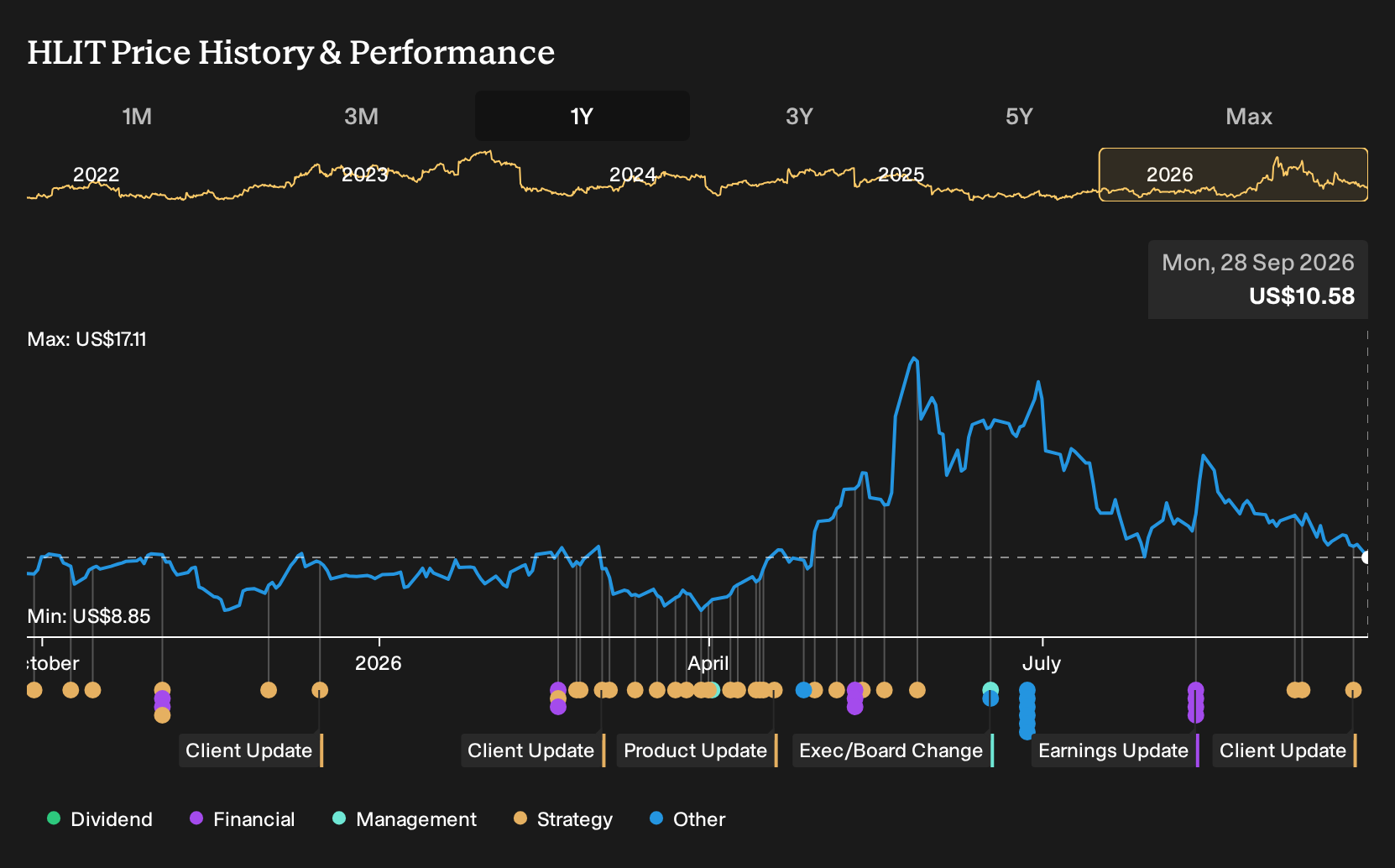
Uncover why Harmonic's fair value indicates a 44% potential upside to its current price, a gap that could narrow quickly.
Exploring Other Perspectives
You are seeing one clear tension. Consensus treats Harmonic’s broadband shift as relatively smooth, while the most bearish analysts lean hard on customer concentration risk. They were only penciling in about US$571.0 million revenue and US$80.0 million earnings by 2029 before this Lightcurve news, so those views may evolve as new deployments land.
Explore 3 other Harmonic fair value estimates, including one that suggests it could be worth just $14.15!
Reach Your Own Conclusion
Don't just follow the ticker. Dig into the data and build a conviction that's truly your own.
- A great starting point for your Harmonic research is our analysis highlighting 2 key rewards and 1 important warning sign that could impact your investment decision.
- See our latest analysis for Harmonic. The report includes a comprehensive fundamental analysis summarized in a single visual, the Snowflake, making it easy to evaluate Harmonic's overall financial health at a glance.
Looking For More Investment Ideas Beyond Harmonic?
Once you have a handle on Harmonic, it can help to widen the lens and compare its story with other opportunities that match your risk tolerance, income needs, and balance sheet preferences.
- If you want potential mispricing with quality fundamentals, scan through a curated 33 high quality undervalued stocks that filters for stronger financial profiles.
- If capital preservation and stability matter most to you, review a focused 30 resilient stocks with low risk scores that emphasizes businesses with more resilient risk scores.
- If you are hunting for fresh ideas that sit off the usual radar, work through a targeted 16 high quality undiscovered gems selected for stronger underlying fundamentals.
This article by Simply Wall St is general in nature. We provide commentary based on historical data and analyst forecasts only using an unbiased methodology and our articles are not intended to be financial advice. It does not constitute a recommendation to buy or sell any stock, and does not take account of your objectives, or your financial situation. We aim to bring you long-term focused analysis driven by fundamental data. Note that our analysis may not factor in the latest price-sensitive company announcements or qualitative material. Simply Wall St has no position in any stocks mentioned.
Have feedback on this article? Concerned about the content? Get in touch with us directly. Alternatively, email editorial-team@simplywallst.com