
Grain Traders Are So Far Unimpressed by the Trump-Xi Summit
The summit meeting late last week between President Donald Trump and Chinese President Xi Jinping in Washington, D.C. produced a two-month trade-truce extension and U.S. statements of progress on agricultural market access. However, grain traders wanted more clarity. “Few major breakthroughs so far,” was the synopsis by veteran ag market watcher and policy analyst Jim Wiesemeyer of Ag Bull Media. “For agriculture, the immediate benefit is greater trade continuity, while the test remains additional purchases and reduced barriers.”
In last Thursday’s welcoming remarks, Trump said work through the bilateral Board of Trade included improved access for American farmers and ranchers. His statement did not provide a complete list of newly eligible products, additional purchase volumes or effective dates. Those details will determine the commercial value, said Wiesemeyer.
U.S. Trade Representative Jamieson Greer said Friday on CNBC the Board of Trade could improve access for American farm exports and protect covered products from future trade disputes, but the specific terms remain pending. He said the administration expected to release more details today (Monday, Sept. 28).
Corn Market Bulls Hanging Tough
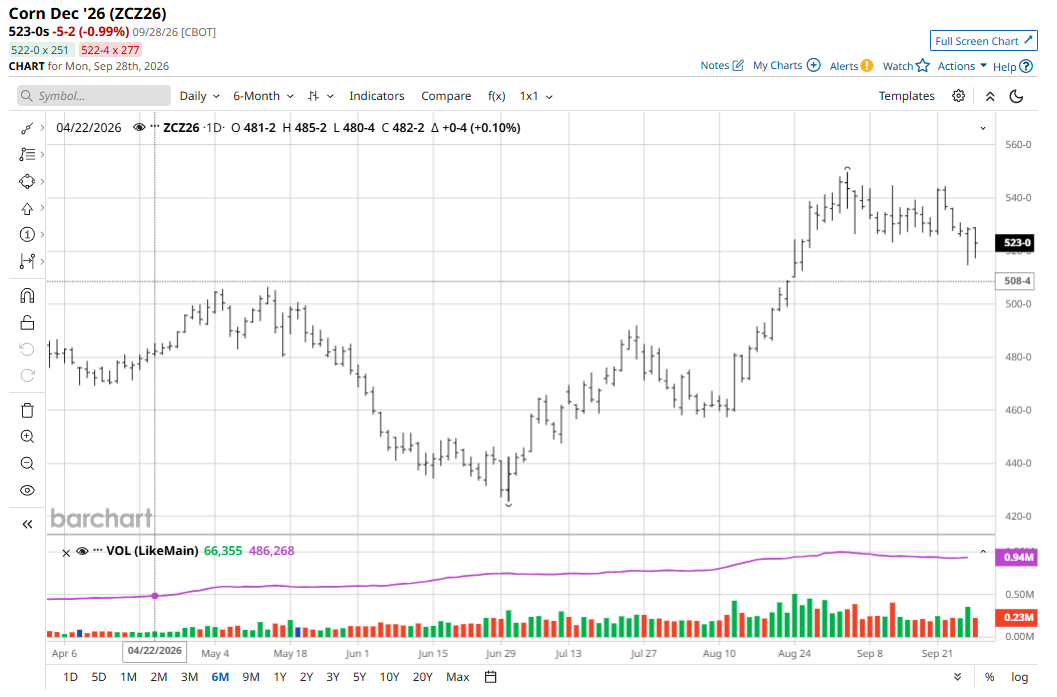
December corn (ZCZ26) futures on Friday rose 3/4 cent to $5.28 1/4 after hitting a four-week low early on. For the week, December corn was up 3/4 cent. The corn futures market saw heavy selling pressure early in the session Friday but clawed back all the losses by the close. A lower U.S. dollar index ($DXY) Friday did aid the corn market bulls.
This week’s USDA quarterly Grain Stocks report, on Wednesday, will provide the official ending stocks of the 2025-26 crop year. With most of the balance sheet settled at this point, feed and residual will be the key category to watch for potential changes. Harvest continues mostly unimpeded in the southern U.S., while many Midwestern farmers are sidelined by rain.
Traders will also keep watching the weekly USDA crop progress reports on Monday afternoon.
Harvesting and commercial hedge pressure will continue in the coming weeks, which will add to selling pressure in corn futures. The stronger U.S. dollar on the foreign exchange market is also a headwind for the grains markets, making U.S. grain more expensive to purchase on the world market.
Soybean Futures Prices Not Far Below Contract Highs
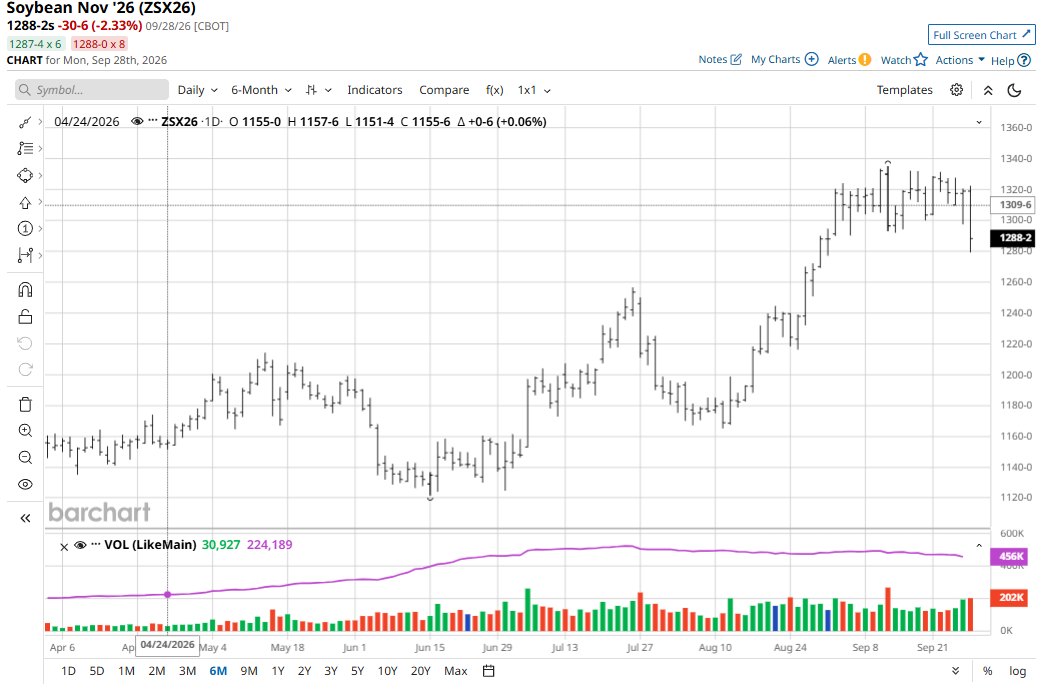
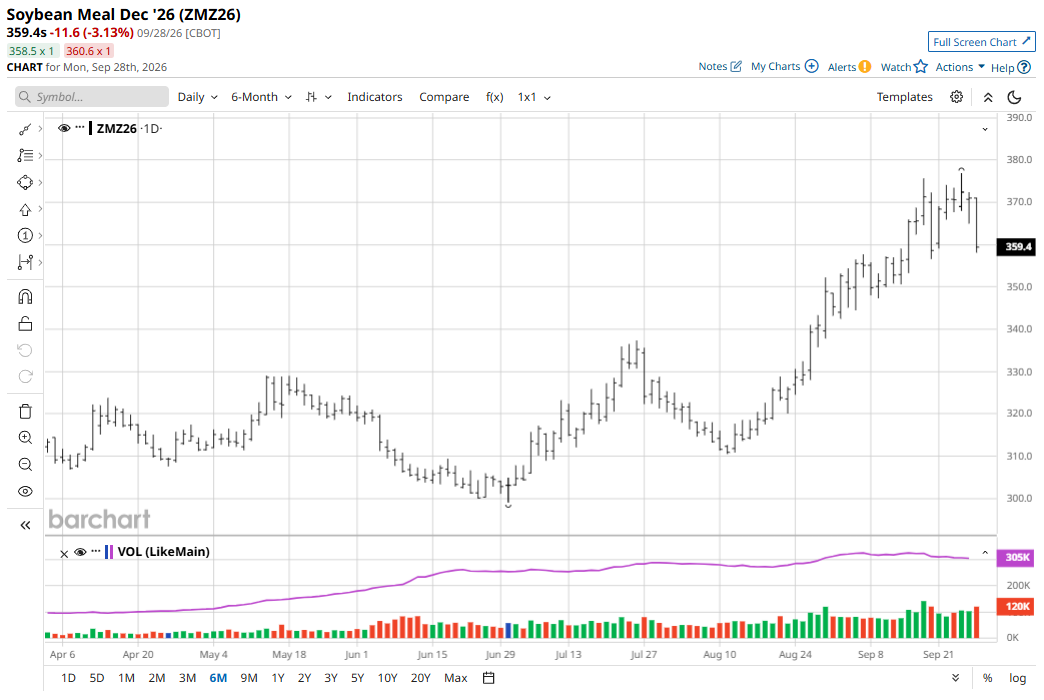
November soybeans (ZSX26) on Friday rose 1 1/2 cents to $13.19 and for the week were up 15 1/2 cents. December soybean meal (ZMZ26) futures fell $1.40 to $371.00 and for the week were up $12.40. The soybean and meal futures markets on Friday saw heavier selling pressure early in the session but were able to erase those losses by the close. The rebound from overnight lows came after USTR Greer said the U.S. and China have reached agreements covering a “subset” of non-sensitive goods that could be traded on more favorable terms. Soybean traders were especially anxious to see what results came out today.
Meantime, soybean processors in the western Midwest are offering hefty premiums for immediate deliveries as persistent rain delays early harvest, tightening supplies and forcing some plants to scale back production. Farmers that were able to harvest in parts of the Midwest found a surprising bump in cash basis levels.
Wednesday’s USDA quarterly Grain Stocks report will provide the official ending stocks of the 2025-26 crop year. With most of the balance sheet settled at this point, feed and residual will be the key category for soybean traders to watch for potential changes.
Winter Wheat Futures Prices Trapped in Downtrends
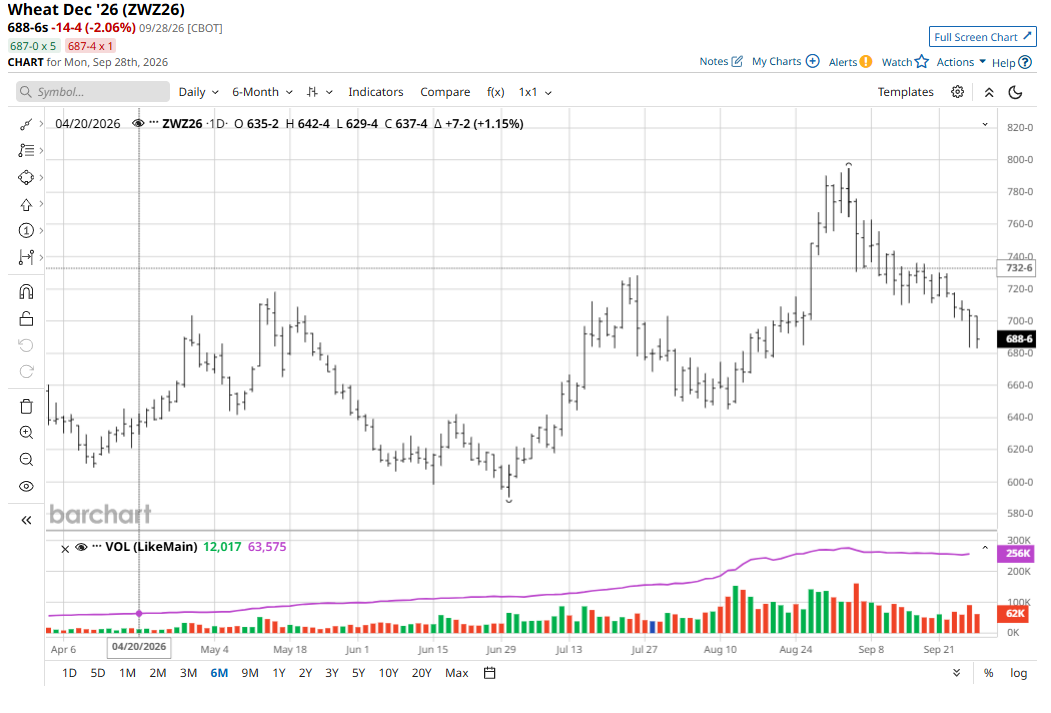
December SRW wheat (ZWZ26) futures on Friday fell 3 3/4 cents to $7.03 1/4, hit a five-week low, and for the week were down 11 cents. December HRW wheat (KEZ26) lost 5 cents to $7.62, hit a six-week low, and for the week were down 21 3/4 cents. The winter wheat futures markets saw more profit-taking pressure and weak long liquidation as price downtrends are in place on the daily bar charts. The selloff in the U.S. dollar index on Friday did help the wheat markets move up from daily lows. Still, Friday’s technically bearish weekly low closes set the table for some follow-through technical selling early next week.
The next major data dump for the wheat market will come next Wednesday with the USDA quarterly grain stocks report and small grains summary, which includes a detailed breakdown of wheat production by class.
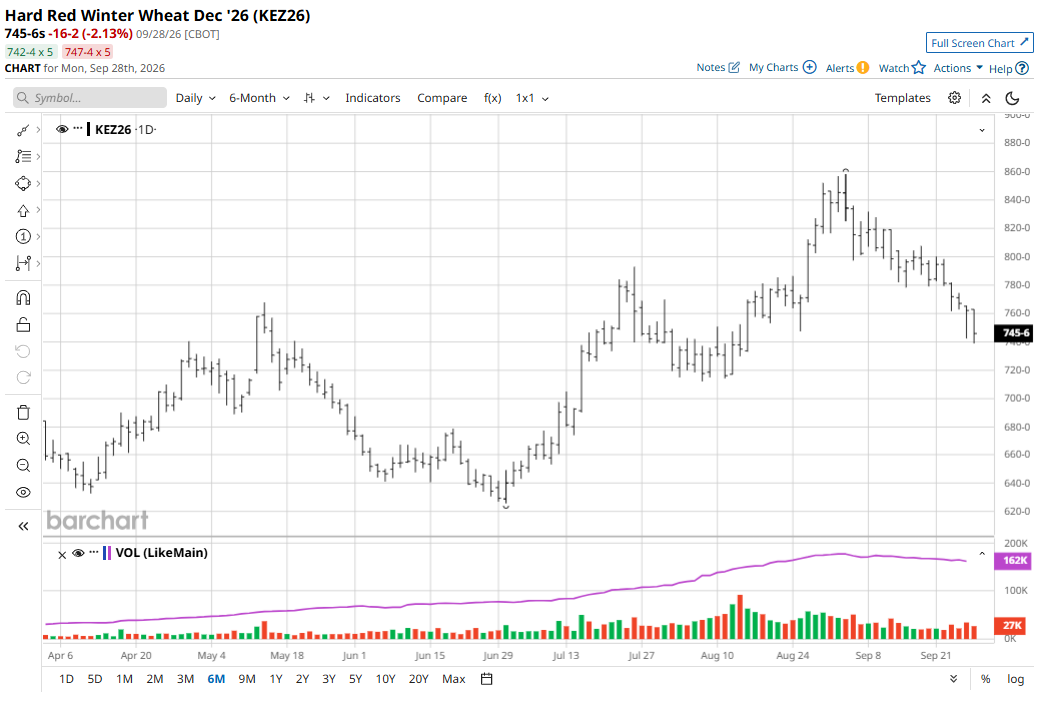
Global wheat supplies, weather concerns and the Super El Nino, as well as ongoing grain-shipping constraints out of the Black Sea region, will remain focal points for the wheat markets in the coming few months. However, the possibility of a Russia-Ukraine ceasefire will remain in the background for bullish traders.
Rains across U.S. HRW country have restored soil moisture enough to encourage planting. Despite recent selling pressure, prices remain well above their year-ago levels. Pressure from harvest should wane with grain now in the bins.
Let me know what you think. I enjoy hearing from my valued Barchart readers all around the globe. Email me at jim@jimwyckoff.com.
On the date of publication, Jim Wyckoff did not have (either directly or indirectly) positions in any of the securities mentioned in this article. All information and data in this article is solely for informational purposes. For more information please view the Barchart Disclosure Policy here.