
Chevron Is Expanding Its Presence in the Mediterranean. Here's What It Means for CVX Stock.
Key Points
The company already has a presence in the Eastern Mediterranean.
Oil prices are expected to remain elevated and help boost results.
Last month, I wrote about how Chevron (NYSE: CVX) is well-positioned to benefit from the U.S. deal with Venezuela to develop some 65 billion barrels of that country's enormous proven oil reserves.
But there's another region Chevron is moving into, which I think will also eventually help the stock. This week brought preliminary reports that the Houston-based oil and gas giant plans to begin seismic research in waters off Greece later this year, expanding its offshore exploration footprint in the Eastern Mediterranean.
Missed AI’s "Act 1"? Act 2 Could Be 15x Bigger. Most investors think they missed the AI boat because they didn't buy Nvidia in 2005. But according to our analysts, we’re only at the end of "Act 1"—the R&D phase. "Act 2" is the global rollout. Continue »
The news came from Greek Environment and Energy Minister Stavros Papastavrou, who was in the U.S. to attend United Nations meetings. The official met with a Chevron executive and agreed that the exploration could begin this year. A seismic exploration is the initial step in assessing hydrocarbon potential and must be conducted before any test drilling can begin.
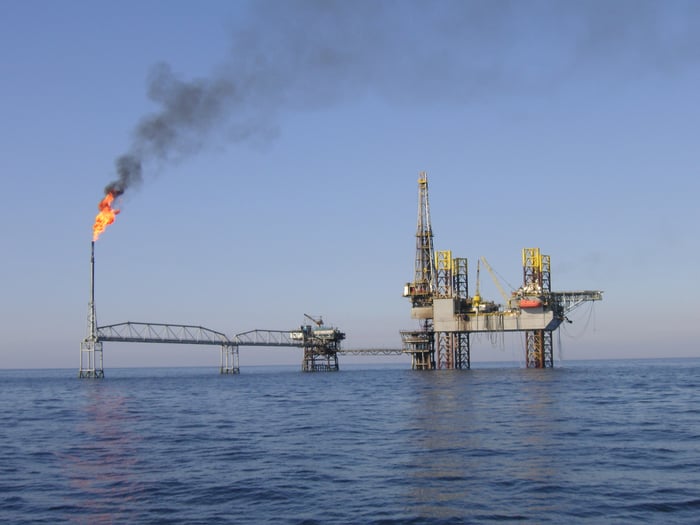
Image source: Getty Images.
Earlier this year, Chevron was awarded four offshore leases to explore for oil around Greece. The oil giant already has assets in the Mediterranean, including two gas-producing fields off Israel and one in Cyprus. It also operates two exploration blocks in Egypt, with an agreement to explore for oil in Libya.
Oil prices are expected to remain elevated
Of course, oil stocks have gyrated this year with crude prices, which have moved in response to developments in the war in the Persian Gulf. But this month, Chevron CEO Mike Wirth told a conference that various mechanisms capable of moderating oil prices -- including strategic reserves and commercial inventories among them -- are now largely spent. He suggested that even a quick and unexpected end to the conflict with Iran wouldn't likely bring prices down softly or quickly.
In addition, even when oil prices settle back to pre-war levels, a global shortage of refining capacity will remain. That, too, is a big plus for Chevron, with its spare capacity.
That's good for Chevron shareholders, as higher oil prices will boost Chevron's revenue and free cash flow in the short term. Indeed, the company reported net income of $12 billion in the second quarter, almost 400% higher than the year-ago quarter. It beat Wall Street's earnings estimates by $0.50 a share, at $6.06.
The stock is up about 34% year-to-date, and Wall Street sees it going higher from here. The average analyst price target is about $224, representing a 10% increase over the current price of $204. Of 25 analysts tracked by Yahoo, 20 rate the stock a "Buy" or a "Strong Buy."
New hydrocarbon sources, such as the potential fields in the Eastern Mediterranean, will only bolster Chevron's position.
Matthew Benjamin has no position in any of the stocks mentioned. The Motley Fool has positions in and recommends Chevron. The Motley Fool has a disclosure policy.