
3 Australian Dividend Stocks To Own In September 2026
Bond yields around the world are sitting near two decade highs, lifting borrowing costs and putting pressure on growth focused shares. Income investors in Australian dividend stocks are looking for cash returns that feel meaningful next to a 5% government bond. That is where reliable payers with yields above 3% can matter. This article highlights three high yielding options with dividends that appear well supported and consistent.
The three stocks covered next are only a sample, and the full screen has surfaced 37 more dividend payers with similarly robust stories that do not fit into this short list.
If you want to identify and analyze income ideas with yields above 3% that clear stricter quality filters, head straight to the Dividend Powerhouses (3%+ Yield) screener.
BHP Group (ASX:BHP)
Overview: BHP Group is a global resources company that primarily mines iron ore and copper, using these cash flows to fund dividends.
Operations: The group generates about US$29b from copper, US$23.9b from iron ore and US$5.6b from coal, with China the largest customer market.
Market Cap: A$308.6b
BHP Group appeals to dividend hunters because its iron ore and copper businesses generate substantial cash that supports a yield above 3%.
"Strong pipeline of copper and potash projects positions BHP to benefit from a global surge in decarbonization efforts and electrification initiatives, with rising demand for critical minerals expected to drive higher future revenues."
What that means for future payouts will come down to how one cost pressure in the project portfolio ultimately feeds through to margins.
Those margin swings sit at the center of the full narrative for BHP Group, which maps how cost trends, capital spend and commodity pricing could reshape BHP Group’s income profile.

Fortescue (ASX:FMG)
Overview: Fortescue is a Perth based miner. Its iron ore operations supply most of the cash that supports its dividend profile, alongside early stage green energy projects.
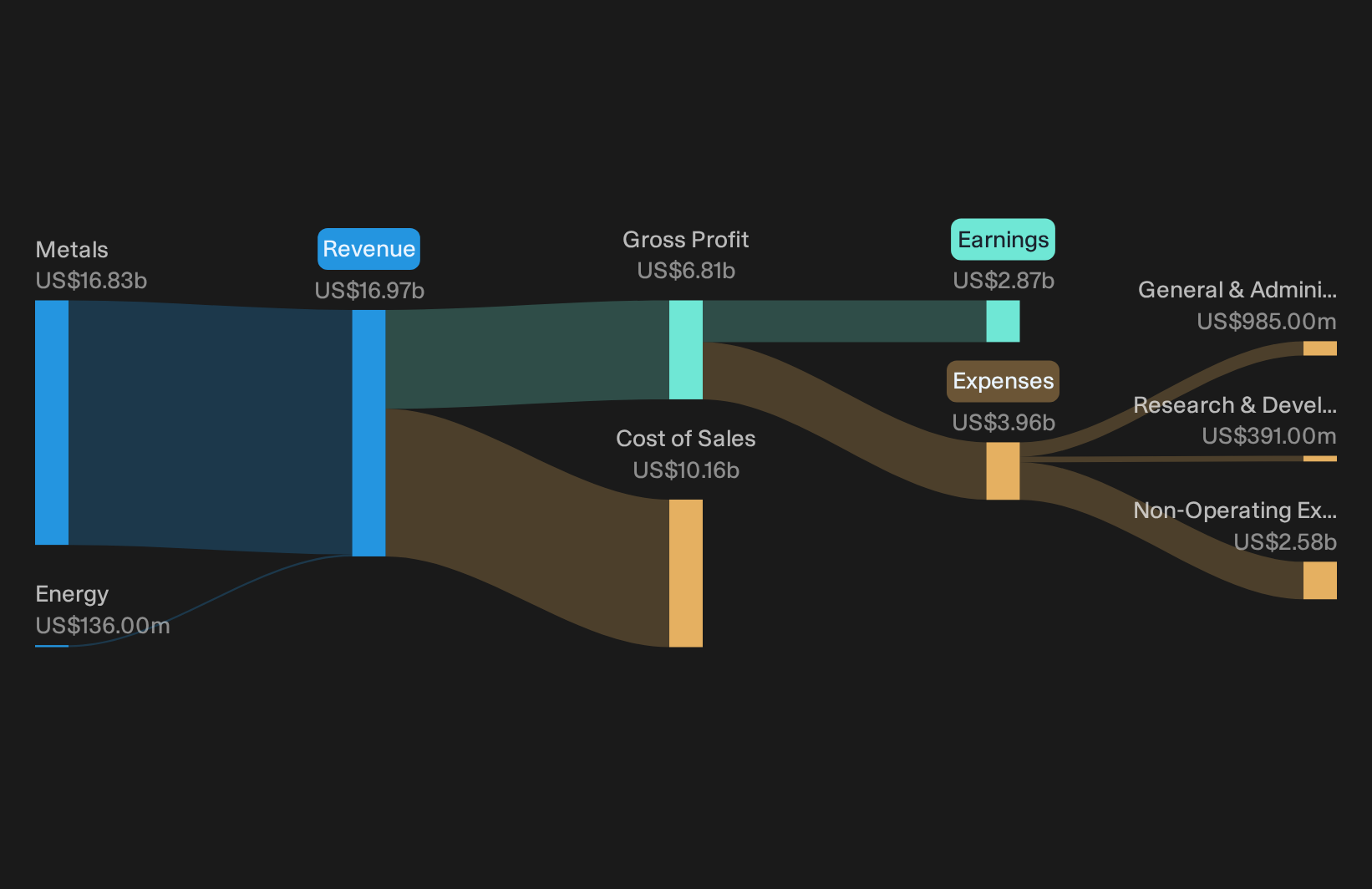
Operations: The business generates about US$16.8b from Metals and US$136m from Energy, with roughly US$15.1b of revenue linked to China.
Market Cap: A$50.3b
For income seekers, Fortescue matters because its iron ore cash flows underpin a yield above 3%. This is occurring even as the group pours money into green energy projects that are yet to prove themselves as reliable dividend engines.
"The trend of declining ore grades and rising extraction costs, combined with the need to develop more distant, lower-quality resources, will likely increase Fortescue's long-term cost base and could erode its low-cost producer advantage."
What happens to Fortescue’s appeal as a dividend powerhouse will hinge on how one capital heavy push reshapes unit costs and long term margins.
That turning point is exactly what the full narrative for Fortescue unpacks, showing where Fortescue’s green energy push could accelerate returns, while ore cost pressures are still masking the upside.
Evolution Mining (ASX:EVN)
Overview: Evolution Mining is a gold producer that runs mines in Australia and Canada, using cash from those operations to fund dividends.
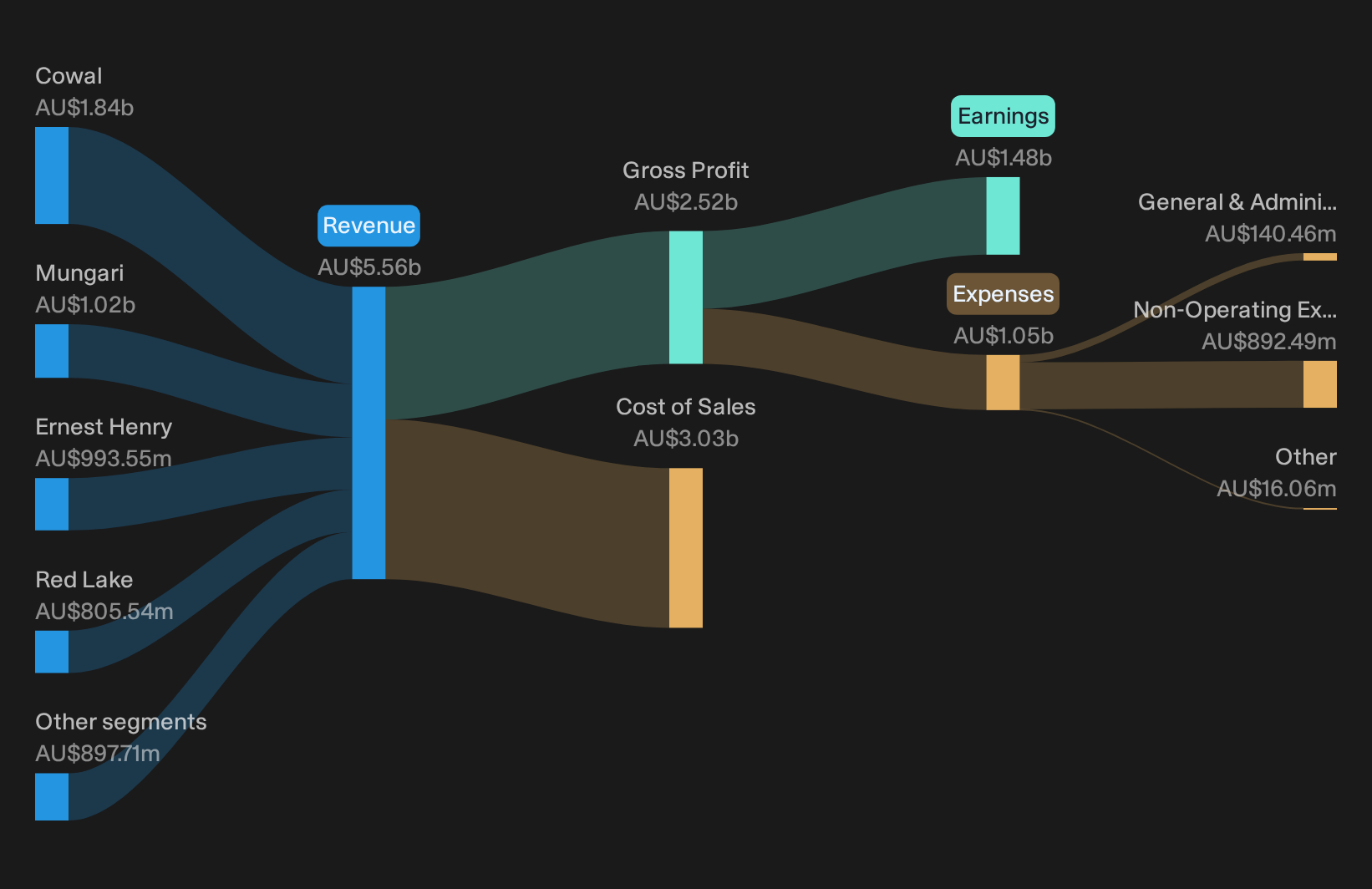
Operations: Evolution Mining generates about A$1.8b from Cowal, A$1.0b from Mungari, A$1.0b from Ernest Henry and A$800 million from Red Lake, with additional contributions from Northparkes and smaller assets.
Market Cap: A$27.8b
For dividend focused investors, Evolution Mining matters because its producing gold assets generate recurring cash flows that support a 3%+ yield and give management room to refine payout policy as the mine portfolio evolves.
"Rising compliance and labor costs, coupled with declining ore grades, may erode margins and challenge long-term earnings projections."
The future of Evolution Mining’s dividend appeal will depend on how ongoing cost pressures interact with its cash-generating mines.
To see how those cost pressures could collide with production plans, or even accelerate Evolution Mining’s next phase, read the full narrative for Evolution Mining for the full picture.
Seeking Alternatives Before The Crowd?
Fresh ideas move first, and the most interesting opportunities often gain momentum while others are still watching. Before the best entry points are gone, consider acting early.
- Spot cash rich businesses that may hold up when other stories wobble by scanning the curated list of solid balance sheet and fundamentals (11 results).
- Follow potential upside in producers linked to metals demand cycles by tracking the curated 17 top copper producer stocks.
- Focus on potential cash generators in bullion producers while gold sentiment is still relatively muted using the focused 36 elite gold producer stocks.
This article by Simply Wall St is general in nature. We provide commentary based on historical data and analyst forecasts only using an unbiased methodology and our articles are not intended to be financial advice. It does not constitute a recommendation to buy or sell any stock, and does not take account of your objectives, or your financial situation. We aim to bring you long-term focused analysis driven by fundamental data. Note that our analysis may not factor in the latest price-sensitive company announcements or qualitative material. Simply Wall St has no position in any stocks mentioned.
Have feedback on this article? Concerned about the content? Get in touch with us directly. Alternatively, email editorial-team@simplywallst.com