
3 Integrated Energy Stocks With Pricing Power Investors Should Watch
Markets are being pulled in opposite directions as rising Treasury yields, stubborn inflation worries and volatile oil prices collide with easing stress around the Strait of Hormuz and a calmer US–China trade backdrop. That mix can punish some stocks yet hand unexpected pricing power or resilience to others, which is where opportunity usually hides. This article walks through three integrated energy stocks exposed to these headlines and why their stories matter right now.
The stocks profiled below are a starting sample only, and the broader screen surfaced 14 more global integrated energy and oil majors with similarly interesting stories that are not covered here. If you want to move straight to the full opportunity set, head into the Global Integrated Energy & Oil Majors screener to identify, filter and analyze the integrated energy companies that best fit your own view and risk profile.
Reliance Industries (NSEI:RELIANCE)
Reliance Industries fits directly into the integrated energy theme, with a large oil to chemicals base feeding into a wider ecosystem that also spans retail and digital services. This structure provides multiple earnings engines when crude markets and macro headlines are volatile.
Reliance Industries operates one of the world’s largest integrated oil to chemicals businesses alongside its retail and digital platforms. Oil to Chemicals generates about ₹6,879.7b of revenue, Retail ₹3,344.4b, Digital Services ₹1,549.2b and Oil and Gas ₹240.3b, with a market cap near ₹16,498.9b.
"The multi-year scale-up and vertical integration of the new energy complex (solar PV, batteries, green hydrogen, green ammonia) directly leverages global and national clean energy transition policies. This creates new, sustainable revenue streams and may enhance future returns on capital as these businesses transition to self-funding and away from legacy hydrocarbons."
A key variable is how pressure on capital intensity and funding costs may affect future margins and cash generation.
Those funding questions sit at the heart of whether Reliance Industries can turn its clean energy build out into a self-funding engine, which is exactly what the full narrative for Reliance Industries unpacks. This includes how legacy hydrocarbons and new projects could be decoupling faster than headlines suggest.

China Petroleum & Chemical (SEHK:386)
China Petroleum & Chemical is one of the heavyweight integrated players in this Global Integrated Energy & Oil Majors screen, tying upstream fields, refineries and a vast fuel and chemicals network directly into China’s energy system and creating leverage to both crude prices and policy driven transition trends.
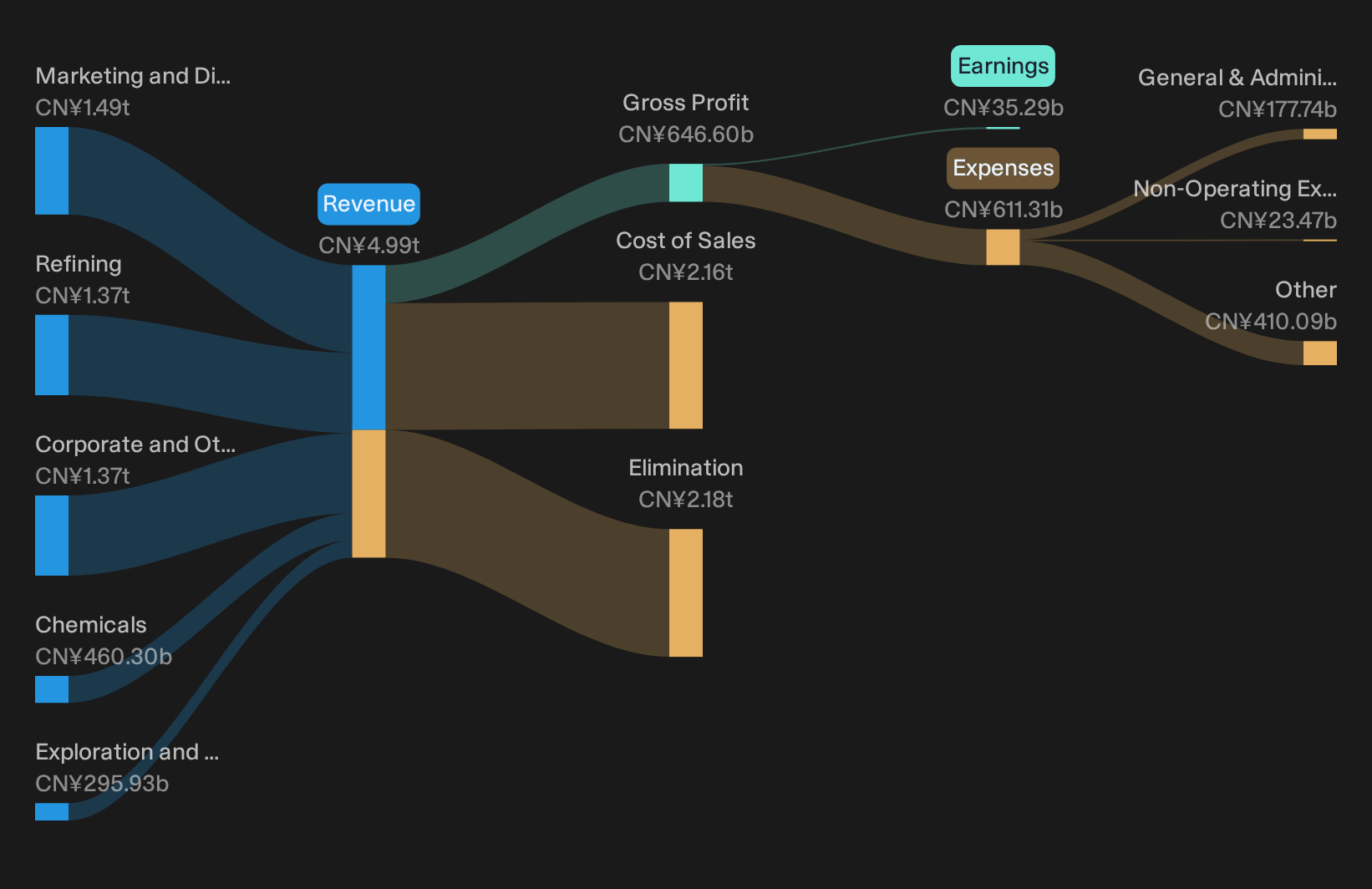
China Petroleum & Chemical runs a broad energy and petrochemicals platform across Mainland China, with CN¥1,372.4b from Refining, CN¥1,493.9b from Marketing and Distribution, CN¥460.3b from Chemicals and CN¥295.9b from Exploration and Production, and a market value around HK$709.8b.
"The build out of 16 new sustainable aviation fuel projects in 2026 positions China Petroleum & Chemical to supply a larger share of future low carbon jet fuel demand, which can support higher average selling prices and uplift earnings mix compared with traditional road fuels."
What really matters next is how a single pressure point in China Petroleum & Chemical’s product mix shapes long term margins and cash returns.
That hinge point is exactly what the full narrative for China Petroleum & Chemical unpacks, showing how China Petroleum & Chemical’s mix could accelerate or stall cash generation as policies and fuel demand evolve.
OMV (WBAG:OMV)
OMV is a textbook integrated energy major for this screen, tying oil, gas and chemicals into one system that lives on crude prices, refining spreads and European demand. This makes its newer lower carbon activities an important counterweight for cycle risk.
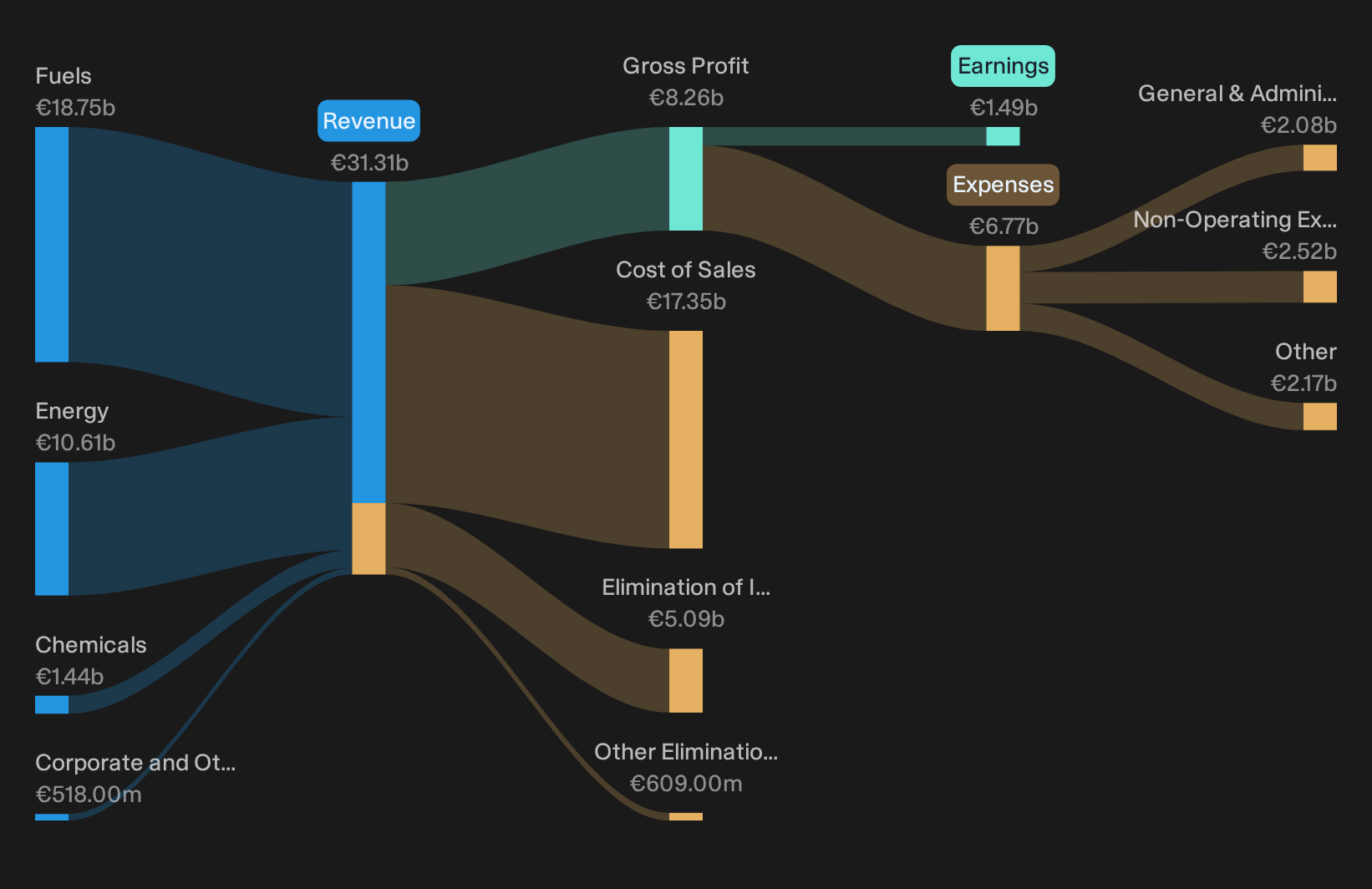
OMV is an integrated oil, gas and chemicals group with Fuels bringing in about €18.7b, Energy €10.6b, Chemicals €1.4b and other activities around €0.5b after eliminations, and the stock carries a market value close to €23.9b.
"OMV's expansion in petrochemicals, specialty products, and plastics recycling through Borealis, including investments in innovative recyclable materials and higher-margin specialty grades, supports the potential for improved net margins and more stable earnings, less exposed to the volatility of traditional refining."
The real swing factor is how one pressure point in the balance between hydrocarbons and low carbon projects reshapes future profit resilience.
That profit mix question is exactly what the full narrative for OMV unpacks, showing where OMV’s lower carbon projects may be accelerating or quietly stalling earnings resilience.
Seeking Smart Alternatives Before They Fly
Fresh ideas move first. The strongest breakouts and quiet compounders often get caught by data screens before headlines. Spot momentum shifts while it matters and under the radar for now, act now.
- Hunt for income workhorses with sturdy cash flows using the curated 157 dividend fortresses before yields compress and prices start flying.
- Track early AI momentum where profits already support the story by scanning the hand picked 37 profitable AI stocks that aren't just burning cash before the crowd catches up.
- Target structural growth in electrification and grid upgrades through a focused set of 39 power grid technology and infrastructure stocks while these themes are still dropping under most radars.
This article by Simply Wall St is general in nature. We provide commentary based on historical data and analyst forecasts only using an unbiased methodology and our articles are not intended to be financial advice. It does not constitute a recommendation to buy or sell any stock, and does not take account of your objectives, or your financial situation. We aim to bring you long-term focused analysis driven by fundamental data. Note that our analysis may not factor in the latest price-sensitive company announcements or qualitative material. Simply Wall St has no position in any stocks mentioned.
Have feedback on this article? Concerned about the content? Get in touch with us directly. Alternatively, email editorial-team@simplywallst.com