
Did Analyst Upgrade Just Shift Schneider National (SNDR) Stock Investment Narrative?
- Schneider National recently received an upgrade to a Zacks Rank #1 rating, which reflects more optimistic analyst expectations for its future earnings profile.
- The improved earnings outlook arrives as Schneider National manages freight exposure across the US, Canada, and Mexico, where evolving trade rules could influence capacity use, pricing leverage, and longer term profitability.
- We will now look at how Schneider National's refreshed earnings outlook could reshape its investment narrative as trade rules evolve.
Scan how Schneider National's cross border freight story compares with other transport and logistics opportunities on our hand picked list of solid balance sheet and fundamentals (23 results).
Schneider National Investment Narrative Recap
To own Schneider National, you need to believe its truckload, intermodal, and logistics network across the US, Canada, and Mexico can turn freight exposure into steadier, more profitable contracts over time. The near term swing factor is still freight demand and capacity balance, which influence contract renewals, bid season outcomes, and how much freight shifts between contract and spot.
The biggest immediate risk sits in pricing pressure if overcapacity lingers while equipment, labor, and compliance costs stay firm or rise. Trade rule negotiations under USMCA look important but not yet game changing. They matter most if they materially alter cross border flows, rail partnerships, or how shippers route freight across the region.
The upgrade of Schneider National to a Zacks Rank #1 focuses attention on earnings expectations at the same time trade rules are being revisited in the USMCA region. That combination puts execution in cross border truckload and intermodal in the spotlight, especially where Schneider relies on rail partnerships and consistent warehouse access around key gateways.
If negotiations shift freight flows between Mexico, Canada, and the US, the intermodal and logistics segments could feel the operational impact first through changes in volume mix, lane balance, and equipment utilization. The Zacks upgrade does not change those underlying execution risks. It mainly underscores that analyst estimates currently lean constructive on Schneider's ability to manage them.
Schneider National's current analyst narrative refers to forecasts of US$6.9b in revenue and US$485.3m in earnings by 2029, based on an assumed 6.6% yearly revenue growth rate and an earnings increase of about US$387.4m from US$97.9m today.
Uncover how Schneider National's fair value indicates a 14% potential upside to its current price that could narrow quickly if sentiment swings toward Schneider National.
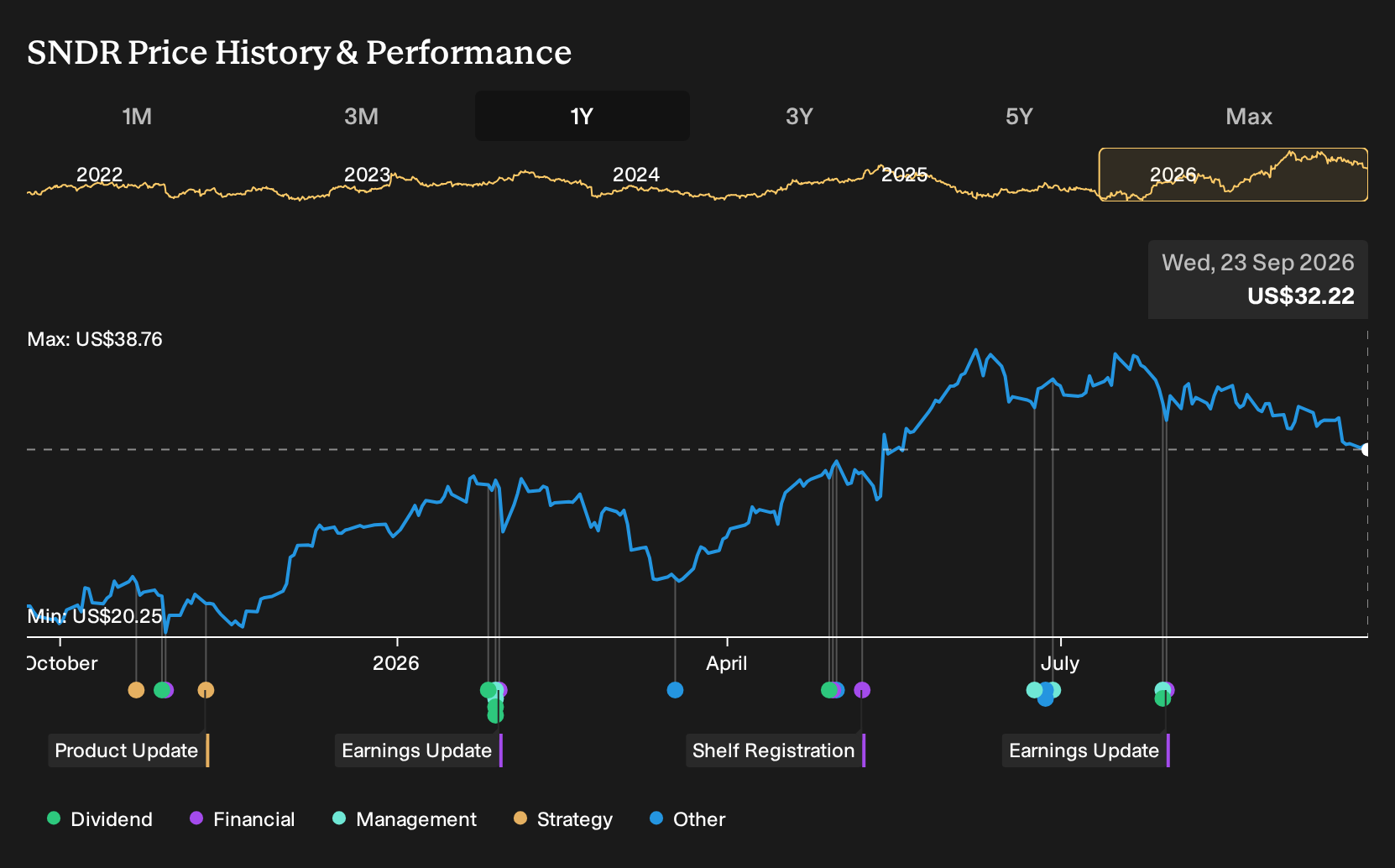
Exploring Other Perspectives
One alternate angle to watch is technology disruption. The most cautious analysts worry that automation and digital freight platforms could undercut Schneider National’s long haul model. Before this Zacks upgrade, that group was working off revenue assumptions near US$6.7b and earnings of about US$559.8m for 2029. Those expectations, while still sizable, sit inside a far more skeptical narrative about competitive pressure and long term pricing power. With USMCA talks and the new rating in play, both stories could shift. You are not short of differing viewpoints to explore.
Explore 2 other Schneider National fair value estimates, including one that suggests as much as 24% downside from the current price.
Reach Your Own Conclusion
Disagree with existing narratives? Extraordinary investment returns rarely come from following the herd, so trust your analysis and go with your instincts.
- A great starting point for your Schneider National research is our analysis highlighting 2 key rewards that could impact your investment decision.
- See our latest analysis for Schneider National. The report includes a comprehensive fundamental analysis summarized in a single visual, the Snowflake, making it easy to evaluate Schneider National's overall financial health at a glance.
Looking For More Ideas Beyond Schneider National?
If the Schneider National story has sharpened your thinking about freight, it can help to compare it with other businesses that share some of the same financial qualities. A focused screener lets you move quickly from one stock to the next while staying disciplined about balance sheets, income quality, and risk.
- For investors who care most about cushioning drawdowns, start with resilient companies that historically screen well on stability using the 31 resilient stocks with low risk scores.
- If dependable income is your priority, narrow in on businesses with higher yields and sturdier payout profiles through the 7 dividend fortresses.
- When you want quality but prefer to avoid the crowded stories, broaden your watchlist with the 16 high quality undiscovered gems.
This article by Simply Wall St is general in nature. We provide commentary based on historical data and analyst forecasts only using an unbiased methodology and our articles are not intended to be financial advice. It does not constitute a recommendation to buy or sell any stock, and does not take account of your objectives, or your financial situation. We aim to bring you long-term focused analysis driven by fundamental data. Note that our analysis may not factor in the latest price-sensitive company announcements or qualitative material. Simply Wall St has no position in any stocks mentioned.
Have feedback on this article? Concerned about the content? Get in touch with us directly. Alternatively, email editorial-team@simplywallst.com