
3 Bank Stocks Built for Higher Interest Rates
Bond markets are doing the shouting right now, with global government yields hovering near 4% and rate expectations staying “higher for longer.” That kind of backdrop can punish some areas of the share market, yet it can also quietly reward others that live off interest income and disciplined risk management. This article walks through three stocks from our Global Financials screener that appear closely tied to this rate shock, and explains why their stories deserve a closer look.
The three stocks below are a small sample of the idea. The full screen surfaced 52 more banks and insurers with equally interesting rate stories that are not covered here. To go broader and identify your own highest-conviction income and quality plays, head straight into the Global Financials – Banks and Insurance Benefiting from Higher Interest Rates screener.
First Merchants (FRME)
Overview: First Merchants is a regional commercial and consumer bank that collects interest income from loans and deposits, making earnings closely tied to higher interest rates.
Operations: The bank generates about $642 million from community banking services in the United States, with results concentrated in its regional footprint.
Market Cap: $2.55b
First Merchants offers exposure to higher-for-longer rates, with regional community banking driving interest income and a 3.7% dividend yield. However, the investment story still hinges on what happens when one unseen pressure on profit margins finally resolves.
When that margin squeeze finally clears, the DCF valuation analysis for First Merchants shows how rate sensitivity and funding costs could be pulling in different directions at the moment.
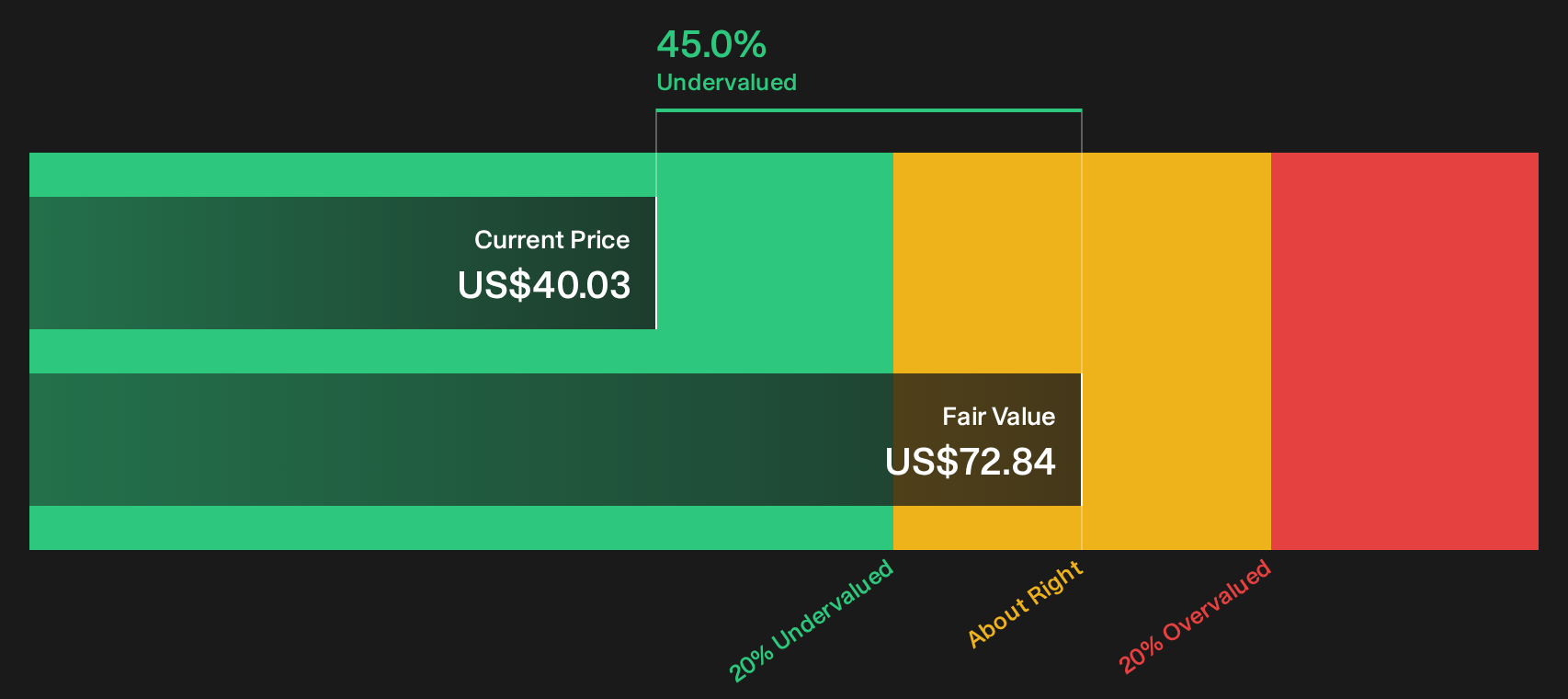
Hope Bancorp (HOPE)
Overview: Hope Bancorp is a U.S. retail and commercial bank that earns most of its money from interest on loans and deposits, tying it closely to a higher-rate world.
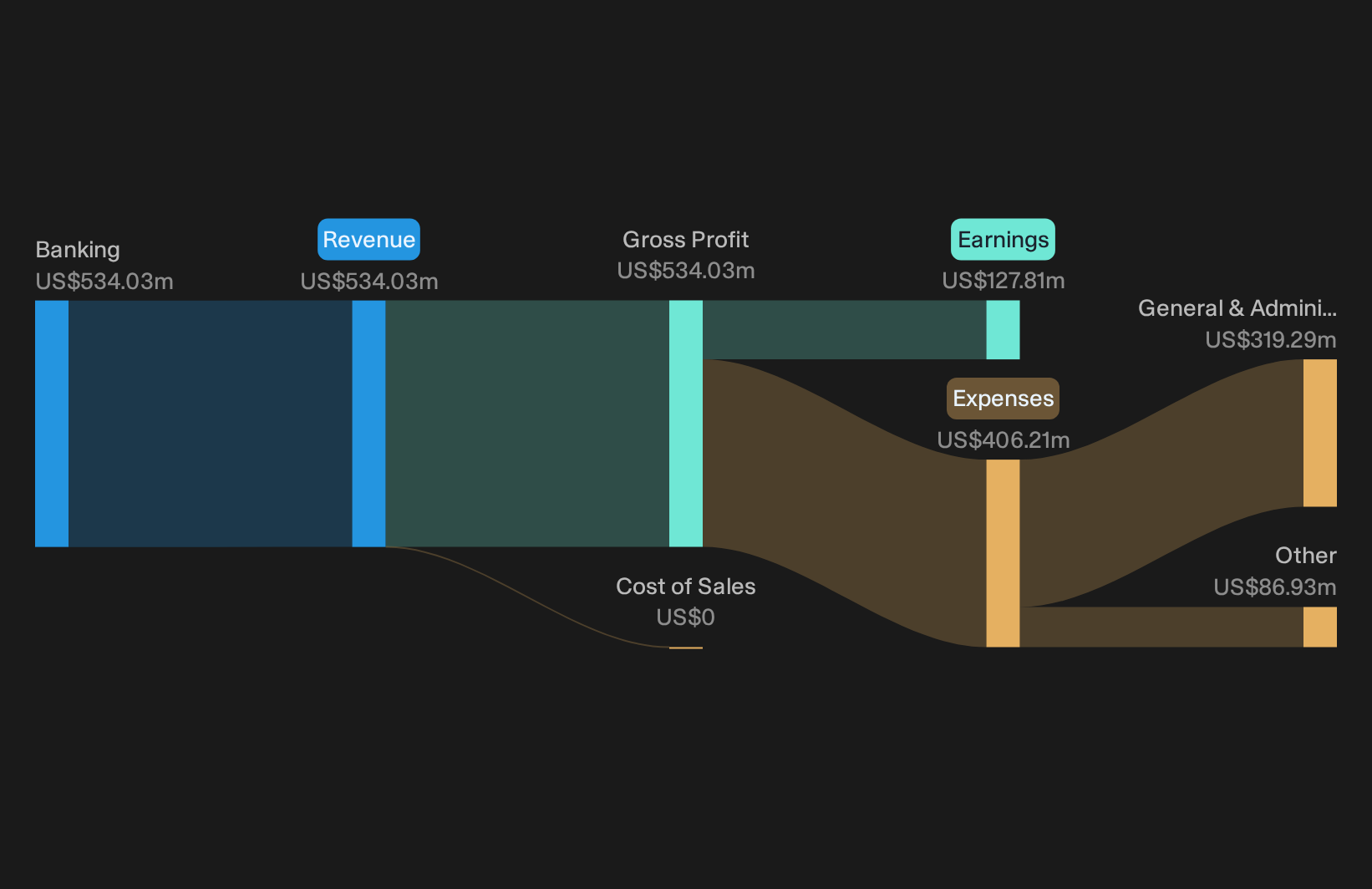
Operations: The business generates about $534 million in banking revenue, all from customers in the United States.
Market Cap: $1.76b
Hope Bancorp plugs directly into the Global Financials theme because its core engine is net interest income. A higher policy rate and wider lending spreads can feed straight into earnings rather than sitting at the edges of the business.
"Reduced exposure to higher-cost brokered deposits, an inflow of low-cost deposits from the Territorial acquisition, and the repositioning of the securities portfolio into higher-yielding assets are expected to improve net interest margin and drive higher net interest income."
What investors will really be watching is how one unresolved cost pressure shapes the gap between what Hope Bancorp pays and what it earns.
That funding gap is the real swing factor, and the full narrative for Hope Bancorp maps how changes in deposit mix, asset yields, and fee income could be masking the next move.
Bank of Queensland (ASX:BOQ)
Overview: Bank of Queensland is an Australian lender that earns most of its income from interest on retail and business banking products.
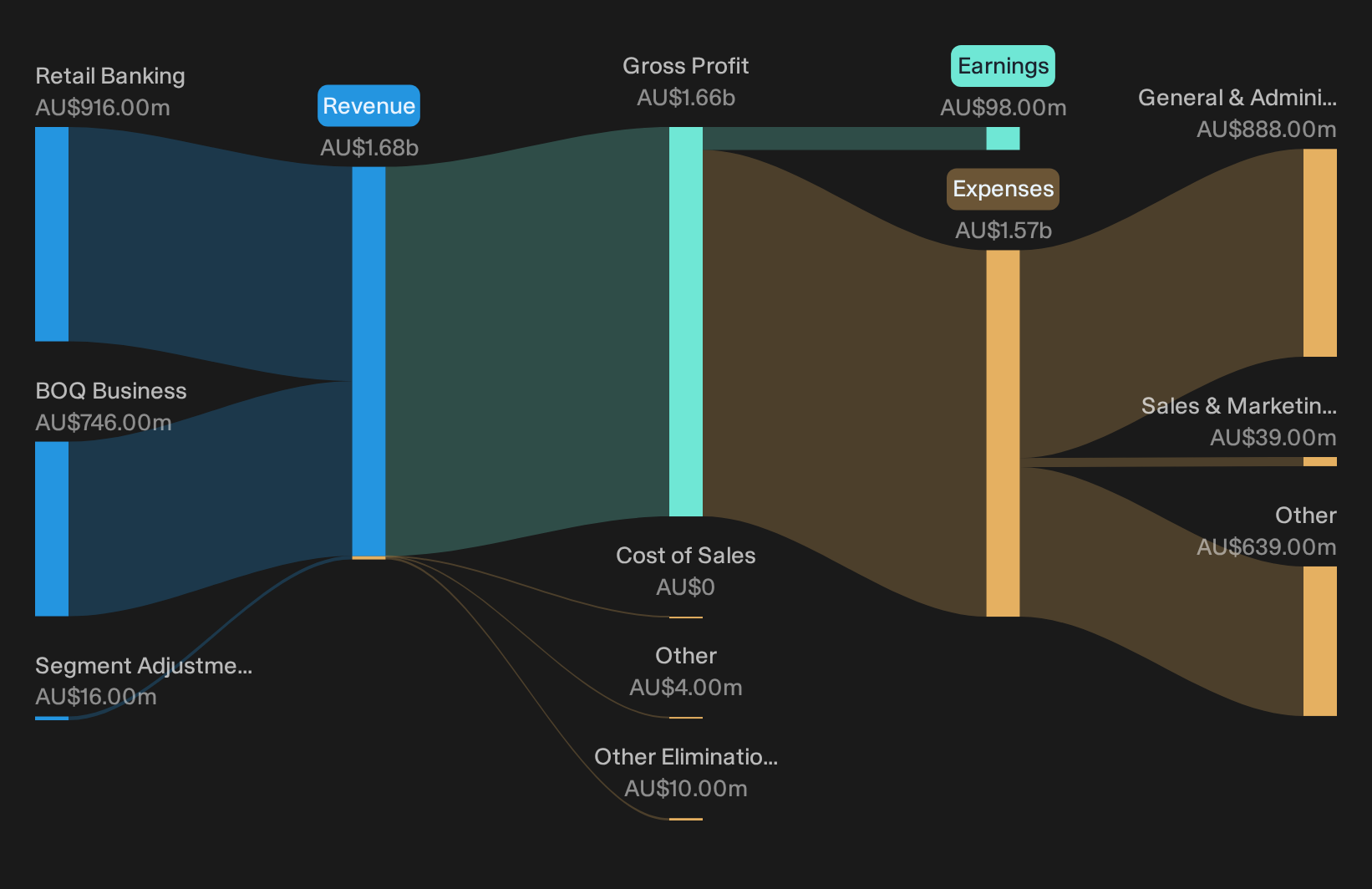
Operations: Bank of Queensland generates about A$916 million from Retail Banking and A$746 million from BOQ Business, with minor segment adjustments.
Market Cap: A$4.3b
Bank of Queensland plugs directly into the higher rate theme because its core engine is lending spreads, with earnings closely linked to what it earns on loans versus what it pays on deposits.
"The transformation of BOQ into a simpler, specialist bank with enhanced digital capabilities is expected to deliver improved customer experiences and efficiencies, which could drive higher revenue and margins."
The real test will be how one pressure on profitability plays out if funding costs, credit charges, and competition all pull in different directions.
If that profitability squeeze is what you are weighing, the full narrative for Bank of Queensland shows how Bank of Queensland’s rate sensitivity, digital overhaul and risk profile could be quietly decoupling.
Seeking Fresh Alternatives Before They Fly
Some of the sharpest breakouts start quietly, while momentum is still building and attention is elsewhere. Track fresh lists under the radar for now, and look for opportunities to enter early.
- Target stronger income resilience by scanning a curated 7 dividend fortresses that focuses on businesses aiming to keep paying investors even when markets drop.
- Look for potential exposure to automation progress with a focused group of 93 robotics and automation stocks that could benefit if factories, warehouses and homes keep getting smarter.
- Prepare for possible infrastructure-related opportunities by reviewing a filtered 39 power grid technology and infrastructure stocks that concentrates on companies tied to critical grid upgrades and reliability spending.
This article by Simply Wall St is general in nature. We provide commentary based on historical data and analyst forecasts only using an unbiased methodology and our articles are not intended to be financial advice. It does not constitute a recommendation to buy or sell any stock, and does not take account of your objectives, or your financial situation. We aim to bring you long-term focused analysis driven by fundamental data. Note that our analysis may not factor in the latest price-sensitive company announcements or qualitative material. Simply Wall St has no position in any stocks mentioned.
Have feedback on this article? Concerned about the content? Get in touch with us directly. Alternatively, email editorial-team@simplywallst.com