
Sales Slump Could Be A Game Changer For Neogen Stock (NEOG)
- Neogen, a food and animal diagnostics producer, is dealing with declining sales and a net-debt-to-EBITDA ratio of 6x. This raises questions about its financial resilience despite operating in a growing healthcare industry.
- The combination of weakening returns on capital and elevated leverage suggests that Neogen’s balance sheet is carrying more strain than its sector peers. This may be sharpening investor focus on cash generation and capital allocation discipline.
- We will look at how Neogen’s investment narrative aligns with rising balance sheet pressure from its elevated net-debt-to-EBITDA ratio.
Stress test your watchlist by comparing Neogen's balance sheet pressure with a curated 30 resilient stocks with low risk scores that may better align with the resilience you want from core holdings.
Neogen Investment Narrative Recap
To own Neogen, you need to believe that tighter food safety rules and more complex global supply chains keep demand firm for reliable testing, even while the business works through weaker sales and an elevated net-debt-to-EBITDA ratio of about 6x. In the near term, the focus is on stabilising operational performance, especially in Food Safety, so that debt appears manageable rather than constraining.
The biggest near term swing factor is execution on efficiency improvements in areas such as Petrifilm and sample collection, which directly affect gross margin and EBITDA. The key risk at the moment is that integration challenges, soft macro conditions and ongoing losses persist long enough to restrict flexibility on spending and deleveraging.
Recent portfolio moves around cleaners, disinfectants and genomics are highly relevant, even if they sit slightly to the side of the current leverage headlines. Shedding lower margin and non core lines is intended to leave Neogen more focused on food and animal diagnostics, where regulatory demand for testing is most visible.
For investors, the link to catalysts is straightforward. A cleaner scope can make it easier to see whether operational fixes at the Petrifilm facility, automation efforts and new assays on platforms such as the Molecular Detection System translate into margins, cash generation and, over time, relief on the stretched balance sheet.
Neogen's narrative projects US$896.0 million revenue and US$102.6 million earnings by 2029. This implies relatively flat yearly revenue performance and an earnings increase of about US$110.5 million from current earnings, which are a US$7.9 million loss.
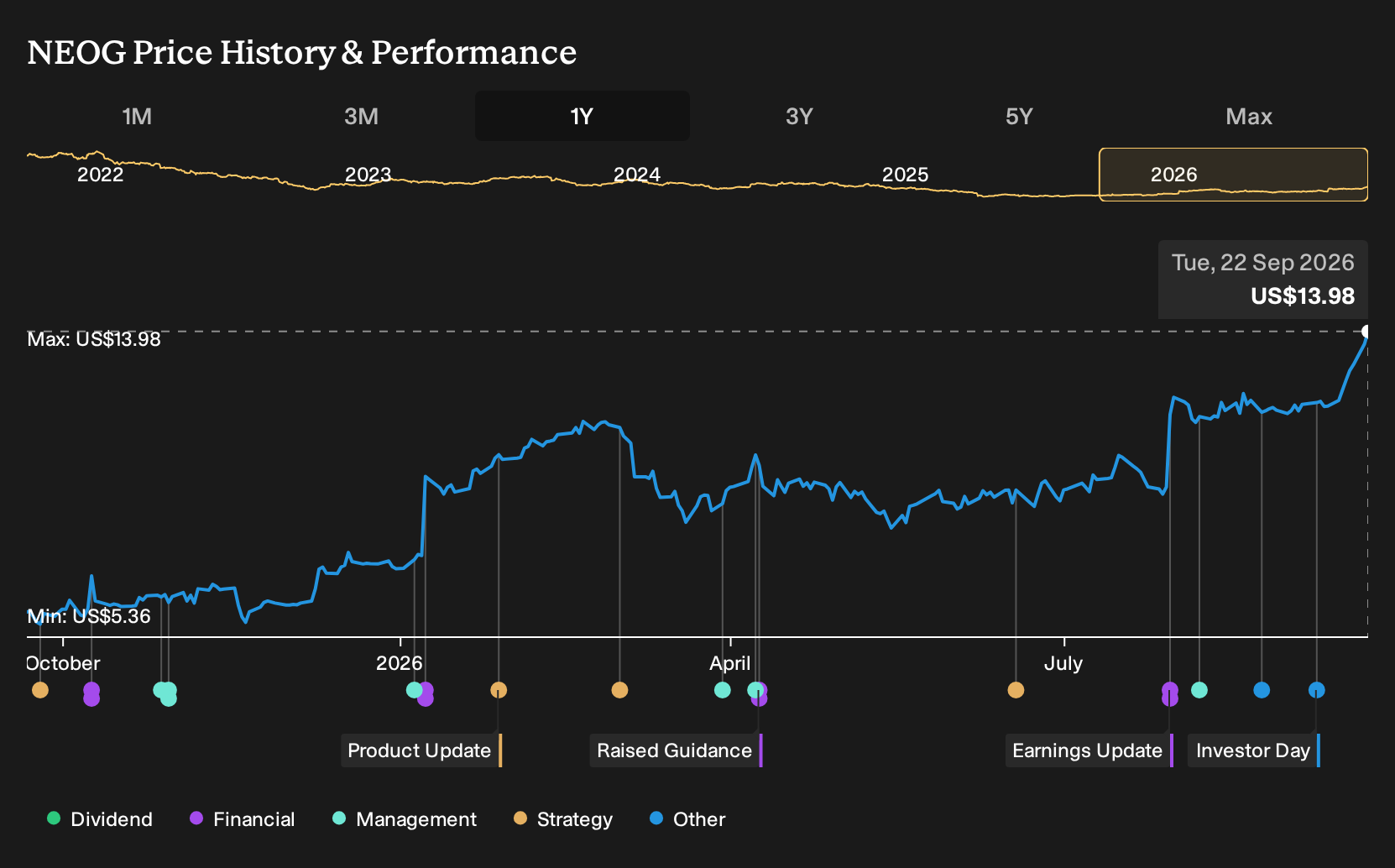
Uncover why Neogen's fair value indicates a 7% potential downside to its current price, which leaves little room for error.
Exploring Other Perspectives
For Neogen, the low end of analyst views leans heavily on regulatory risk. Those forecasters worry that tougher approval timelines and higher data privacy costs could drag on revenue, with their 2029 estimates sitting closer to US$859.0 million of sales and US$104.2 million of earnings. That is a more pessimistic setup than consensus, and both narratives were built before this latest news. You can use the gap between them as a prompt to explore several viewpoints before deciding how this update might reshape your own expectations.
Explore another Neogen fair value estimate, including an estimate that indicates up to 7% downside from the current price.
Decide For Yourself
Disagree with existing narratives? Extraordinary investment returns rarely come from following the herd, so consider trusting your own analysis and instincts.
- A great starting point for your Neogen research is our analysis highlighting 1 important warning sign that could impact your investment decision.
- See our latest analysis for Neogen. The report includes a comprehensive fundamental analysis summarized in a single visual, the Snowflake, which makes it easy to evaluate Neogen's overall financial profile at a glance.
Looking For More Investment Ideas Beyond Neogen?
If Neogen's balance sheet leaves you wanting a different risk profile, the Simply Wall St Screener can help you quickly surface other companies that better fit your preferred mix of resilience, income and upside potential.
- For investors who care most about defence and capital preservation, review a curated 30 resilient stocks with low risk scores that may better match a low volatility approach.
- If income is your priority and you want yield backed by real cash flows, focus on a hand picked 7 dividend fortresses that aim to combine payout strength with balance sheet support.
- For readers hunting for under followed quality, scan a refined 16 high quality undiscovered gems that pair solid fundamentals with relatively low market attention.
This article by Simply Wall St is general in nature. We provide commentary based on historical data and analyst forecasts only using an unbiased methodology and our articles are not intended to be financial advice. It does not constitute a recommendation to buy or sell any stock, and does not take account of your objectives, or your financial situation. We aim to bring you long-term focused analysis driven by fundamental data. Note that our analysis may not factor in the latest price-sensitive company announcements or qualitative material. Simply Wall St has no position in any stocks mentioned.
Have feedback on this article? Concerned about the content? Get in touch with us directly. Alternatively, email editorial-team@simplywallst.com