
3 Korean AI Chip Stocks Backed By Export Demand
AI chip exports from Korea are surging, volatility has cooled, and global investors are watching KOSPI heavyweights again. That mix creates a rare window where strong news flow and improving risk appetite intersect, but it can also punish the wrong stock picks quickly. This article breaks down three Korean AI semiconductor export leaders exposed to the current news cycle so you can judge which stories look more resilient and which require more caution.
The stocks covered below are just a sample from the Korean AI semiconductor export leaders that cleared the quality and risk filters. The full screen surfaced 8 more companies with equally compelling stories that are not featured in this article. To identify and analyze the highest conviction ideas right now, go straight to the Korean AI Semiconductor Export Leaders screener.
Wonik IPS (KOSDAQ:A240810)
Overview: Wonik IPS builds and installs semiconductor manufacturing equipment for front-end chip production, closely tied to Korea’s AI-focused export fabs.
Operations: The business generates about ₩942.8 billion from semiconductor equipment, with sales concentrated in South Korea at ₩647.3 billion and China at ₩267.6 billion.
Market Cap: ₩6.3 trillion
Wonik IPS is positioned within Korea’s AI hardware export drive, supplying front-end fab tools that help address AI chip production bottlenecks. The stock combines semiconductor equipment exposure with premium pricing and a high proportion of non-cash earnings. As a result, a key focus is how any change in less visible pressures on cash-backed profitability could affect the overall earnings profile.
Those cash questions make it worth studying the Wonik IPS financial health report to see whether earnings quality and balance sheet strength are moving in different directions.

TES (KOSDAQ:A095610)
Overview: TES supplies semiconductor and compound semiconductor production equipment, such as PECVD, dry cleaning, LPCVD, and OLED display tools, supporting AI chip and high-performance computing manufacturing.
Operations: TES generates about ₩405.5 billion from semiconductor manufacturing equipment, with roughly ₩357.3 billion of sales in South Korea and ₩47.9 billion in China.
Market Cap: ₩2.7 trillion
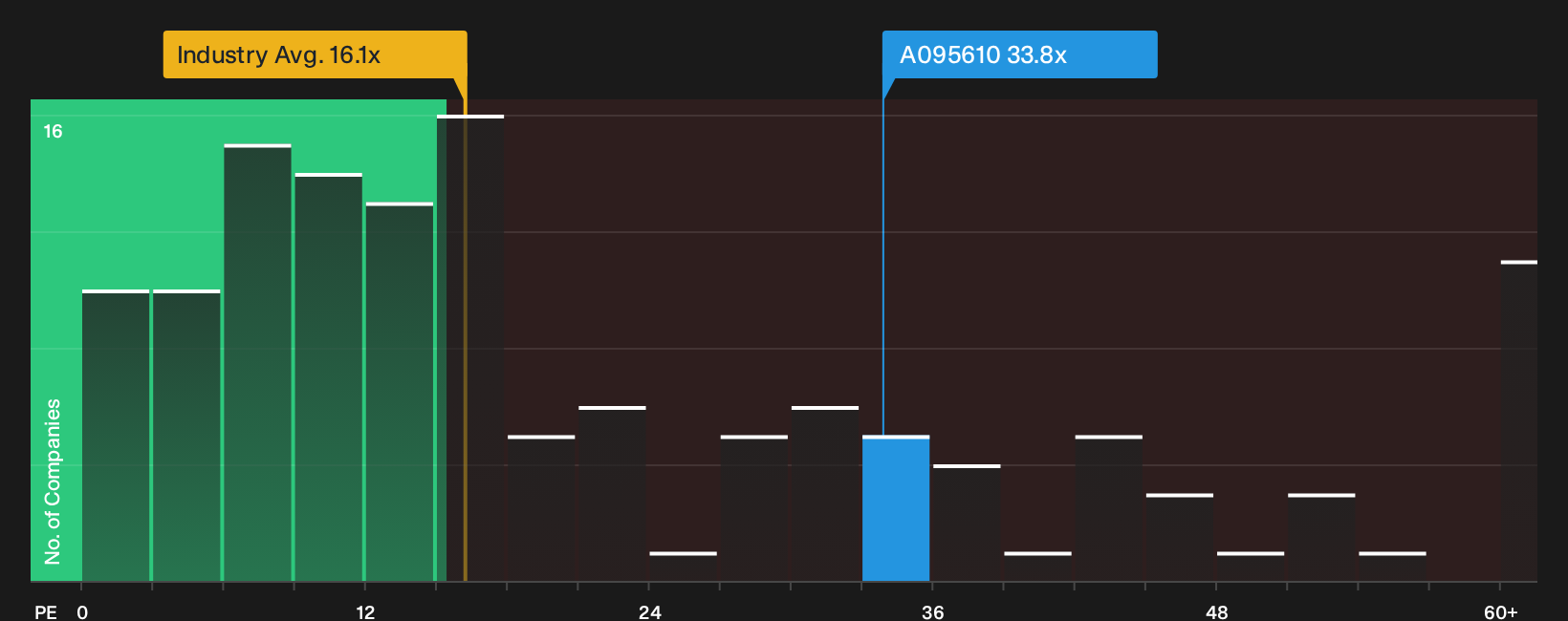
TES is closely tied to the Korean AI semiconductor export story, providing tools used to produce chips for AI workloads and high-performance computing. Earnings forecasts indicating double digit growth and recent H1 2026 profit strength suggest the company is positioned as a supplier to global capacity expansion. However, the premium P/E and share price volatility mean there is significant sensitivity to how potential pressures on future demand develop.
That sensitivity to future demand and a premium P/E makes the 2 key rewards and 1 important major warning sign a helpful way to see what the market might be missing on TES.
HANMI Semiconductor (KOSE:A042700)
Overview: HANMI Semiconductor supplies packaging, bonding, and testing equipment that helps prepare advanced AI-related chips for export across global markets.
Operations: The business generates about ₩551.3 billion from semiconductor equipment, with most sales in Asia and smaller contributions from Europe and the Americas.
Market Cap: ₩22.8 trillion
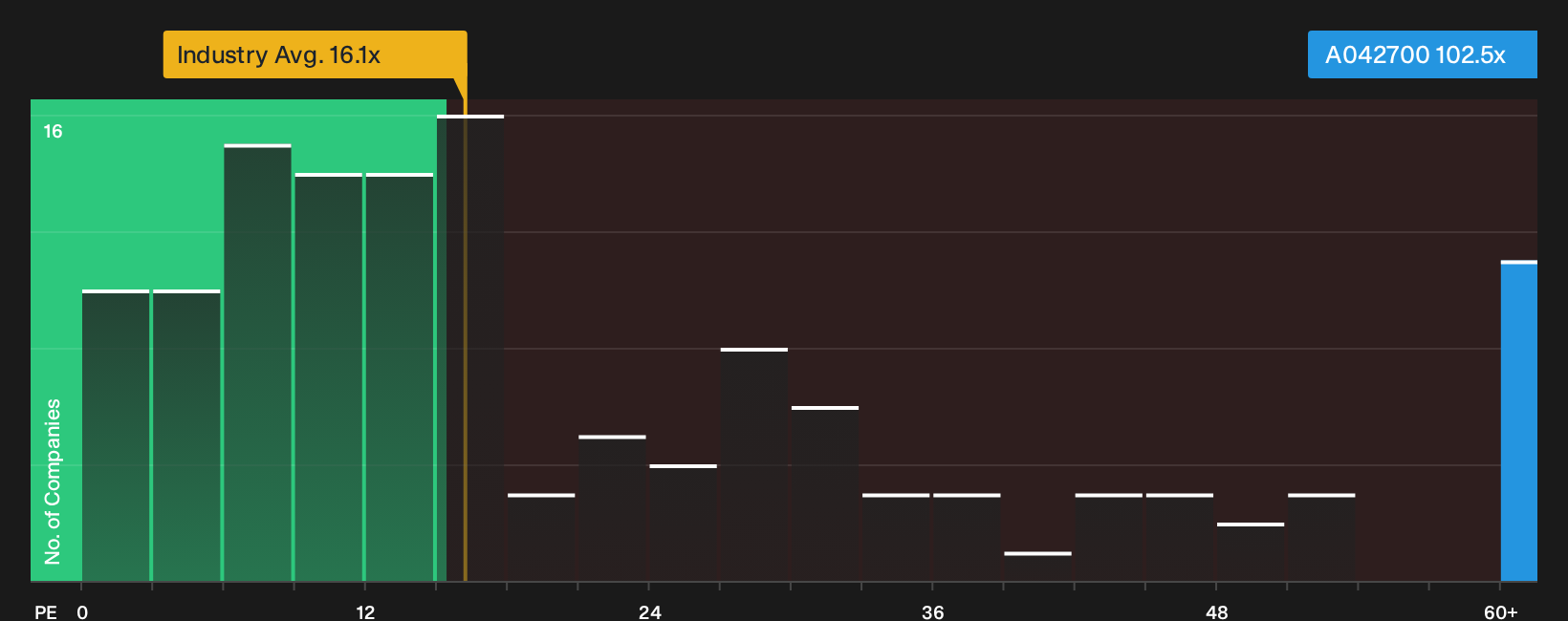
HANMI Semiconductor ties directly into the Korean AI Semiconductor Export Leaders theme through its packaging and testing tools that support advanced AI chips, with Q2 2026 net income of ₩108,430.75 million and high net margins indicating strong profitability in this niche. For investors, the appeal includes the company’s role in advanced AI chip preparation, while the rich 102.5x P/E and funding mix mean outcomes can be highly sensitive if a single key assumption does not hold.
If that single assumption wobbles, the 2 key rewards and 2 important warning signs (1 is major!) shows where valuation optimism could be masking the real pressure points.
Seeking Alternatives Before The Crowd?
Fresh themes are breaking out, momentum is building, and under the radar stories will not stay quiet for long. Scan what others miss while it matters and act now.
- Spot early-stage turnarounds before they start flying by running the curated 619 high quality undiscovered gems that highlights under-followed companies with cleaner balance sheets and improving fundamentals.
- Track powerful income ideas while yields are still elevated by scanning the curated 160 dividend fortresses focused on sturdier cash flows and payout resilience.
- Ride structural infrastructure demand instead of chasing overcrowded themes by using the hand picked 40 power grid technology and infrastructure stocks focused on grid technology and upgrade beneficiaries.
This article by Simply Wall St is general in nature. We provide commentary based on historical data and analyst forecasts only using an unbiased methodology and our articles are not intended to be financial advice. It does not constitute a recommendation to buy or sell any stock, and does not take account of your objectives, or your financial situation. We aim to bring you long-term focused analysis driven by fundamental data. Note that our analysis may not factor in the latest price-sensitive company announcements or qualitative material. Simply Wall St has no position in any stocks mentioned.
Have feedback on this article? Concerned about the content? Get in touch with us directly. Alternatively, email editorial-team@simplywallst.com