
3 Credit Insurance Stocks for Higher Rate and Default Risk Exposure
Long-term Treasury yields near 5.35% are pulling attention back to bonds and putting pressure on income-focused equities, while credit-risk and default insurance providers sit right in the crosshairs of this stress story. When borrowers feel the squeeze, demand for protection can move too, creating both potential winners and risks. This article walks through three stocks exposed to these rate and credit trends and explains why they might deserve a closer look now.
The stocks covered below are just a sample set, while the full credit-risk and default insurance screen surfaced 14 more U.S. listed insurers and guarantors with equally compelling narratives that are not discussed here. To identify and analyze the highest conviction ideas across this group, head straight to the Credit-Risk and Default Insurance Providers screener.
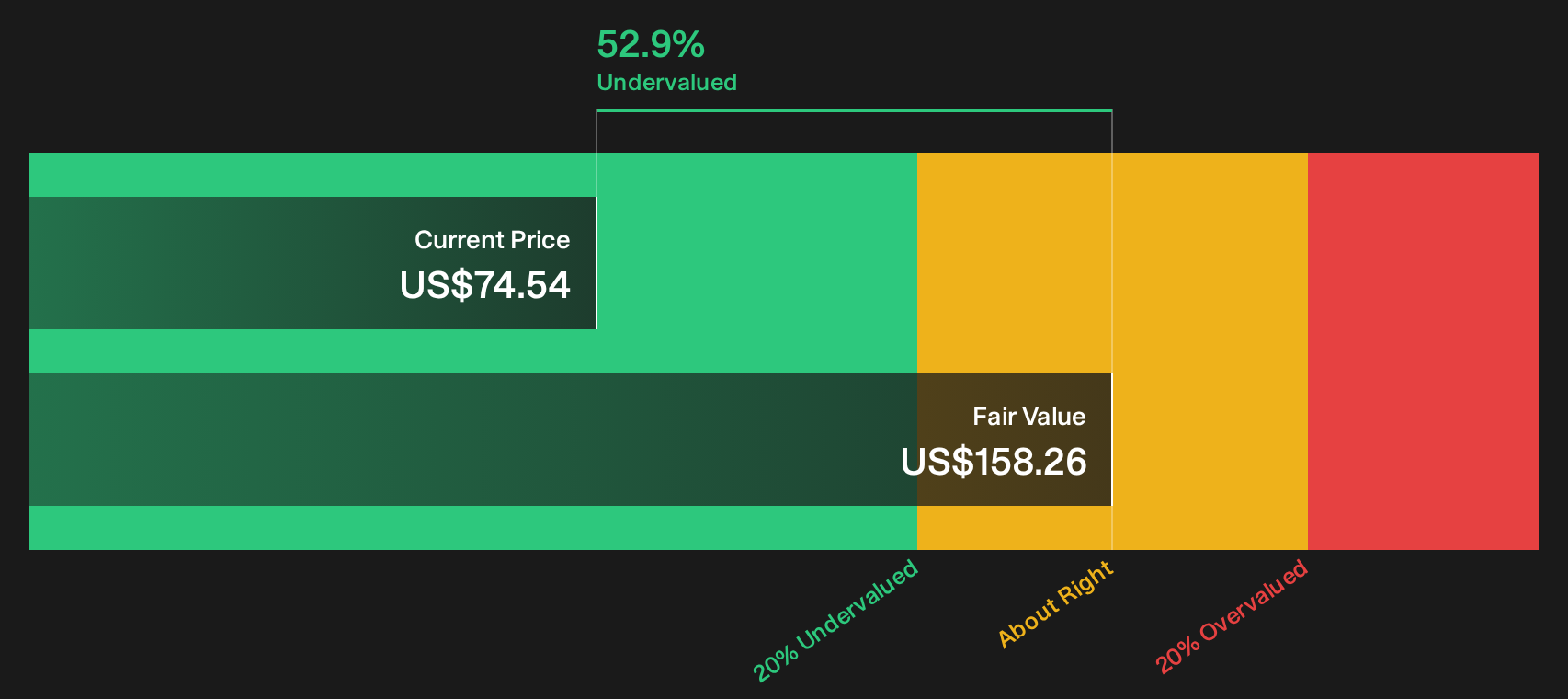
American International Group (AIG)
Overview: American International Group is a large global insurer providing commercial, credit related, and personal insurance products plus investment activities.
Operations: AIG generates most revenue from General Insurance in North America at about US$8.9b, International at roughly US$8.9b, and Global Personal near US$6.5b.
Market Cap: US$39.4b
American International Group connects cleanly to the credit risk theme through financial lines, trade credit, and political risk coverage that respond directly to rising default concerns. Investors get exposure to a diversified insurer with credit related products, a dividend, and current earnings expectations. The key point for investors is how pricing power for those protections might behave if one unseen pressure keeps building.
If that pressure is building faster than headlines suggest, start with the DCF valuation analysis for American International Group to see whether current pricing fully reflects AIG’s credit risk leverage.
MBIA (MBI)
Overview: MBIA provides financial guarantee insurance on U.S. municipal and global public finance bonds, directly insuring against credit risk and potential defaults.
Operations: MBIA reports US$86 million from U.S. Public Finance Insurance and US$64 million from the Corporate segment, partly offset by eliminations and smaller items.
Market Cap: US$224 million
MBIA lives and breathes the credit risk theme because its entire model revolves around insuring municipal and structured finance borrowers when investors worry about repayment.
"The runoff of National's insured portfolio, with gross par declining to about $23.2 billion and leverage already at 23 to 1, limits opportunities to grow new premium volume and is expected to cap future revenue expansion even as legacy risks normalize."
What ultimately matters for MBIA is how one unresolved pressure shapes the balance between shrinking exposure and the value assigned to remaining guarantees.
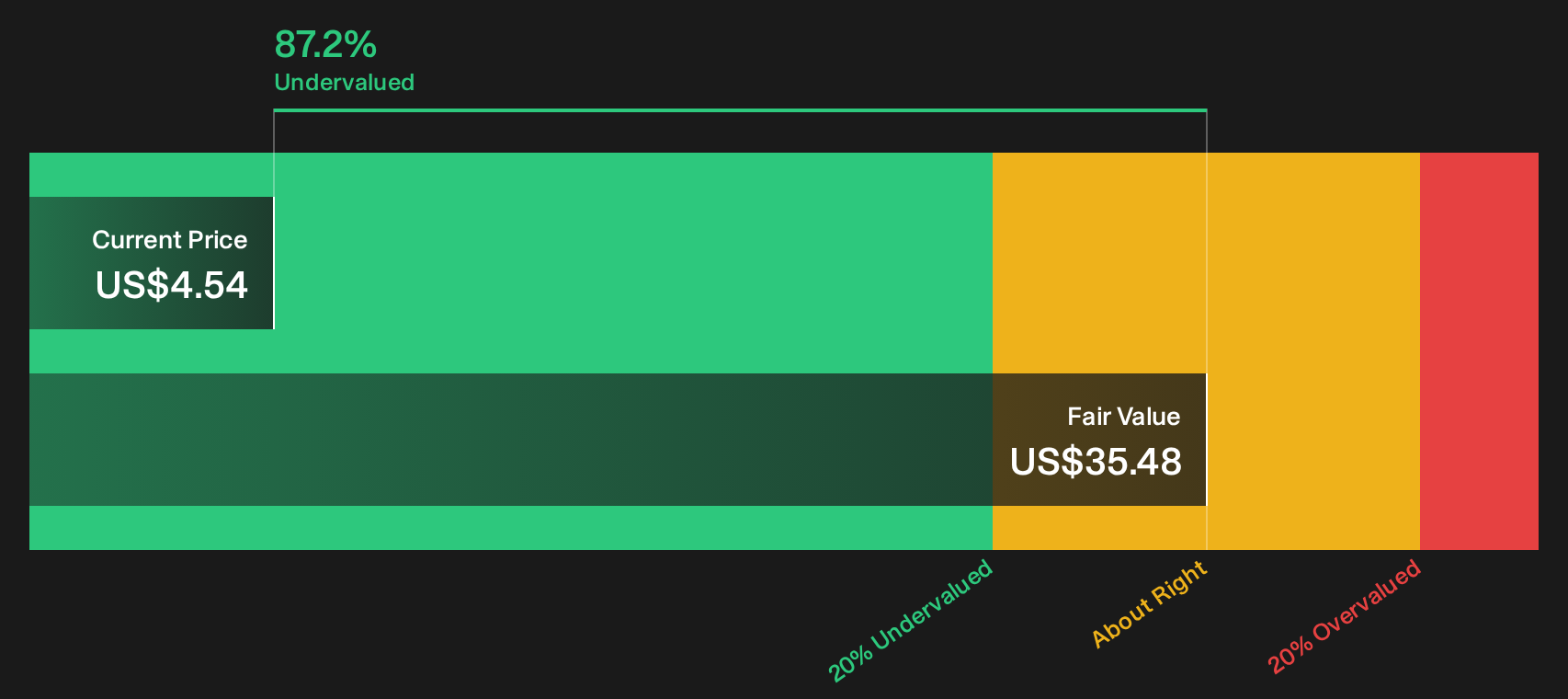
That unresolved pressure is exactly why the full narrative for MBIA digs into how MBIA’s runoff, leverage and credit spreads could be masking upside optionality.
Assured Guaranty (AGO)
Overview: Assured Guaranty provides credit insurance on public finance and structured finance debt, giving investors protection against missed interest and principal payments.
Operations: Assured Guaranty generates most revenue from Financial Guaranty at US$813 million, with US$126 million from Asset Management and smaller contributions elsewhere.
Market Cap: US$3.1b
Assured Guaranty is one of the clearest pure plays on the credit-risk and default insurance theme. It sits directly between yield-hungry bond buyers and issuers looking to keep funding costs in check as long-term rates and credit spreads move.
"The consolidation of their insurance subsidiaries into Assured Guaranty Inc. is expected to create a more efficient capital structure, leading to higher profitability and improved net margins due to the increased diversification and larger capital base."
What happens to those margins if one key pressure in the credit markets keeps building faster than most issuers are prepared for?
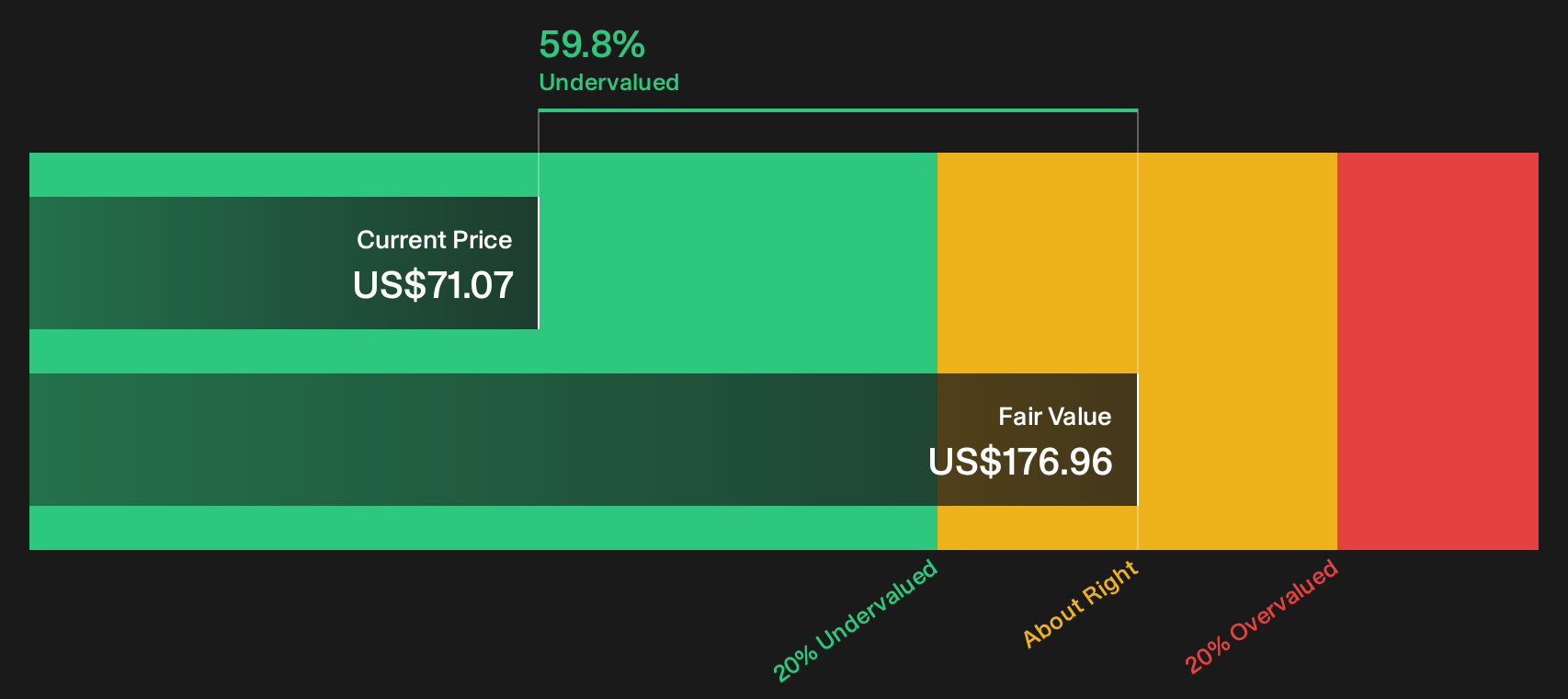
If that pressure keeps climbing, read the full narrative for Assured Guaranty to see how Assured Guaranty’s capital structure, credit exposure, and equity story could be quietly decoupling.
Seeking Alternatives Before Momentum Flies
Fresh opportunities move fast. Some are already breaking out, others building quiet momentum while attention stays elsewhere. Review these curated ideas before the crowd catches on.
- Identify income workhorses with potential staying power by scanning the curated 7 dividend fortresses before yields change or market attention shifts.
- Explore companies that may support AI workloads by taking a focused pass through 87 AI infrastructure stocks while these enablers remain less widely followed.
- Consider the evolving energy landscape by reviewing the hand picked 19 nuclear energy infrastructure stocks before interest from momentum traders potentially increases.
This article by Simply Wall St is general in nature. We provide commentary based on historical data and analyst forecasts only using an unbiased methodology and our articles are not intended to be financial advice. It does not constitute a recommendation to buy or sell any stock, and does not take account of your objectives, or your financial situation. We aim to bring you long-term focused analysis driven by fundamental data. Note that our analysis may not factor in the latest price-sensitive company announcements or qualitative material. Simply Wall St has no position in any stocks mentioned.
Have feedback on this article? Concerned about the content? Get in touch with us directly. Alternatively, email editorial-team@simplywallst.com