
APLD’s 250MW Question: The Deal That Could Unlock Applied Digital Stock’s Next Leg Up
Applied Digital (APLD) has undergone a significant business transformation in less than four years. The company has moved from hosting infrastructure for Bitcoin miners to operating a vertically integrated AI data center business. Along the way, it has also cut its construction timelines in half, bringing them down from roughly 24 months to around 12 months.
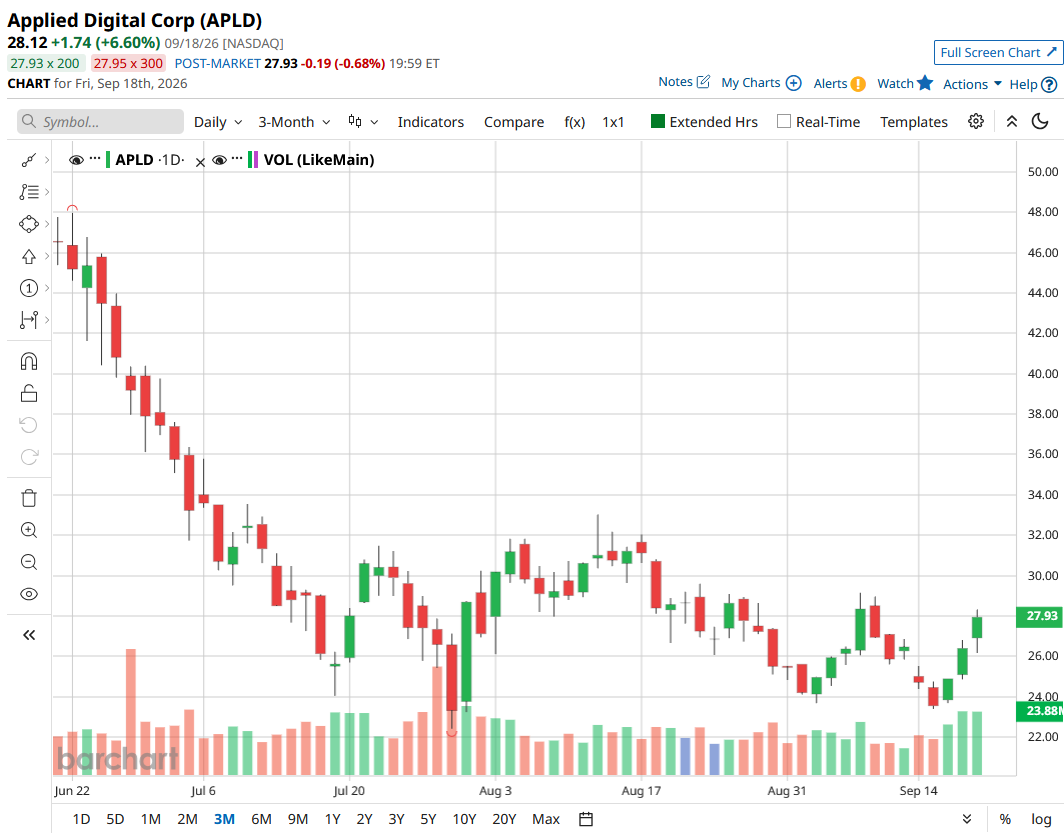
So why isn’t APLD stock performing well? The biggest risks to Applied Digital’s growth may come from the practical challenges of scaling its data center business. CEO Wesley Cummins, on the previous earnings call, identified supply chain management and power availability as the company’s two biggest constraints. There are also concerns around pricing and the broader market environment.
The key question from here is whether the 250 megawatts currently under advanced discussions ultimately become contracted capacity. If Applied Digital successfully closes those deals, the additional leases could significantly expand its already sizable backlog and add further visibility to future growth. It will also address a lot of concerns surrounding the execution risk, which is what’s keeping the stock down in part.
About Applied Digital Stock
Applied Digital designs, develops, and operates digital infrastructure solutions, pivoting successfully from being a blockchain company to an AI infrastructure company. It operates through three segments: Data Center Hosting, Cloud Services, and HPC Hosting. The company is headquartered in Dallas, Texas.
The stock posted incredible gains in 2025 but has been flat so far this year. Its one-year returns stand at 15%, which is hardly anything to talk about considering the extreme volatility its shareholders have experienced during this time.
From Bitcoin Miner to AI Infrastructure Powerhouse
The switch to artificial intelligence is showing up clearly in the company’s financial performance. During the second quarter of 2026, Applied Digital generated $258.7 million in revenue, up 407% from the same quarter last year. The figure was also around $163.38 million above Wall Street’s consensus estimates. For the full fiscal year, revenue came in at $611.3 million, up 167% from the previous year.
But the strongest evidence of the transformation may be Applied Digital’s contracted backlog rather than the quarterly revenue figure. The company now has approximately $36 billion in total contracted long-term lease value spread across five campuses. These contracts represent around 1.41 gigawatts of contracted critical IT load. That backlog is supported by 15-year take-or-pay leases with Oracle (ORCL), CoreWeave (CRWV), and at least one additional investment-grade U.S. hyperscaler. Long-term contracted revenue at this scale is uncommon in such an early-stage industry. The business is also supported by strategic partners such as Nvidia (NVDA), which owns a stake in Applied Digital, and ABB, as well as financing from Macquarie Asset Management.
Where the results became more interesting was in the margin data. High-performance computing net operating income posted a 91% margin, exceeding the company’s own guidance for the mid-80% range. That brings the economics of Applied Digital’s lease business closer to the levels seen among its publicly traded peers. It also raises the possibility that the company’s underlying contracts are stronger than management’s previous guidance.
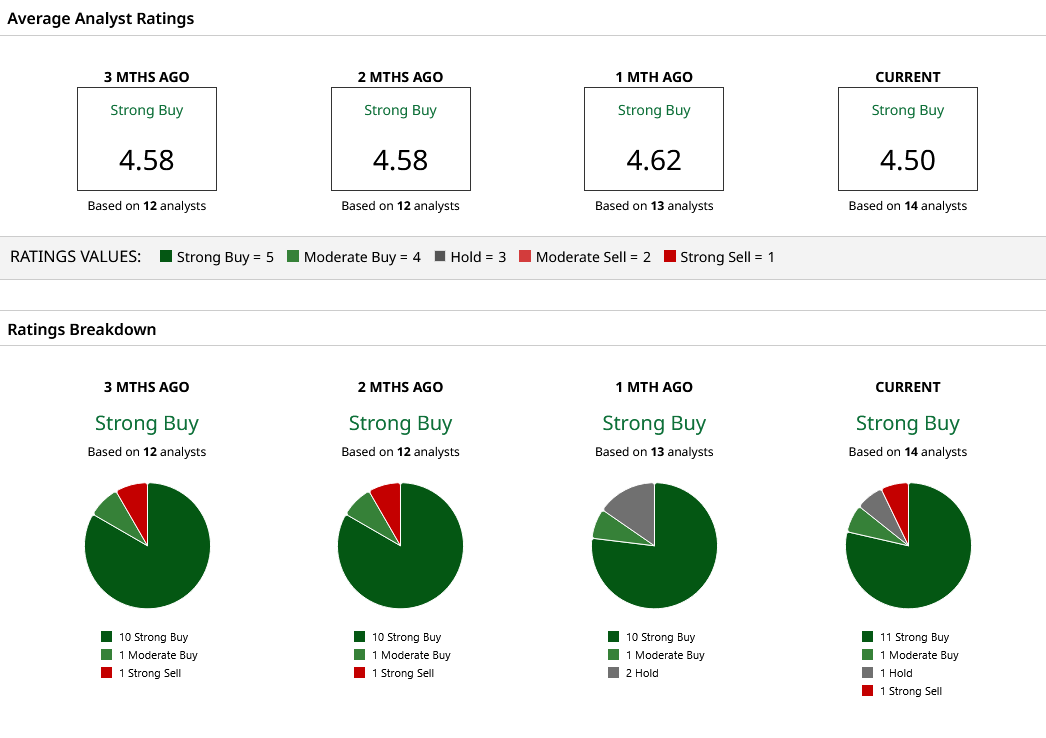
Analysts Aren’t As Bullish As Before On Applied Digital Stock
Northland Securities’ Michael Grondahl has pointed to lower yields on new deals. At the broader market level, Craig-Hallum’s George Sutton said investors remain cautious relative to AI, showing that Applied Digital can face pressure from sector-wide sentiment even if the company continues executing well.
The stock currently has a mean target price of $67.89. This suggests upside potential of 141%, which sounds too good to be true. The reasons are exactly what Northland Securities and Craig-Hallum pointed out.
On the date of publication, Jabran Kundi did not have (either directly or indirectly) positions in any of the securities mentioned in this article. All information and data in this article is solely for informational purposes. For more information please view the Barchart Disclosure Policy here.