
3 Japanese Insider Owned Growth Stocks To Own In September 2026
US Federal Reserve officials are openly warning that fighting stubborn inflation could be painful, with higher interest rates raising the bar for weaker businesses. Japanese growth stocks where insiders own a lot of shares can look interesting in this kind of market because management is heavily exposed to the same risks as outside investors. This article highlights three such fast growing Japanese companies from our screener and explains what makes each one worth a closer look.
The three stocks below are just a sample from this growth and insider-ownership theme, with the full screen surfacing 100 more Japanese companies where management has a meaningful stake and the investment story is just as compelling. To go beyond this short list, head straight into the Fast Growing Stocks With High Insider Ownership screener to identify, filter, and analyze the highest-conviction ideas that best match your own risk profile.
Round One (TSE:4680)
Overview: Round One operates multi entertainment centers across Japan, combining bowling, arcade games, karaoke, billiards, and Spo Cha under one roof, with expansion plans central to its growth outlook.
Market Cap: ¥310.8b
Round One links closely to the Fast Growing Stocks With High Insider Ownership theme through its Japan focused roll out of multi entertainment complexes and related same store sales efforts. The company has reported 35.7% annual earnings growth over 5 years and valuation metrics that sit below many peers. Future returns hinge on how one pressure point in its profitability mix plays out.
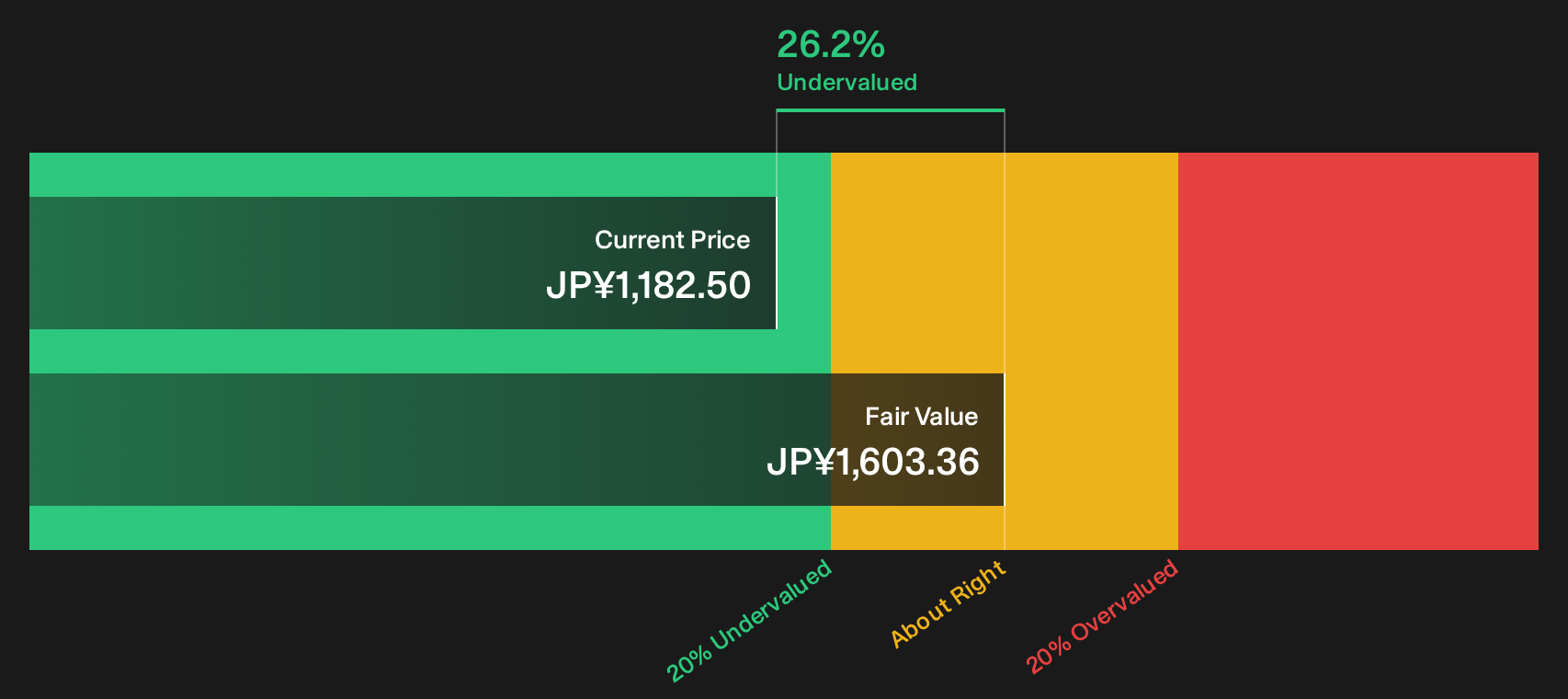
That profitability pressure point is exactly what shows up when you run the numbers through the DCF valuation analysis for Round One, which can reveal whether growth is masking strain.
Micronics Japan (TSE:6871)
Overview: Micronics Japan develops and sells semiconductor probe cards and related testing equipment, along with body measuring and LCD inspection devices worldwide.
Operations: The business generates about ¥84.9b from probe cards and ¥1.4b from TE equipment, with sales concentrated in South Korea and Taiwan.
Market Cap: ¥519.1b
Micronics Japan’s probe card line has expanded rapidly, with net margins around 21.7%, and the company has raised its 2026 guidance. These factors support the screener’s focus on growth and insider alignment. Earnings and revenue forecasts above 20% a year are consistent with this view, although outcomes will depend on how pressure in memory semiconductor demand affects its order book over time.
That pressure on future orders is exactly why a closer read of the 2 key rewards and 1 important major warning sign can highlight where Micronics Japan’s growth story could accelerate or stall.

Rakuten Group (TSE:4755)
Overview: Rakuten Group runs a broad online ecosystem spanning e-commerce, cashless payments, digital banking, content, and mobile services in Japan and overseas.
Operations: The group generates about ¥1.40t from Internet Services, ¥1.09t from FinTech, and ¥513b from Mobile, after internal eliminations.
Market Cap: ¥1.55t
Rakuten Group matters for this screener because its FinTech arm, from Rakuten Pay to Rakuten Bank, is where management is clearly leaning in to pursue faster growth that aligns insider ownership with a scaled cashless ecosystem.
"AI-driven operational efficiencies, targeting a 31% reduction in customer support costs, are anticipated to improve net margins by boosting profitability across Rakuten's operational segments."
The key issue now is how one unresolved pressure in the broader mobile and ecosystem economics affects that improving earnings picture.
That unresolved pressure makes it even more important to read the full narrative for Rakuten Group to see how Rakuten Group’s ecosystem economics could be accelerating beneath the surface.

Seeking Fresh Alternatives Before Others?
Fresh opportunities do not wait. Momentum shifts, early data gets priced in, and under the radar for now ideas get caught quickly. Scan what others miss and get in early.
- Spot established cash generators before the crowd starts chasing yield by scanning this curated 14 dividend fortresses that focuses on durable payouts and resilient cash flows.
- Hunt for quality at a discount by running through a hand picked 17 high quality undervalued stocks that pairs robust fundamentals with prices that still look reasonable.
- Track the next wave of automation by reviewing a focused 95 robotics and automation stocks built around companies tied to real world robotics and factory efficiency trends.
This article by Simply Wall St is general in nature. We provide commentary based on historical data and analyst forecasts only using an unbiased methodology and our articles are not intended to be financial advice. It does not constitute a recommendation to buy or sell any stock, and does not take account of your objectives, or your financial situation. We aim to bring you long-term focused analysis driven by fundamental data. Note that our analysis may not factor in the latest price-sensitive company announcements or qualitative material. Simply Wall St has no position in any stocks mentioned.
Have feedback on this article? Concerned about the content? Get in touch with us directly. Alternatively, email editorial-team@simplywallst.com