
Grain Traders Are Focusing on the Trump-Xi Meeting Later This Week as Soybean Prices Rebound
The grain markets rallied early Monday as bulls are encouraged by reports of fresh China purchases of U.S. soybeans and by positive comments from U.S. and Chinese officials ahead of the late-week summit between Presidents Donald Trump and Xi Jinping. Wheat markets got further support from the Russia-Ukraine war still running hot, which is disrupting grain shipments out of the Black Sea region.
China bought more U.S. soybeans ahead of the Trump-Xi meeting, a sign of further progress toward Beijing’s pledge to boost purchases of American farm goods, Bloomberg reported overnight.
“State-owned firms booked at least four cargoes — or about 260,000 tons — of U.S. soybeans late last week, said traders with knowledge of the deals. The supplies are mainly for loading in December and January from the Pacific Northwest and the U.S. Gulf, they said, asking not to be named as they weren’t authorized to talk to the media.”
Earlier this month, China passed the halfway mark of a pledge to buy at least 25 million tons of U.S. soybeans annually through 2028.
Soybeans Hovering Not Far Below This Year’s Highs
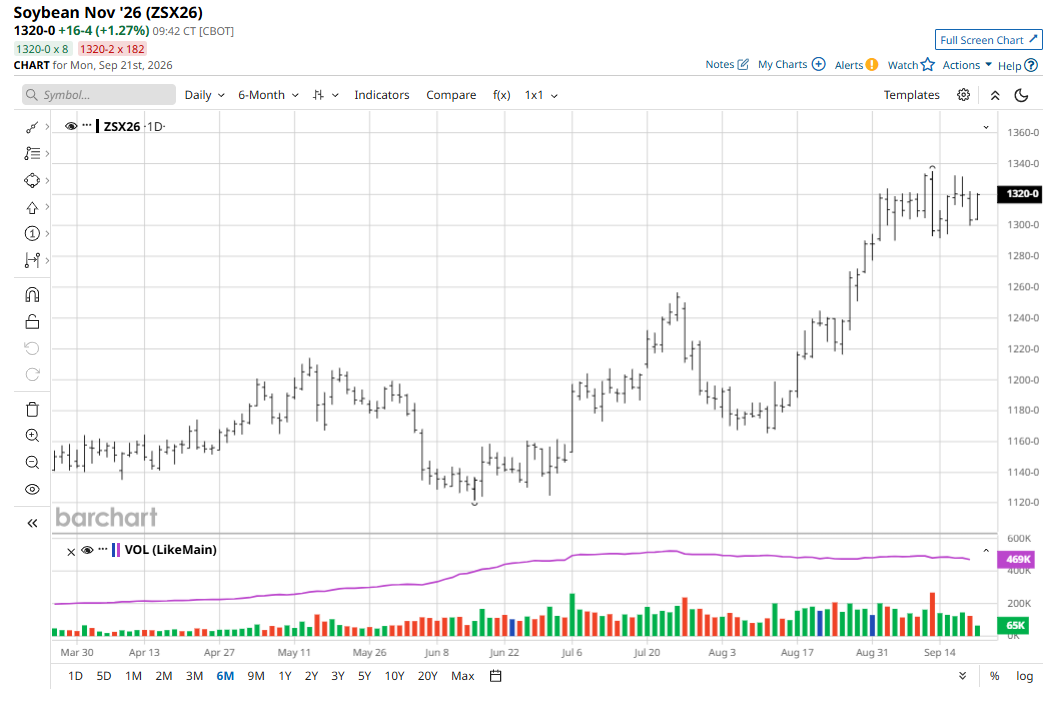
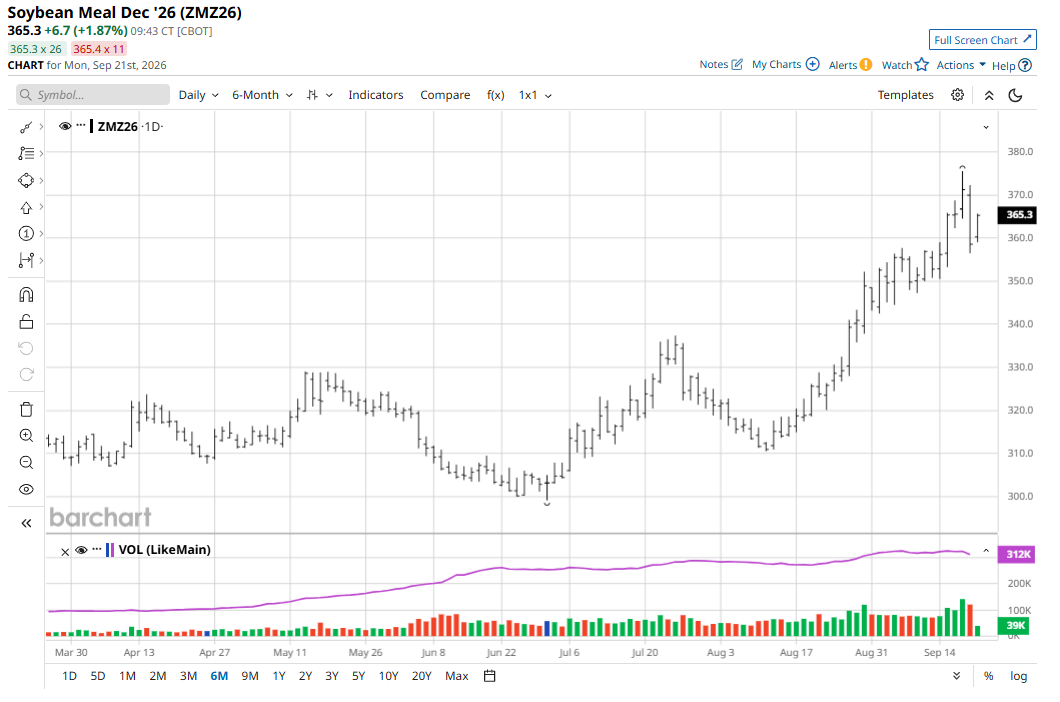
The soybean (ZSX26) and meal (ZMZ26) futures markets rebounded early today following the overnight reports of China buying more U.S. soybeans. On Friday, profit-taking pressure and weak long liquidation, led by meal, had taken prices lower. Veteran traders had a good idea that meal had come too far, too fast, and was due for a solid down day like Friday. Both soybean and meal futures markets are presently hovering near their highs for the year.
Domestic Soybean Crushing Remains Strong
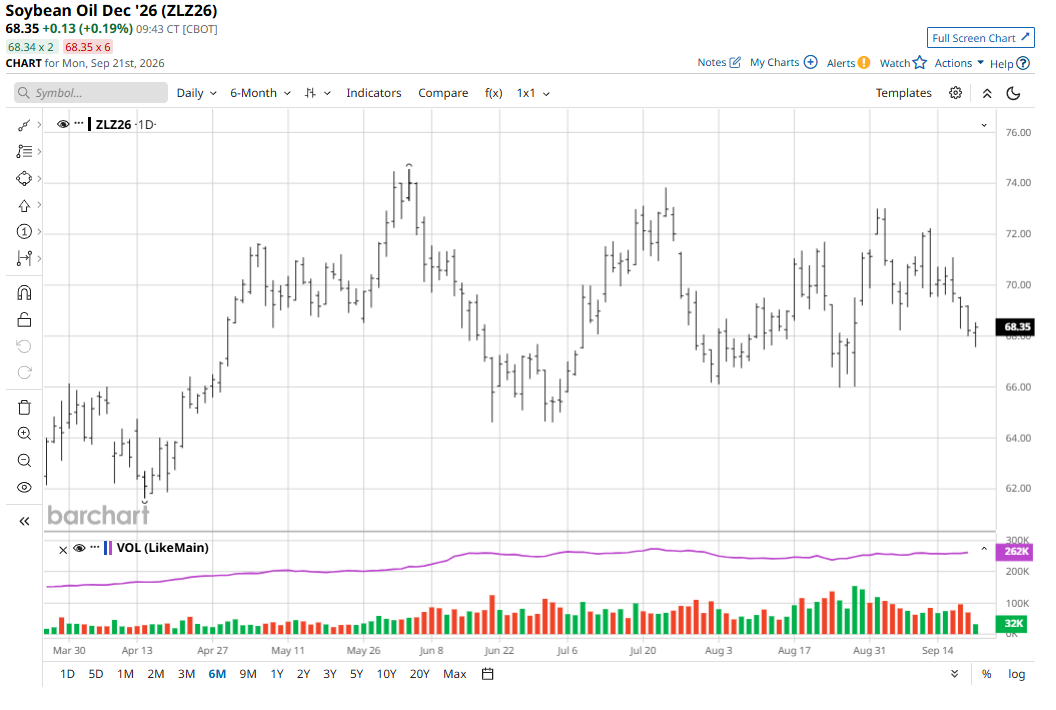
The National Oilseed Processors Association (NOPA) last week reported its crush in August hit a record for the month. Crush use fell to an 11-month low in August but still hit a record for the month. NOPA handles around 98% of total U.S. crush and said members crushed a record 205.456 million bushels in August, up 8.2% from last year’s record. While crush was still up from the previous year, the month-over-month drop could result in marginally tighter supplies in the near term. Soyoil stocks fell to 1.201 billion pounds, down 11.7% from end of July stocks and the tightest supply since November 2024. The strong domestic crush pace is likely to at least keep a floor under the soybean market heading into the end of the year.
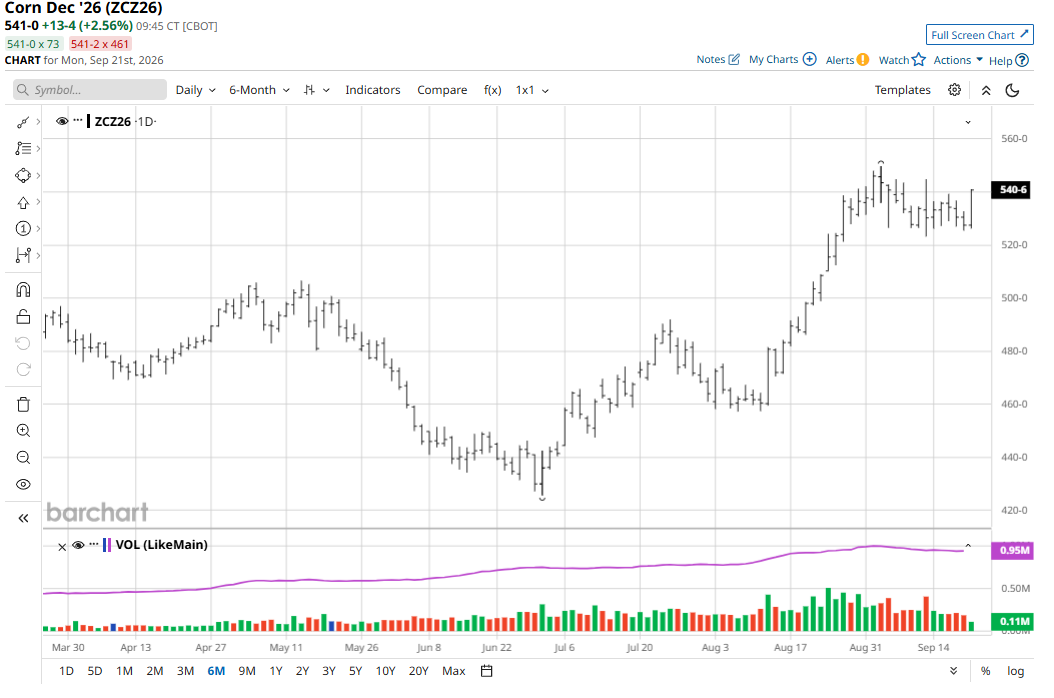
Corn Remains in Choppy Trading Range at Higher Price Levels; Hedge Selling on Deck
Heavy rains over parts of the Corn Belt the past couple weeks have slowed down early harvesting of corn (ZCZ26) and soybeans. However, extended cooler and drier weather for the Midwest is forecast starting at mid-week, which will allow combines to get into the fields.
Harvest-Related Farmer Selling Will Hit Corn, Soybean Markets Soon
Harvesting and commercial hedge pressure will ramp up in the coming weeks, which will add selling pressure in both corn and soybean futures and could cap any demand-oriented price rallies. Ongoing uncertainties regarding the Black Sea and Sea of Azov grain shipments will remain market-sensitive for all the grains into at least the end of this year. Such could limit the downside for corn. Those export risks are compounded by already reduced supplies in the European Union after a severe drought in western Europe this growing season. There is also concern that a strengthening El Niño could trim output in key Southern Hemisphere grain regions later this year.
Grain traders will keep watching the weekly USDA crop progress reports on Monday afternoons.
Black Sea Shipping Constraints Keep Winter Wheat Futures Prices Elevated
Winter wheat futures also rallied overnight. The Russia-Ukraine war that is destroying shipping and grain infrastructure in both countries shows no signs of a stoppage. Over the weekend, a Moscow oil refinery was hit during drone attacks that were part of the largest overnight Ukrainian barrage this year. The refinery strike was the latest indication that neither Ukraine nor Russia has any intent to de-escalate.
December soft red winter (ZWZ26) and hard red winter wheat (KEZ26) futures both see fledgling price downtrends in place on the daily bar charts, which will keep the chart-based speculators wanting to play the short sides. The recently strong U.S. dollar ($DXY) on the foreign exchange market is also a bearish element for not only wheat, but also for corn and soybeans. The stronger greenback makes U.S. grains more expensive to purchase in non-U.S. currency on the world trade markets. Most global grain trade is conducted in U.S. dollars.
The next major data dump for hard red spring wheat (KWZ26) will come at the end of the month in the USDA Small Grains Summary, which includes a detailed breakdown of wheat production by class.
Let me know what you think! I enjoy hearing from my valued Barchart readers worldwide. And I answer all your emails. Email me at jim@jimwyckoff.com.
On the date of publication, Jim Wyckoff did not have (either directly or indirectly) positions in any of the securities mentioned in this article. All information and data in this article is solely for informational purposes. For more information please view the Barchart Disclosure Policy here.