
Does LNG Equipment Order Change The Bull Case For Baker Hughes (BKR)?
- Baker Hughes reported a large order to supply 13 Frame 5/2E gas turbine driven gas compression systems and modular liquefaction blocks, including cold boxes, for Venture Global’s Cloud Connector Pipeline and Plaquemines LNG expansion in Louisiana, supporting more than 100 MTPA of existing and planned LNG capacity.
- The deal deepens Baker Hughes’ role across the LNG value chain by pairing pipeline feed gas compression with electric motor driven SMR liquefaction modules, air coolers and integrated controls. This ties its equipment into both upstream gas transportation and downstream liquefaction infrastructure.
- We will now examine how Baker Hughes’ broader investment narrative could be influenced by this large Plaquemines LNG compression and liquefaction order.
Scan beyond Baker Hughes and this LNG build out by reviewing the hand picked 38 power grid technology and infrastructure stocks that could also benefit from large scale energy infrastructure spending.
Baker Hughes Investment Narrative Recap
To own Baker Hughes, you need to believe in its push toward gas technology, LNG infrastructure and industrial energy solutions as a long run earnings engine, even while it remains tied to upstream spending cycles. The Plaquemines and Cloud Connector order feeds directly into that thesis by adding long duration equipment exposure to liquefaction and feed gas compression.
For the near term, the key swing factor is execution on the IET backlog while protecting margins against tariffs, input costs and customer pricing pressure. The biggest risk stays the same. Heavy exposure to hydrocarbons means any faster policy shift toward renewables or tighter ESG rules could curb LNG and gas infrastructure demand.
The large Plaquemines and Cloud Connector award is the clearest recent data point for Baker Hughes right now. It reinforces how much of the investment case leans on securing complex LNG and gas tech packages that can support backlog, recurring service work and utilization of the industrial equipment footprint over many years.
That same order also underlines the risk side. A portfolio that leans into LNG, gas compression and related equipment is sensitive to trade policy, steel and metals costs and permitting outcomes for large US projects. Your assessment of those external factors, along with Baker Hughes’ ability to execute consistently on a larger installed base, will influence how compelling this catalyst appears.
Baker Hughes’ current earnings sit at US$3.1b, and analysts project revenue growth of 3.3% per year, leading to forecast revenue of US$30.8b and earnings of US$3.3b by 2029. This implies an earnings increase of about US$0.2b from today.
Uncover how Baker Hughes' fair value indicates a 24% potential upside to its current price, before sentiment around this LNG order shifts.
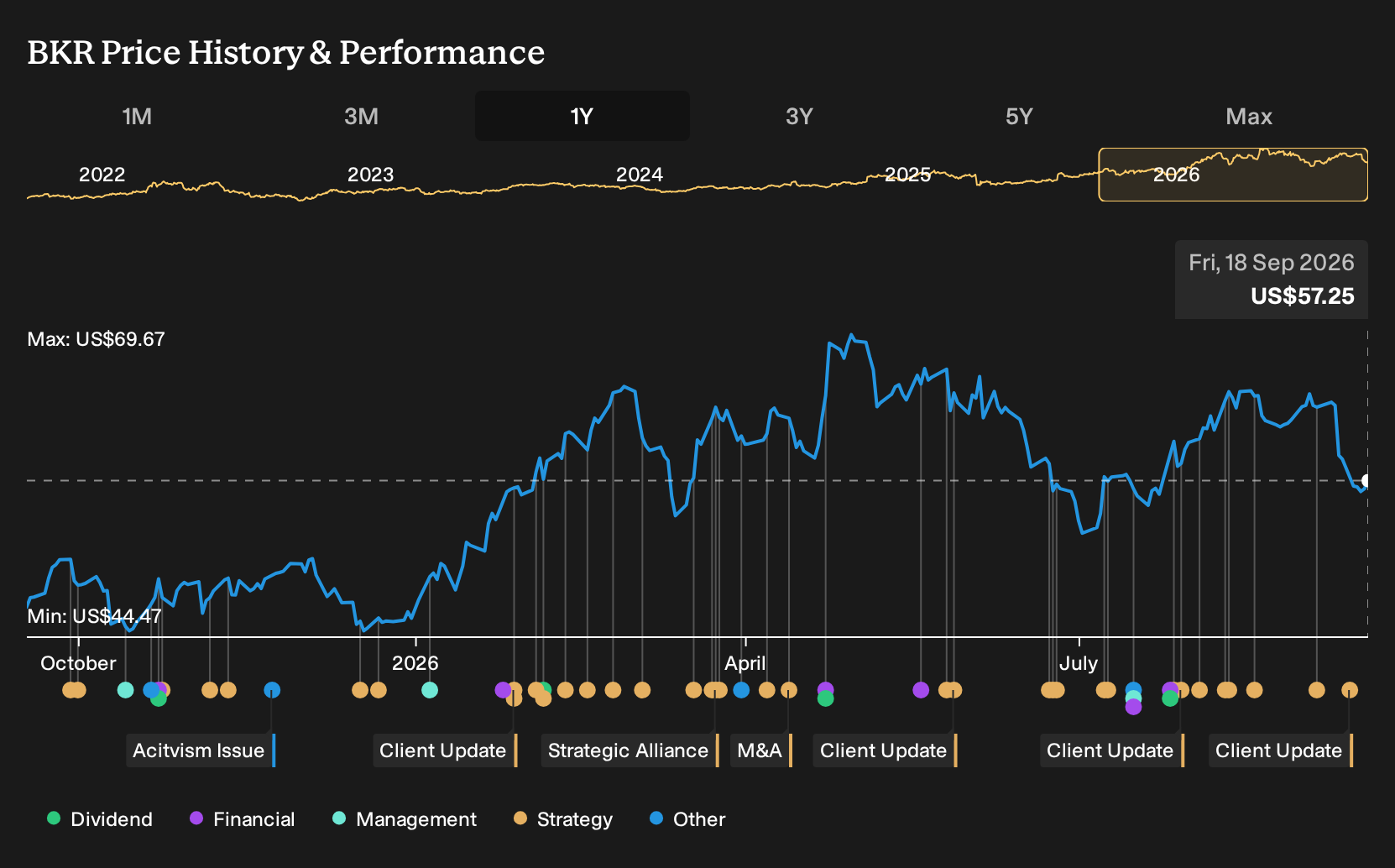
Exploring Other Perspectives
One alternative view on Baker Hughes focuses on acquisition risk around Chart. The most cautious analysts already saw this as a drag, even while modelling revenue of about US$34.8b and earnings near US$3.5b by 2029. You can read that as a more pessimistic story on deal execution that might shift after this LNG order.
Explore 3 other Baker Hughes fair value estimates, including one that suggests it could be worth just $71.24!
The Verdict Is Yours
Disagree with existing narratives? Extraordinary investment returns rarely come from following the herd, so go with your instincts.
- A great starting point for your Baker Hughes research is our analysis highlighting 5 key rewards that could impact your investment decision.
- See our latest analysis for Baker Hughes. The report includes a comprehensive fundamental analysis summarized in a single visual, the Snowflake, making it easy to evaluate Baker Hughes' overall financial health at a glance.
Looking for more Baker Hughes style investment ideas?
Once you have formed a view on Baker Hughes, it can help to compare the opportunity against other businesses with different risk and income profiles using the Simply Wall St Screener.
- If you want potential value with quality in mind, check out a curated set of 33 high quality undervalued stocks that combine solid fundamentals with attractive pricing signals.
- For investors who prioritize resilience over headlines, consider a 30 resilient stocks with low risk scores that screens for companies with steadier risk profiles and more defensive characteristics.
- If balance sheet strength matters most to you, head to a list of solid balance sheet and fundamentals (23 results) to focus on businesses with healthier debt levels and robust financial foundations.
This article by Simply Wall St is general in nature. We provide commentary based on historical data and analyst forecasts only using an unbiased methodology and our articles are not intended to be financial advice. It does not constitute a recommendation to buy or sell any stock, and does not take account of your objectives, or your financial situation. We aim to bring you long-term focused analysis driven by fundamental data. Note that our analysis may not factor in the latest price-sensitive company announcements or qualitative material. Simply Wall St has no position in any stocks mentioned.
Have feedback on this article? Concerned about the content? Get in touch with us directly. Alternatively, email editorial-team@simplywallst.com