
3 Penny Stocks To Watch In September 2026
The Federal Reserve just lifted interest rates again to tackle stubborn inflation, which makes borrowing more expensive and investors more cautious about overpaying for growth stories. That backdrop pushes attention toward smaller, low-priced businesses that still keep their finances in decent shape. This article walks through three financially grounded penny stocks screened for balance sheet resilience so you can spot potential opportunities without stretching for risk you do not understand.
The stocks covered below are only a small sample, and the full screen surfaced 314 more financially fit penny stocks with narratives that are not covered here but follow the same focus on balance sheet strength. To identify and analyze your own higher conviction ideas from that broader universe, head straight into the Financially Fit Penny Stocks screener.
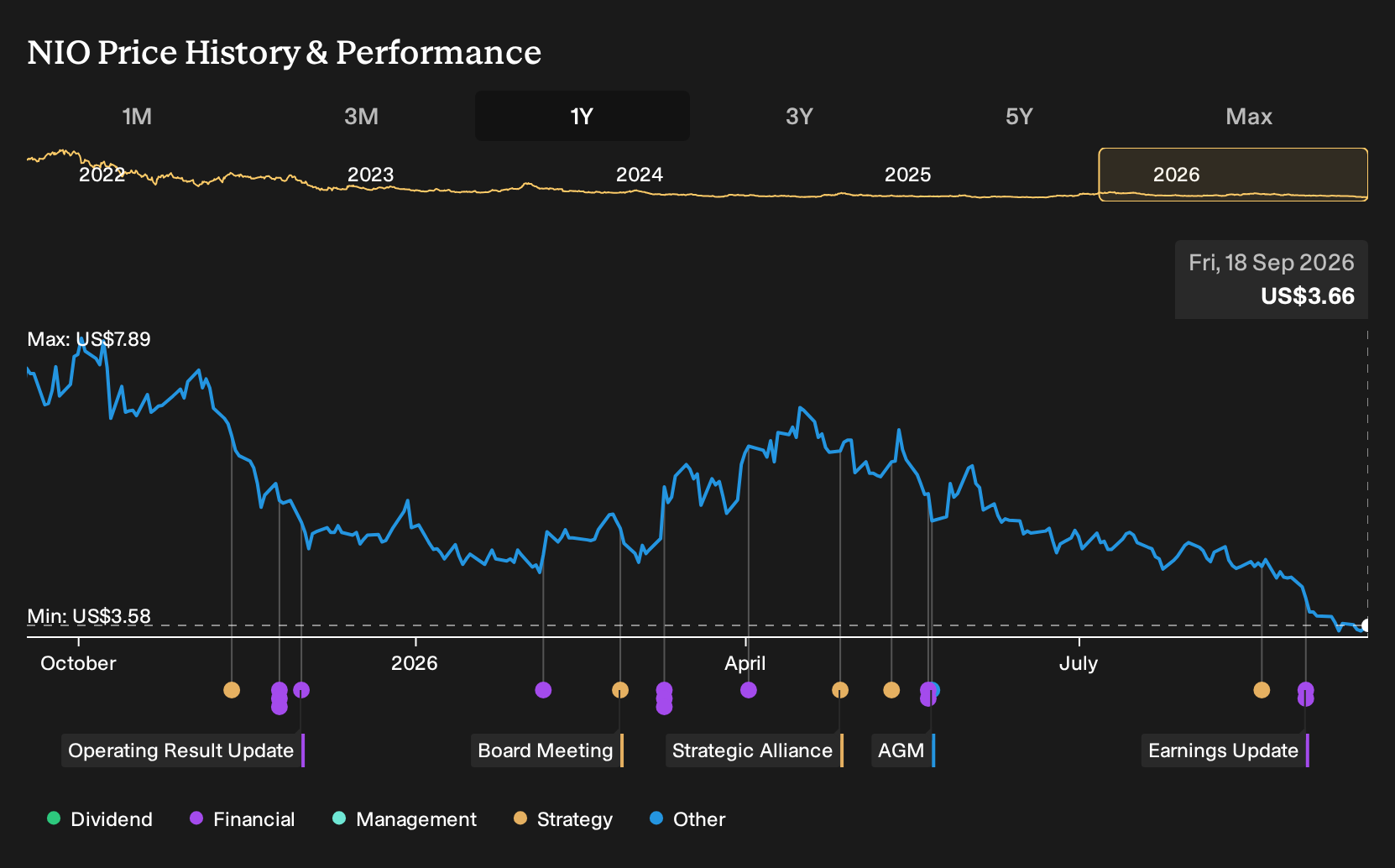
NIO (NIO)
Overview: NIO designs and sells smart electric SUVs and sedans while tightly linking owners into its Power-branded charging and battery services ecosystem.
Operations: The business currently generates about CN¥114.1 billion from smart electric vehicle related activities, almost entirely within the People's Republic of China.
Market Cap: US$9.1b
NIO fits this Financially Fit Penny Stocks screen because its premium EVs plug directly into a suite of paid power services that can turn one-off buyers into recurring customers.
"Expansion and densification of NIO's proprietary Power Swap network and charging infrastructure across China's largest cities and highways removes range anxiety and further differentiates NIO from competitors, which may influence EV adoption patterns and the development of recurring services revenue and margin stability."
What investors really need to watch is how one unresolved pressure on profitability shapes the balance between growth ambitions and future dilution risk.
That trade off sits at the center of the full narrative for NIO, which breaks down how expansion, services and dilution risk could be pulling in different directions for NIO.
Grab Holdings (GRAB)
Overview: Grab Holdings runs a Southeast Asian superapp that connects ride-hailing, deliveries and GrabFin credit services such as PayLater and working-capital loans.
Operations: Grab Holdings currently reports about US$4.7b in annual revenue, led by Deliveries at US$1.99b, Mobility at US$1.31b and Financial Services at US$430 million.
Market Cap: US$11.5b
Grab Holdings matters for the Financially Fit Penny Stocks theme because its GrabFin arm plugs lending and PayLater products into an already busy transport and food platform. That turns regular trips and orders into potential customers for a growing financial services engine.
"Financial Services may eventually become Grab's second economic engine. Revenue there increased 59%, while the segment's adjusted EBITDA loss narrowed from $26 million to $15 million."
What happens when that financial arm either tightens or relaxes its underwriting standards could quietly reshape future margins and cash generation.
That underwriting question sits at the heart of the full narrative for Grab Holdings, which maps how credit risk, user engagement and profitability could be decoupling under the surface.

Clover Health Investments (CLOV)
Overview: Clover Health Investments offers Medicare Advantage HMO and PPO insurance plans to US seniors, with its core business anchored in these policies rather than ancillary software.
Operations: Clover Health Investments currently generates about US$2.48b in revenue from its Insurance segment, entirely within the United States Medicare Advantage market.
Market Cap: US$2.4b
For a Financially Fit Penny Stocks screen focused on smaller insurers, Clover Health Investments matters because its Medicare Advantage book ties financial health directly to how effectively it prices risk, manages care costs, and uses its technology layer to sharpen those decisions over time.
"The company's differentiated technology-driven care model, particularly the Clover Assistant platform, positions it to benefit from the healthcare industry's accelerated shift toward technology adoption and data-driven, value-based care. This approach supports lower medical costs and higher medical margins, with implications for both revenue and net margins."
How this approach to managing medical spend performs during a difficult claims year could influence the company’s earnings path.
That claims risk is exactly what the full narrative for Clover Health Investments unpacks, showing where Clover Health Investments could be masking pressure or building an accelerating earnings engine.

Seeking Alternatives Before Momentum Flies
Fresh ideas can move from quiet to crowded fast. Some slip away once momentum builds and prices start flying. Scan these themed shortlists while it matters and consider acting early if they fit your strategy.
- Explore potential early leaders in digital assets by scanning the 18 cryptocurrency and blockchain stocks before this corner of the market attracts broader attention.
- Track potential compounding machines with resilient cash flows using the 6 dividend fortresses while yields and prices still look reasonable for long term income-focused investors.
- Look for under the radar operators tied to critical infrastructure with the 38 power grid technology and infrastructure stocks before capital rotations narrow perceived valuation gaps.
This article by Simply Wall St is general in nature. We provide commentary based on historical data and analyst forecasts only using an unbiased methodology and our articles are not intended to be financial advice. It does not constitute a recommendation to buy or sell any stock, and does not take account of your objectives, or your financial situation. We aim to bring you long-term focused analysis driven by fundamental data. Note that our analysis may not factor in the latest price-sensitive company announcements or qualitative material. Simply Wall St has no position in any stocks mentioned.
Have feedback on this article? Concerned about the content? Get in touch with us directly. Alternatively, email editorial-team@simplywallst.com