
Honda Motor (TSE:7267) Could Be 23% Undervalued As Magnet Bet Raises Bigger Questions
Honda Motor (TSE:7267) has moved beyond vehicles into materials technology, backing Niron Magnetics, a US developer of rare-earth-free iron nitride magnets, as industries reassess their reliance on China for critical magnet supplies.
Honda Motor's recent backing of Niron Magnetics comes as the stock trades at ¥1,689, with a 90-day share price return of 19.6% and a 1-year total shareholder return of 8.6%. This suggests momentum has picked up in the short term, while long-term holders have seen steadier gains.
Scan beyond Honda Motor's magnet push and track other companies positioned for supply chain shifts with our curated list of 36 best rare earth metal stocks.
Honda Motor trades at roughly a 23% discount to one intrinsic value estimate and sits slightly below analyst targets after the Niron move. Is that genuine caution around risks, or has the market marked it down too far?
Most Popular Narrative: Fairly Valued
Honda Motor last closed at ¥1,689, almost exactly in line with the most followed narrative fair value estimate of ¥1,688. This places the emphasis on whether the future earnings story justifies that pricing rather than on a large valuation gap today.
Ongoing cost optimization through price revisions, operational efficiencies, and expanding use of common platforms across models is improving cost structure and profitability. This may support higher long-term net margins and earnings stability even amidst short-term pressures from tariffs and currency fluctuations.
See why 16 investors see Honda Motor as 0% overvalued.
Result: Fair Value of ¥1,688 (ABOUT RIGHT)
Still, Honda Motor faces pressure from EV related losses and intense competition in China, which could quickly challenge the current fair value narrative.
Find out about the key risks to this Honda Motor narrative.
Another View on Honda Motor’s Valuation
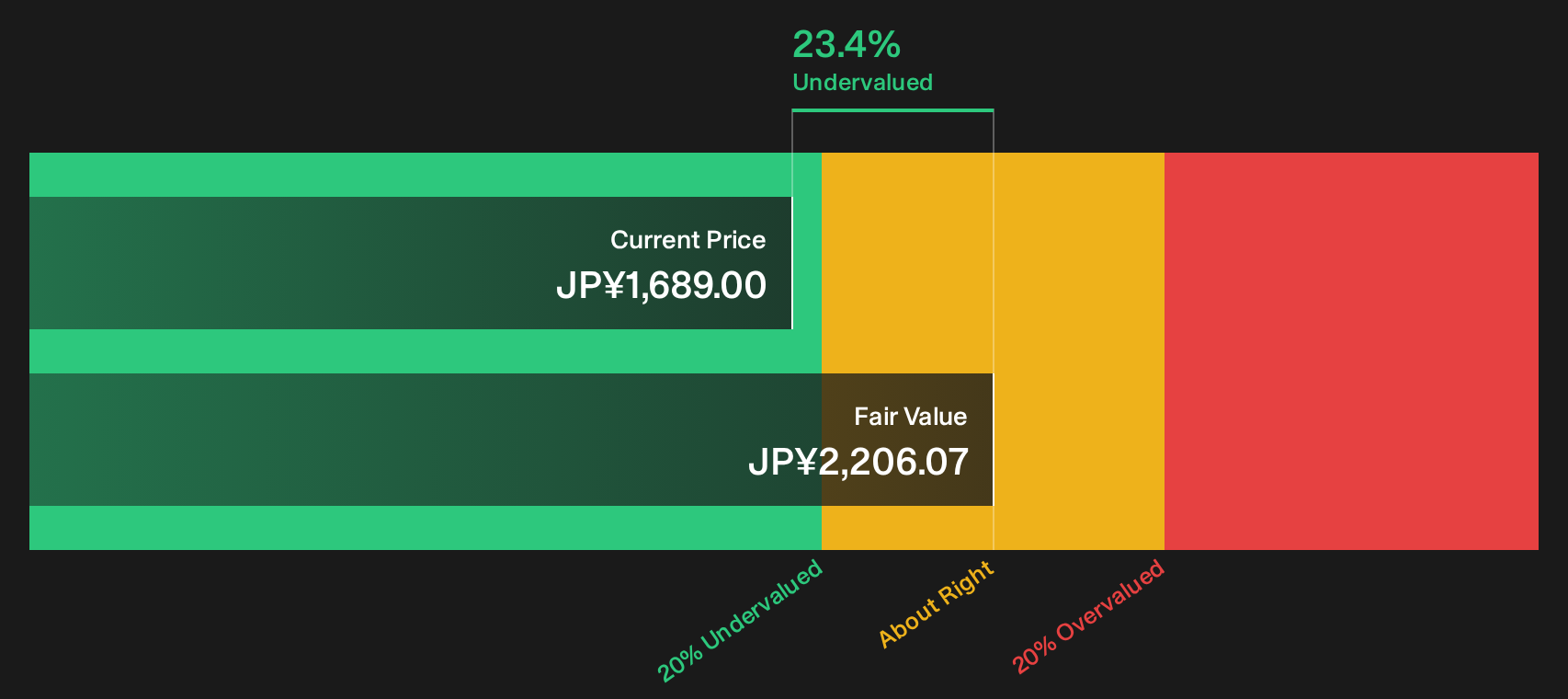
While one camp treats Honda Motor as roughly fairly priced around ¥1,688, the SWS DCF model points to a different story. On that framework, the stock trades at about a 23% discount to an estimated future cash flow value of roughly ¥2,206. That raises a simple question for investors: Is the gap a genuine margin of safety or a warning that the cash flow assumptions might be too optimistic?
Our DCF model is only as good as the forecasts that feed it, so it is worth understanding how those inputs work before relying on any single fair value line in your spreadsheet. Look into how the SWS DCF model arrives at its fair value.
Next Steps
If the sentiment around Honda Motor feels finely balanced between opportunity and concern, use that tension as a prompt to dig into the numbers yourself. To weigh both sides of the story and judge whether the current pricing lines up with your own risk and reward expectations, start with the 3 key rewards and 2 important warning signs.
Looking for more Honda Motor sized investment ideas?
Do not stop at Honda Motor alone. Consider broadening your watchlist with a few targeted stock ideas that match the type of opportunity you want to focus on next.
- Target resilient uptrends and filter for companies with a history of consistent fundamentals using our 21 resilient stocks with low risk scores.
- Focus on quality at a discount and scan for potential bargains through the 17 high quality undervalued stocks.
- Prioritize balance sheet strength and search for financially robust businesses via the list of solid balance sheet and fundamentals (20 results).
This article by Simply Wall St is general in nature. We provide commentary based on historical data and analyst forecasts only using an unbiased methodology and our articles are not intended to be financial advice. It does not constitute a recommendation to buy or sell any stock, and does not take account of your objectives, or your financial situation. We aim to bring you long-term focused analysis driven by fundamental data. Note that our analysis may not factor in the latest price-sensitive company announcements or qualitative material. Simply Wall St has no position in any stocks mentioned.
Have feedback on this article? Concerned about the content? Get in touch with us directly. Alternatively, email editorial-team@simplywallst.com