
Is Phase 4 Success Altering The Investment Case For Neurocrine Biosciences Stock?
- Neurocrine Biosciences reported Phase 4 KINECT-PRO data in August showing INGREZZA delivers clinically measured and patient-reported relief in tardive dyskinesia, and management raised full-year guidance while highlighting portfolio additions CRENESSITY and VYKAT XR.
- The combination of early symptom relief reported by patients and higher INGREZZA guidance reflects demand resilience and broader franchise depth for Neurocrine Biosciences beyond a single neurology product.
- We will now look at how Neurocrine Biosciences' investment narrative is affected by stronger INGREZZA guidance that is anchored in patient-reported benefits.
Neurocrine Biosciences Investment Narrative Recap
To own Neurocrine Biosciences, you need confidence that INGREZZA remains a durable tardive dyskinesia franchise while newer products like CRENESSITY and VYKAT XR gradually lessen reliance on a single drug. The KINECT PRO data and higher INGREZZA guidance reinforce that core thesis in the near term, since they tie ongoing demand to patient reported symptom relief rather than just clinician scales.
The key short term swing factor is how payers and Medicare contracting treat INGREZZA pricing and access. Stronger guidance does not remove that issue. Pricing pressure, higher gross to net discounts, and tighter plan controls can still weigh on revenue visibility. Portfolio concentration around INGREZZA and CRENESSITY remains the biggest business risk.
The August KINECT PRO update is the most relevant recent development because it directly links to INGREZZA volume expectations and guidance. Management pointed to earlier patient perceived benefit on top of measured symptom changes. That kind of outcome data can support prescriber confidence and help sustain discussions with payers on maintaining coverage and positioning.
For catalysts, the combination of this Phase 4 evidence and raised full year INGREZZA outlook keeps operational focus squarely on execution in tardive dyskinesia while CRENESSITY ramps. Your lens should be on whether payer scrutiny or Medicare negotiations undercut that guidance, and how quickly Neurocrine Biosciences can broaden contribution from its psychiatry and neurology pipeline to offset that risk over time.
Neurocrine Biosciences' current analyst storyline points to US$5.2b in revenue and US$1.4b in earnings by 2029, based on revenue growth assumptions of 15.6% per year. That path implies earnings would need to rise by about US$694.5m from US$705.5m today to reach the consensus forecast.
Uncover why Neurocrine Biosciences' fair value indicates a 46% potential upside to its current price that could narrow quickly.
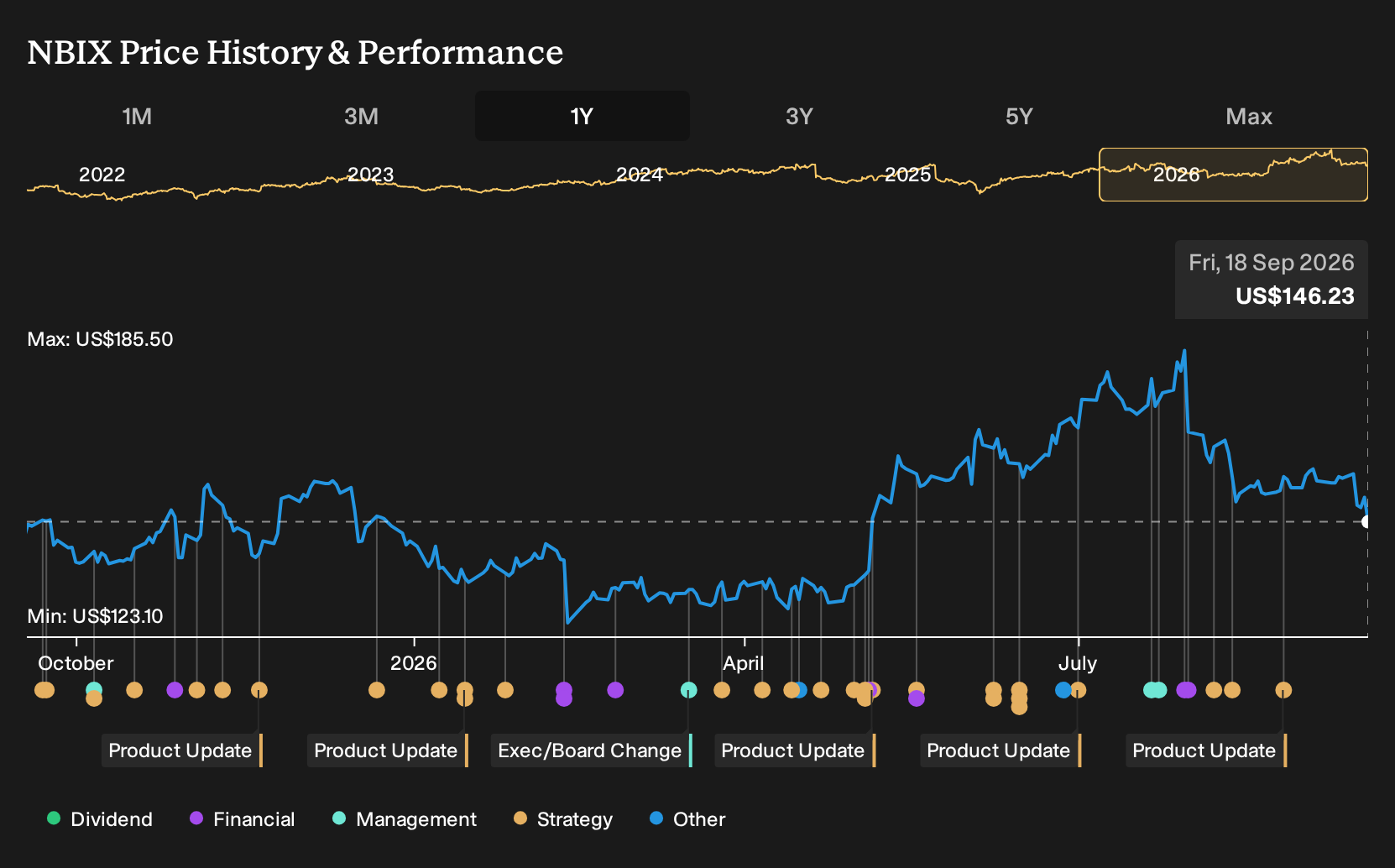
Exploring Other Perspectives
One alternate view on Neurocrine Biosciences puts payer pressure front and center. The most cautious analysts previously mapped only 14.4% annual revenue growth and about US$1.1b in 2029 earnings, versus the broader group at US$1.4b. That gap reflects concern that tighter Medicare and insurer bargaining could reshape these forecasts once new INGREZZA data is absorbed.
Explore 2 other Neurocrine Biosciences fair value estimates, including one that suggests it could be worth just $209.52!
Decide For Yourself
Don't just follow the ticker. Dig into the data and build a conviction that's truly your own.
- A great starting point for your Neurocrine Biosciences research is our analysis highlighting 4 key rewards that could impact your investment decision.
- See our latest analysis for Neurocrine Biosciences. The report includes a comprehensive fundamental analysis summarized in a single visual, the Snowflake, making it easy to evaluate Neurocrine Biosciences' overall financial health at a glance.
Looking For More Neurocrine Biosciences Style Ideas?
If Neurocrine Biosciences has sharpened your interest in healthcare and neurology, it can be useful to compare that thesis with other businesses that fit different risk and return profiles using the Simply Wall St Screener.
- If resilience matters most to you, scan a 30 resilient stocks with low risk scores that may help limit portfolio shocks when single holdings hit setbacks.
- If income is your priority, review a 6 dividend fortresses that focuses on higher yield payouts supported by fundamental data.
- If you are hunting for less crowded opportunities, check a 16 high quality undiscovered gems that focuses on quality metrics rather than headlines.
This article by Simply Wall St is general in nature. We provide commentary based on historical data and analyst forecasts only using an unbiased methodology and our articles are not intended to be financial advice. It does not constitute a recommendation to buy or sell any stock, and does not take account of your objectives, or your financial situation. We aim to bring you long-term focused analysis driven by fundamental data. Note that our analysis may not factor in the latest price-sensitive company announcements or qualitative material. Simply Wall St has no position in any stocks mentioned.
Have feedback on this article? Concerned about the content? Get in touch with us directly. Alternatively, email editorial-team@simplywallst.com