
Top 3 Dividend Stocks To Watch In September 2026
The Federal Reserve has kicked off a new rate hiking cycle, which means borrowing costs are climbing while cash in the bank still struggles to keep up with inflation. Reliable dividend payers become more interesting when income feels harder won. Investors looking for steady cash flow may care less about short term price swings and more about regular cheques. This article highlights three high yielding dividend stocks with payouts above 3%.
The three stocks covered below are only a first pass at this idea. The full screen surfaced 162 more companies with similarly strong income stories that are not included here. To identify which ones might suit your portfolio, head straight into the Dividend Powerhouses (3%+ Yield) screener to analyze yields, coverage and stability side by side.
Chevron (CVX)
Chevron is a large integrated energy business that turns upstream oil and gas production and downstream refining into the cash that funds its dividend, with about US$55b from international upstream, US$53b from US upstream and roughly US$161b from downstream, and a market value near US$415b.
For income investors, Chevron offers a straightforward pitch. Heavyweight oil and gas operations generate the free cash flow that supports its 3%+ yield, and current projects are aimed at extending that income story rather than reinventing it.
"Chevron agreed updated joint venture terms in Venezuela and outlined plans to invest over US$7b across five years, aiming to more than double production in the country from roughly 280,000 barrels per day to about 600,000 barrels per day."
The key issue for investors is how this still developing cash engine might influence future dividend headroom and the pace of any payout growth.
That headroom question is exactly what the full narrative for Chevron unpacks, explaining where Chevron’s income story could accelerate and where Venezuela risk might still be masking pressure.

Accenture (ACN)
Accenture focuses on long relationships and recurring work, using its cloud, AI, automation and managed services to support cash generation that can back a 3%+ dividend for an extended period rather than just a single cycle.
"AI could reduce billable labor needs and compress parts of Accenture’s traditional consulting and delivery model."
What matters next is how one quiet shift in how clients buy long-term services feeds through to pricing power and dividend headroom.
That quiet shift in buying power is exactly what the full narrative for Accenture unpacks, showing where Accenture’s income story could be accelerating faster than headline consulting work implies.
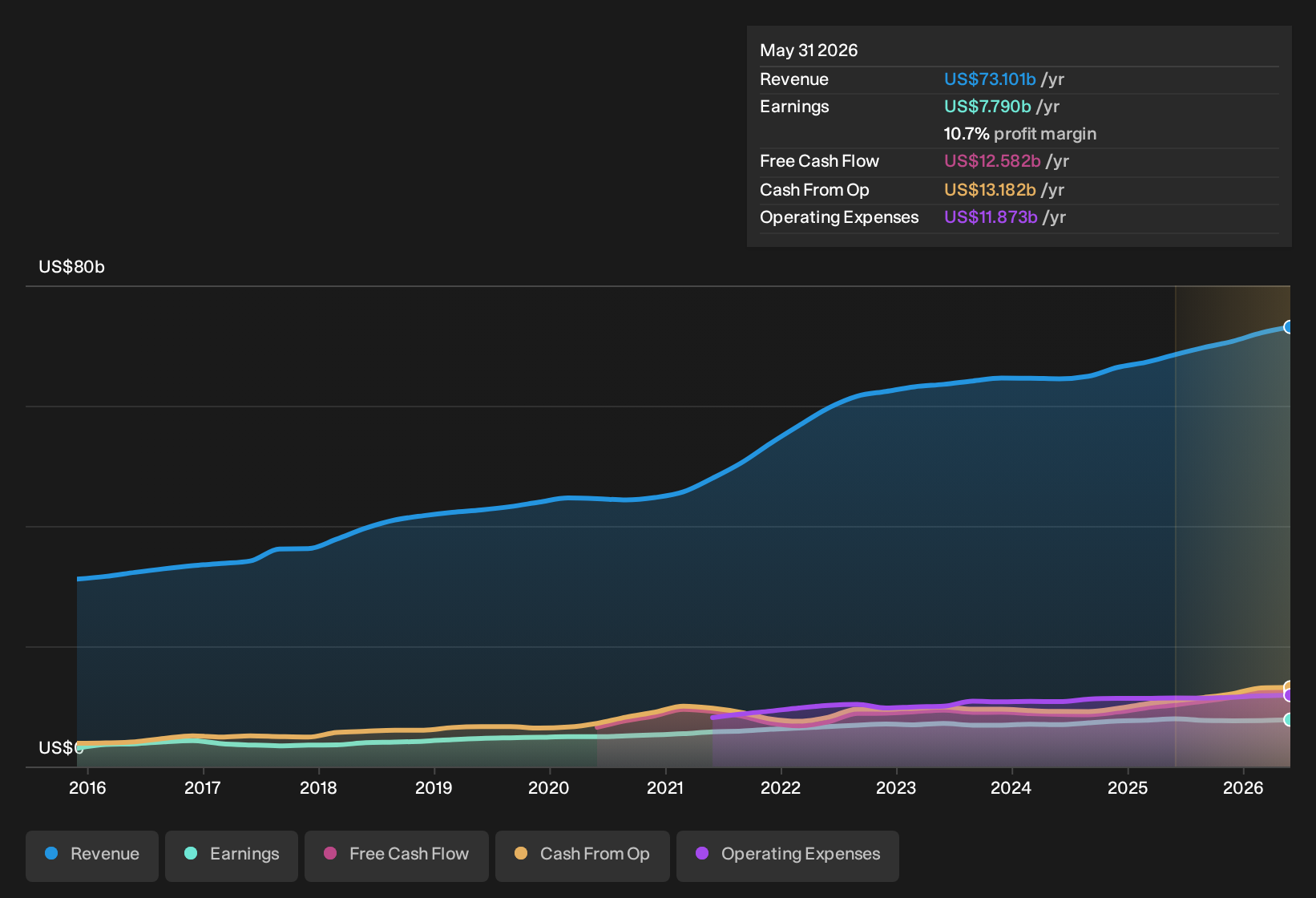
Home Depot (HD)
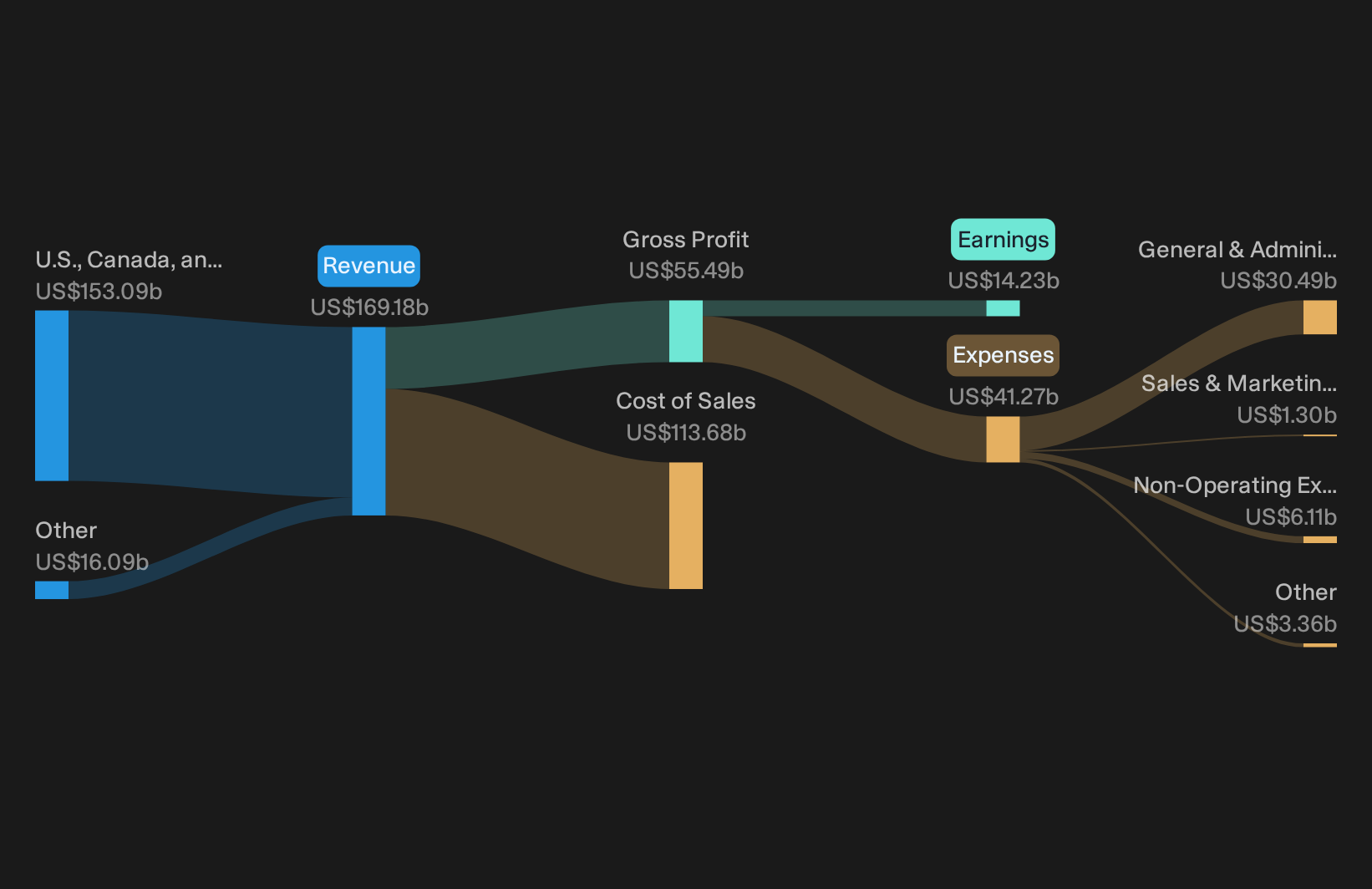
Home Depot is a home improvement retailer whose steady sales of building materials, décor, tools and installation services produce the cash that supports its 3%+ dividend profile, with about US$153.1b from U.S., Canada and Mexico operations, US$16.1b from other revenue and a market value near US$301.8b.
Income focused investors look at Home Depot because everyday repair work, renovation projects and installation services can turn into repeat spending that supports consistent cash flow. That is the kind of earnings backdrop that matters when judging the staying power of a dividend.
"The company's targeted acquisitions (SRS, pending GMS) and continued expansion of its Pro customer ecosystem are positioning Home Depot as the supplier of choice for complex, higher-ticket projects. This is set to increase market share, customer lifetime value, and organic revenue growth over time."
The real test will be how one quiet pressure on big ticket project demand shapes margins and the path of dividend growth.
Those margin questions sit at the center of the full narrative for Home Depot, which tracks how Home Depot’s project mix could be quietly accelerating dividend support.
Seeking Fresh Alternatives Before They Fly
Markets move fast and the most interesting dividend and cash flow stories can shift from under the radar to full priced in a single breakout. Scan fresh ideas before momentum is fully caught and use that edge while it matters. Act now.
- Spot early movers in smaller companies before wider attention drives headlines by running the 8 elite penny stocks with strong financials and seeing which balance sheets already look built for pressure.
- Track where real cash generation meets AI momentum by scanning the 38 profitable AI stocks that aren't just burning cash. This screener is curated for businesses already funding growth from their own income rather than constant capital raises.
- Anchor your watchlist to real assets by reviewing the 36 elite gold producer stocks and seeing which producers pair sizable output with balance sheets that look ready for the next turn in sentiment.
This article by Simply Wall St is general in nature. We provide commentary based on historical data and analyst forecasts only using an unbiased methodology and our articles are not intended to be financial advice. It does not constitute a recommendation to buy or sell any stock, and does not take account of your objectives, or your financial situation. We aim to bring you long-term focused analysis driven by fundamental data. Note that our analysis may not factor in the latest price-sensitive company announcements or qualitative material. Simply Wall St has no position in any stocks mentioned.
Have feedback on this article? Concerned about the content? Get in touch with us directly. Alternatively, email editorial-team@simplywallst.com