
Rumor has it that the Bank of England plans to suspend the sell-off of long-term bonds, and the most aggressive “downsizers” in the global debt storm have stepped on the brakes
The Zhitong Finance App learned that, according to reports, the Bank of England plans to stop selling its 20-year and 30-year long-term treasury bonds in order to comprehensively reform its bond sales plan. The report quoted sources as saying that the Bank of England, the Treasury, and the Debt Management Office (DMO) officials that issue bonds on behalf of the government have drafted relevant plans, but have not disclosed the sources, and the final decision remains in the hands of the Bank of England. The report said that it is expected that the Bank of England will officially announce this decision in addition to the monetary policy decision this Thursday.
Amid the turmoil in the global bond market, the most aggressive downsizers stopped first
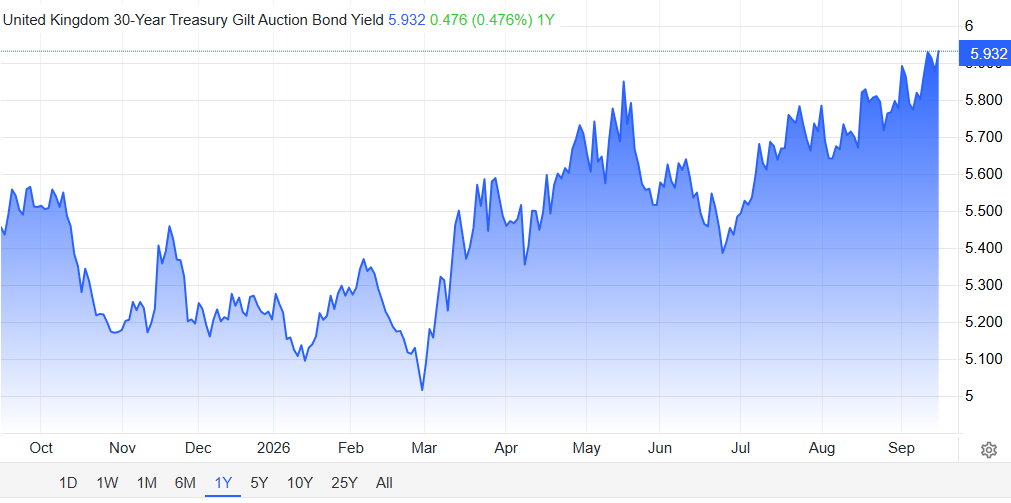
The background of this adjustment is that long-term treasury bond yields have risen to decades of high levels. The yield on UK 30-year treasury bonds is currently above 5.9%, the only one seen since the 90s; the price of 20-year and 30-year treasury bonds fell to their lowest level since 1998 last week.
The Bank of England is the central bank with the most aggressive downsizing pace in the G7, and is also the only major central bank that actively sells bonds to the market before they expire. Since 2009, it has accumulated bond holdings of up to £895 billion through quantitative easing, and the portfolio has now been reduced to around £490 billion, of which long-term treasury bonds with maturities of more than 20 years are around £150 billion.
Market participants expect the Bank of England to slow the downsizing rate to £50 billion a year over the next 12 months starting in October — down from £70 billion in the previous two years and £100 billion in the previous year. This meant that active sales remained at around £20 billion. However, long-term treasury bonds only account for about 20% of current active sales — even maintaining the same pace and structure, the actual sale of this portion of the position is only about £4 billion.
Mike Bell (Mike Bell), head of asset management market strategy at RBC BlueBay, expects the central bank to shift sales to the short to medium term, and “it wouldn't be surprising to completely stop selling long-term bonds.”
In fact, the Bank of England's “brakes” have already begun: in the past year, it sold only about £4 billion of its long-term holdings of over £150 billion, and most of it was concentrated on two ultra-long-term bonds — at this pace, it would take more than 24 years to fully clear. In the last quarter's auction plan, the number of treasury bonds with a term of 20 years or more has dropped to zero, the first time since the active sale program was launched in January 2023.
Tomasz Wieladek (Tomasz Wieladek), chief European macro strategist at T. Rowe Price, believes that a market-neutral and prudent approach would have meant reducing or even stopping the sale of long-term treasury bonds, as demand for this portion of bonds from pension funds has now declined structurally.
“Sell once and lose half” bill
The core of the problem is the loss. The Bank of England bought debt at a time when the price was high, but now it is selling at a low level — Deutsche Bank analysts estimate that the average discount rate at which the central bank sells long-term bonds in the midst of quantitative austerity is as high as 50%. The consensus in the economics community is that since 2022, the rapid sell-off of long-term bonds has cost UK taxpayers around £22 billion; the UK Budget Responsibility Office (OBR) even anticipates that the total cost of completely emptying this portfolio over the next five years will reach around £100 billion.
After the sell-off of long-term bonds is stopped, the Bank of England's active sale will continue (about 20 billion pounds/year), but long-term debt will be completely divested; at the same time, the central bank will directly sell its short- and medium-term treasury bonds to DMO under the Ministry of Finance to help smooth out additional government debt supply pressure. This “New Zealand model” was discussed as early as 2022, but was put on hold due to concerns that it would damage the independence of monetary policy. Compared to maintaining the current sell-off, stopping the sell-off of long-term bonds is expected to directly save the Treasury about £2.5 billion a year until the end of the decade — this will provide valuable room for the new Chancellor of the Exchequer John Healey (John Healey)'s first budget on October 28.
But the other side of the coin is also clear: stopping the sell-off of loss-making bonds means that the central bank keeps more reserves, and the Treasury must pay more interest for it, which will make it more difficult for Healy to achieve the “balance of daily expenses” fiscal rule. Bank of England Governor Bailey has repeatedly defended the previous sell-off strategy. He insisted that stopping the sell-off immediately would only forcibly spread the losses that were destined to be borne over a longer period of time.
Thursday resolution: Unsettled interest rates, and a dissenting vote
Markets are focusing on the Monetary Policy Committee (MPC) meeting this Thursday. The market generally expects the Bank of England to keep interest rates unchanged (currently around 3.75%) — Bailey previously refuted the claim that interest rate hikes were “inevitable” in a speech to Parliament last week. However, there is likely to be a divided vote within the committee, and investors will keep an eye on the number of negative votes. This week's UK data is also intense: August inflation data was released on Wednesday, and employment data released on Tuesday was mixed — the ILO unemployment rate remained stable at 4.9% for the three months up to July (expected to rise to 5%), but the number of jobless claims increased by 27,800, more than three times what was expected.
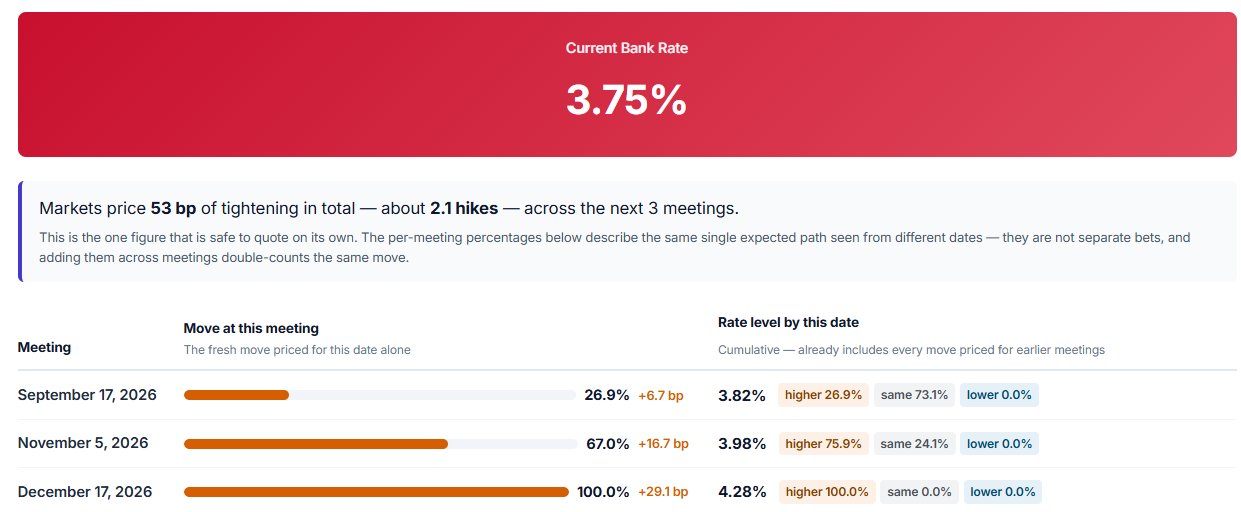
The specter of interest rate hikes has not dissipated. Affected by the Iranian conflict boosting oil prices, British gasoline and diesel prices have risen to the highest level since 2022. The market is currently betting heavily that the Bank of England will raise interest rates four times next year. Goldman Sachs changed its forecast to hawkish on Monday, expecting an interest rate hike of 25 basis points in November; Citi joined the hawkish forecasters on the same day. UBS, on the other hand, expects Thursday to be a “hawkish stand still.”