
Nokia (HLSE:NOKIA) Stock Looks Undervalued On Cash Flow But Overvalued On Earnings
Nokia Oyj has delivered a very strong 3 year share price run, yet its valuation checks are split, with a Discounted Cash Flow (DCF) estimate pointing to a sizeable discount while market based multiples look less forgiving.
- The stock has returned 185.5% over 3 years, which puts extra focus on whether recent gains already reflect the business outlook.
- New agreements such as the BeeHealthy tie up and expansion into AI powered network automation can support long term cash generation, while regulatory scrutiny around supply chains may weigh on how investors price risk.
- The broader valuation score is low at 2 out of 6, which leans expensive overall even though the intrinsic value model suggests the shares trade about 26.7% below its estimate.
The issue now is whether Nokia Oyj’s recent share price strength leaves enough margin between the current market value and the intrinsic value estimate to appeal to valuation focused investors.
Scan beyond Nokia Oyj and compare its run with hand picked 89 AI infrastructure stocks that are also exposed to AI powered networks and data heavy communications themes.
Is Nokia Oyj Still Cheap on Cash Flow?
The Discounted Cash Flow (DCF) model values Nokia Oyj by projecting future free cash flows and discounting them back to today. In this framework, the business is treated as a cash generator that can be compared with the current share price.
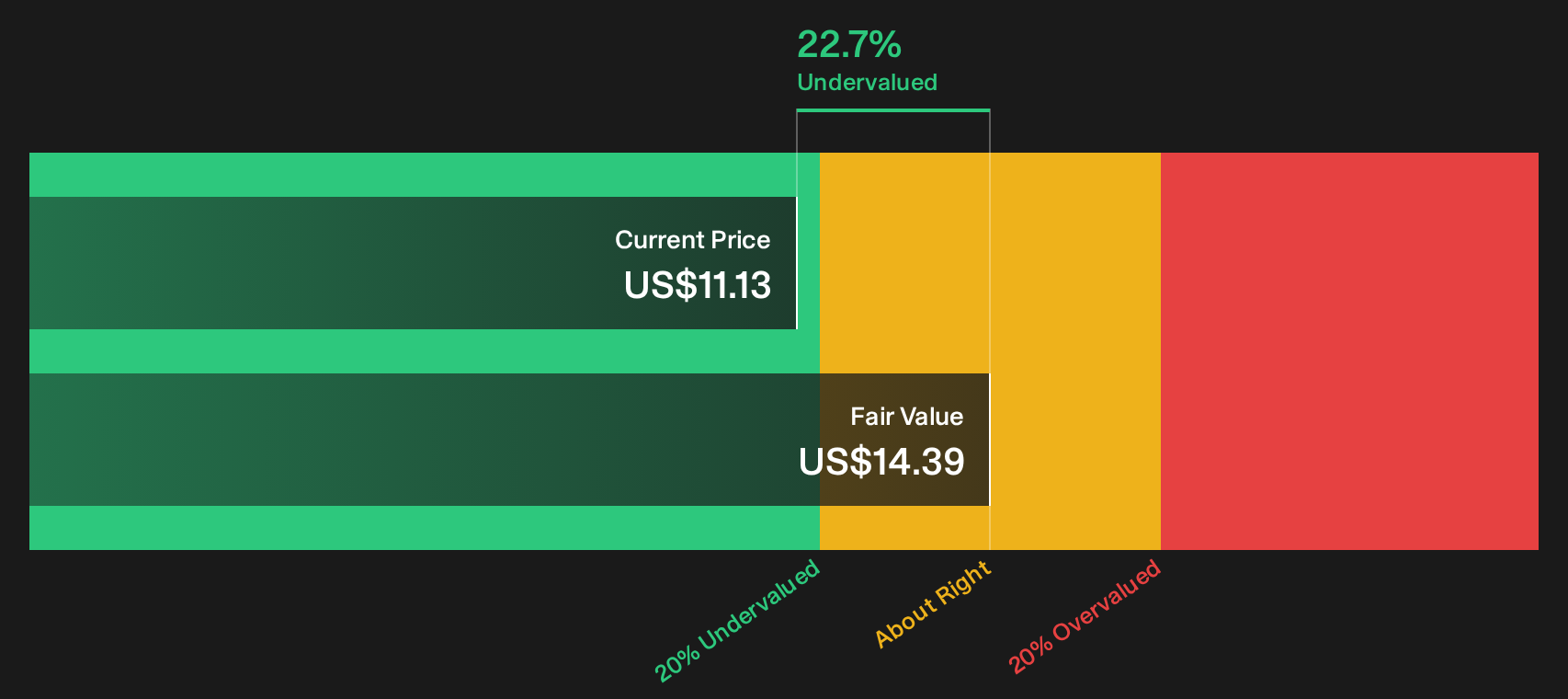
Nokia Oyj produced around €557.2 million of free cash flow over the latest twelve months, and the model assumes those cash flows grow over time rather than shrink. That stream is converted into an estimated intrinsic value of about €13.04 per share. With the current price sitting roughly 26.7% below that figure, the market is valuing the stock below what this cash flow outlook implies.
The new BeeHealthy collaboration, which aims to monetise network capabilities in digital healthcare, helps explain why some investors may see more cash flow potential than the current price reflects. It supports the idea that Nokia Oyj has use cases that are not yet fully recognised in the share valuation.
On this DCF view, Nokia Oyj appears undervalued relative to the cash flows currently built into the model.
Our Discounted Cash Flow (DCF) analysis suggests Nokia Oyj is undervalued by 26.7%. Track this in your watchlist or portfolio, or discover 183 more high quality undervalued stocks.
Is Nokia Oyj Getting Expensive on Earnings?
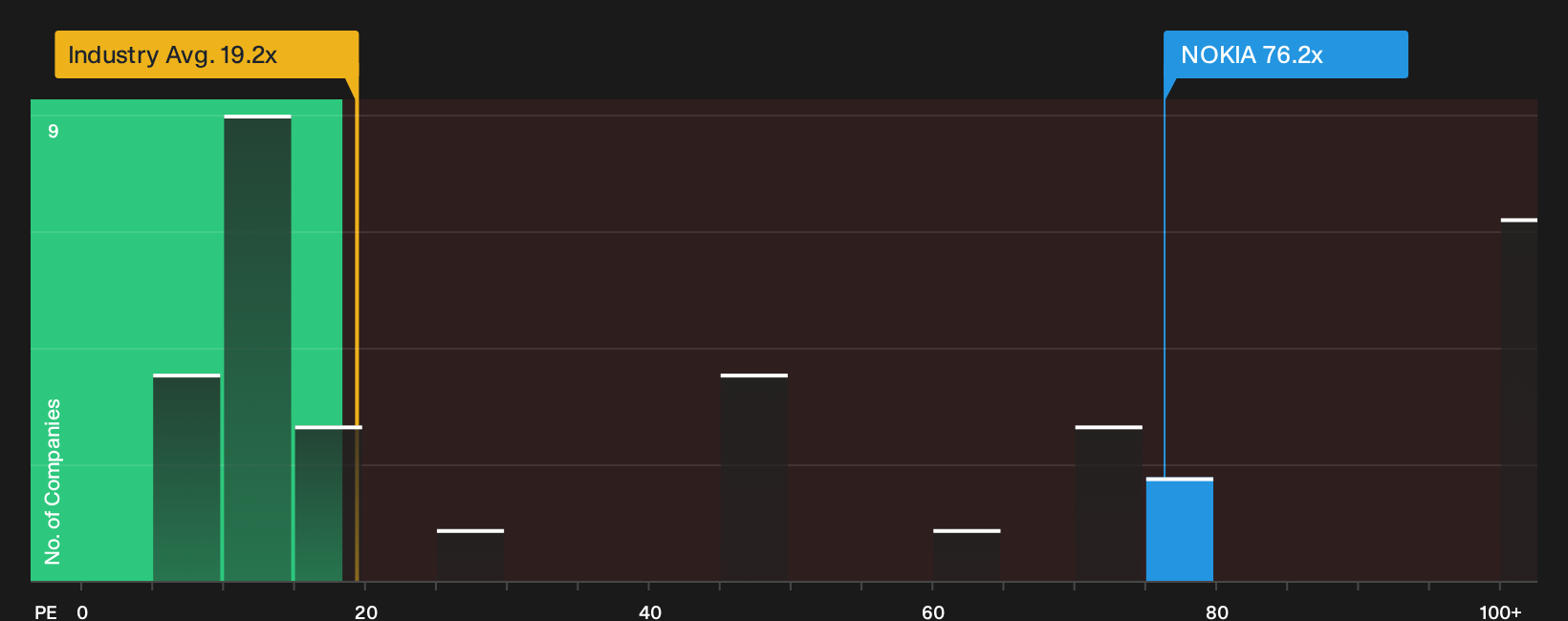
The P/E ratio is a useful yardstick for Nokia Oyj because it links what you pay directly to the earnings that support the share price. Nokia trades on a P/E of about 76.2x, which is more than double the communications industry average of roughly 32.1x and well above the peer group at 32.2x.
A more tailored fair P/E ratio for Nokia Oyj, which takes into account its margins, risk profile and sector, sits closer to 50.9x. The current multiple is therefore considerably higher than what this framework suggests, which indicates that investors are already paying a steep premium for each euro of earnings.
On this earnings yardstick, Nokia Oyj appears expensive, with the share price implying a lot is already reflected in the valuation compared with both peers and the modelled fair ratio.
See what the numbers say about this price — find out in our valuation breakdown.
The Nokia Oyj Narrative: What Would Justify Today's Price?
Nokia Oyj’s Simply Wall St Narratives pick up where this valuation puzzle leaves off by spelling out which combinations of future growth, profitability and earnings outcomes would need to play out for the shares to be worth materially more or materially less than today’s market price, and they sit on the company’s Community page. Each scenario ties its numbers to a clear view of where Nokia Oyj's growth, margins and key risks could head next, which you can revisit as fresh information comes through.
Community views on Nokia Oyj are split wide apart, with one camp leaning into the AI and cloud order book and another fixated on execution and margin strain.
Bull case: 10% undervalued
"Strong demand from hyperscalers (cloud/AI data centers) and U.S./European infrastructure stimulus is expanding Nokia's addressable market for high-capacity network equipment, supporting future top-line growth..."
Read the full Bull Case to see why Nokia Oyj could be undervalued
Bear case: 106% overvalued
"The network infrastructure industry is experiencing ongoing commoditization, leading to intense price competition and margin compression, this environment could erode Nokia's pricing power and result in structurally lower gross margins and operating margins..."
Read the full Bear Case to see why Nokia Oyj could be overvalued
Do you think there's more to the story for Nokia Oyj? Head over to our Community to see what others are saying!
The Bottom Line
Nokia Oyj screens as undervalued on a Discounted Cash Flow (DCF) basis, with the intrinsic value estimate sitting well above the current share price, yet the P/E framework paints it as overvalued compared with peers. That split reflects a clash between cash flow assumptions on one side and rich earnings expectations and sentiment on the other, which keeps the broader value score weak. For you, the central issue is whether Nokia Oyj can sustain the profitability and execution implied by its premium multiple. The key question is whether the discount to intrinsic value is a genuine opportunity or simply compensation for the operational and margin risks highlighted by the bear case.
This article by Simply Wall St is general in nature. We provide commentary based on historical data and analyst forecasts only using an unbiased methodology and our articles are not intended to be financial advice. It does not constitute a recommendation to buy or sell any stock, and does not take account of your objectives, or your financial situation. We aim to bring you long-term focused analysis driven by fundamental data. Note that our analysis may not factor in the latest price-sensitive company announcements or qualitative material. Simply Wall St has no position in any stocks mentioned.
Have feedback on this article? Concerned about the content? Get in touch with us directly. Alternatively, email editorial-team@simplywallst.com