
Koito Manufacturing (TSE:7276) Stock Could Be 20% Undervalued As Earnings Look Rich
Koito Manufacturing stock has delivered a solid 20.3% gain over the past year, yet its valuation picture is split, with an intrinsic value estimate pointing to upside while market multiples flag a richer price tag. For anyone tracking the shares today, Koito Manufacturing screens as undervalued on a Discounted Cash Flow, but broader checks suggest the stock is not a straightforward bargain.
- The 20.3% return over the past year signals that the recent share move has already priced in a meaningful amount of optimism.
- Expectations around future cash generation from Koito Manufacturing's automotive lighting business can support the intrinsic value case, while any pressure on margins or delayed customer programs may weigh on those cash flow assumptions.
- The stock scores 2 out of 6 on broader valuation checks, which leans expensive rather than a clear bargain when stepping back from the intrinsic value estimate.
The issue now is whether Koito Manufacturing's current share price already reflects most of the intrinsic value upside suggested by the Discounted Cash Flow work.
Spot opportunities beyond Koito Manufacturing by scanning a curated group of quality ideas in the 16 high quality undervalued stocks.Is Koito Manufacturing Still Cheap on Cash Flow?
The Discounted Cash Flow model looks at the cash Koito Manufacturing can generate for shareholders over time and then discounts those amounts back to today. For Koito Manufacturing, the latest twelve-month free cash flow is about ¥47.1b, and the projections used in the model assume these cash flows continue rather than shrink.
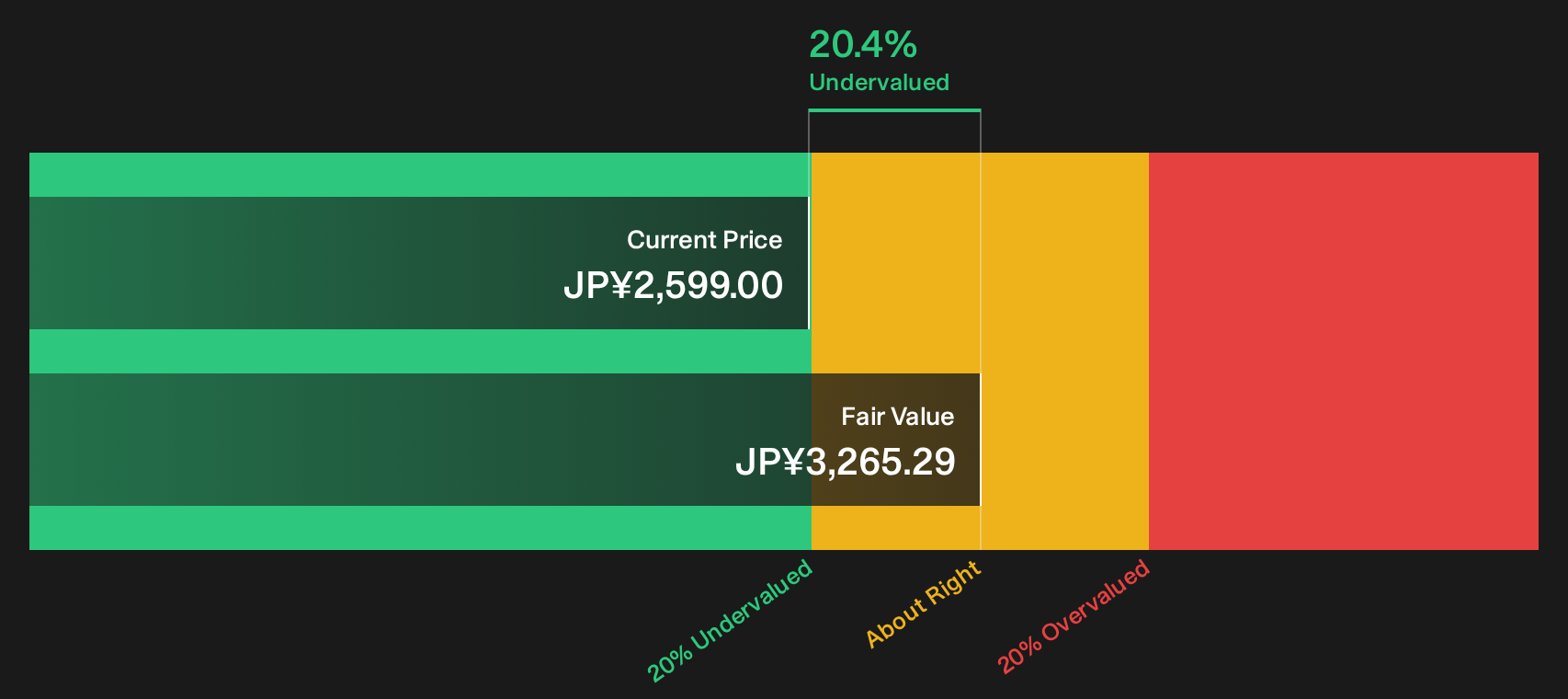
Using those inputs, the 2 Stage Free Cash Flow to Equity model arrives at an intrinsic value of roughly ¥3,265 per share. Compared with the current market price, that implies Koito Manufacturing trades at about a 20.4% discount. The difference between the cash flow-based value and the quoted price suggests the market is assigning a lower value to the business than the model does, based on these assumptions.
Overall, this Discounted Cash Flow analysis indicates that Koito Manufacturing stock may be undervalued at today’s share price.
Our Discounted Cash Flow (DCF) analysis suggests Koito Manufacturing is undervalued by 20.4%. Track this in your watchlist or portfolio, or discover 16 more high quality undervalued stocks.
Is Koito Manufacturing Getting Expensive on Earnings?
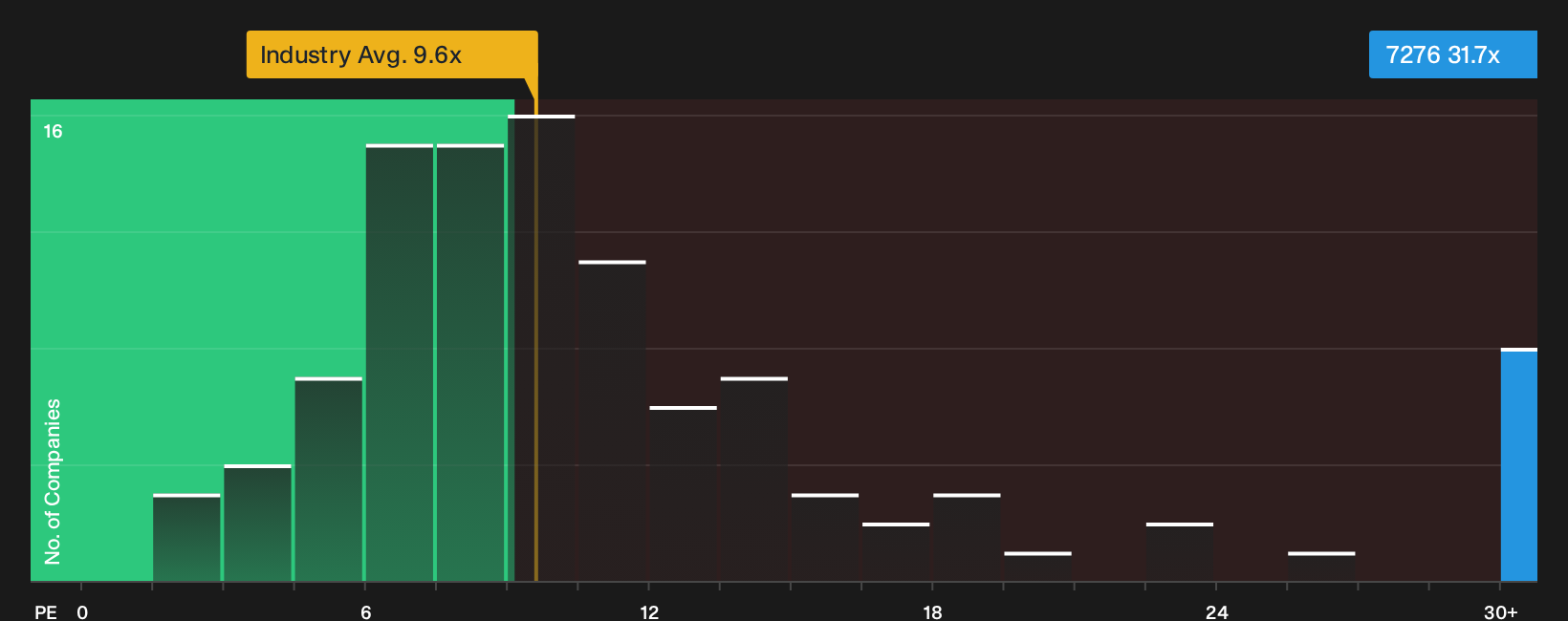
P/E is a useful lens for Koito Manufacturing because earnings remain a key anchor for how investors value mature auto component producers. On this measure, the stock trades on a P/E of about 31.7x, well above the Auto Components industry average of roughly 9.6x and ahead of the peer group near 17.8x. That is a sizeable premium for exposure to Koito Manufacturing compared with other listed suppliers.
The fair P/E ratio implied by the broader model is about 14.4x, which is less than half of where the shares currently change hands. This gap suggests that, once you factor in Koito Manufacturing's sector, size and risk profile, the current market pricing builds in a fuller earnings valuation than the framework supports.
On the P/E multiple alone, Koito Manufacturing stock looks overvalued relative to both its own fair ratio and to industry peers.
See what the numbers say about this price — find out in our valuation breakdown.
The Koito Manufacturing Narrative: What Would Justify Today's Price?
Simply Wall St Narratives for Koito Manufacturing pick up where the valuation gap leaves off by spelling out what mix of future earnings, margins and growth would need to play out for the stock to be worth materially more or less than today's price on the market. Each narrative links a fair value estimate to a particular storyline around Koito Manufacturing's potential catalysts and key risks, so you can track over time which version seems to be unfolding on the Community page.
Share a narrative on Koito Manufacturing to lay out a number-driven view on its growth, margins and execution from here, and then monitor how that thesis tracks against future results.
Do you think there's more to the story for Koito Manufacturing? Head over to our Community to see what others are saying!
The Bottom Line
Koito Manufacturing looks cheap on a Discounted Cash Flow (DCF) view, with the intrinsic value estimate sitting above the current share price, yet the rich P/E multiple argues the stock is already priced for strong execution. The tension comes from cash flow assumptions pointing to upside while market multiples and broader checks lean towards overvalued. For an investor, the key question is whether Koito Manufacturing can deliver the earnings and margin profile that continues to justify a premium valuation, or whether it moves closer to sector norms.
This article by Simply Wall St is general in nature. We provide commentary based on historical data and analyst forecasts only using an unbiased methodology and our articles are not intended to be financial advice. It does not constitute a recommendation to buy or sell any stock, and does not take account of your objectives, or your financial situation. We aim to bring you long-term focused analysis driven by fundamental data. Note that our analysis may not factor in the latest price-sensitive company announcements or qualitative material. Simply Wall St has no position in any stocks mentioned.
Have feedback on this article? Concerned about the content? Get in touch with us directly. Alternatively, email editorial-team@simplywallst.com