
Can Cameco (TSX:CCO) Stay Below Fair Value With Rich Sales Pricing?
Cameco has delivered a very strong run over the past five years, yet investors now face a split verdict on value, with the Discounted Cash Flow (DCF) intrinsic value estimate pointing to some upside while market multiples suggest the stock already trades on a rich valuation.
- Cameco has returned about 374.2% over five years, which puts recent short term share price softness into a much longer backdrop of strong gains.
- Restarts at high grade uranium assets and exposure to potential Westinghouse IPO proceeds can support cash flow expectations. However, operational and commodity price risks may limit how much investors are willing to pay for those future earnings.
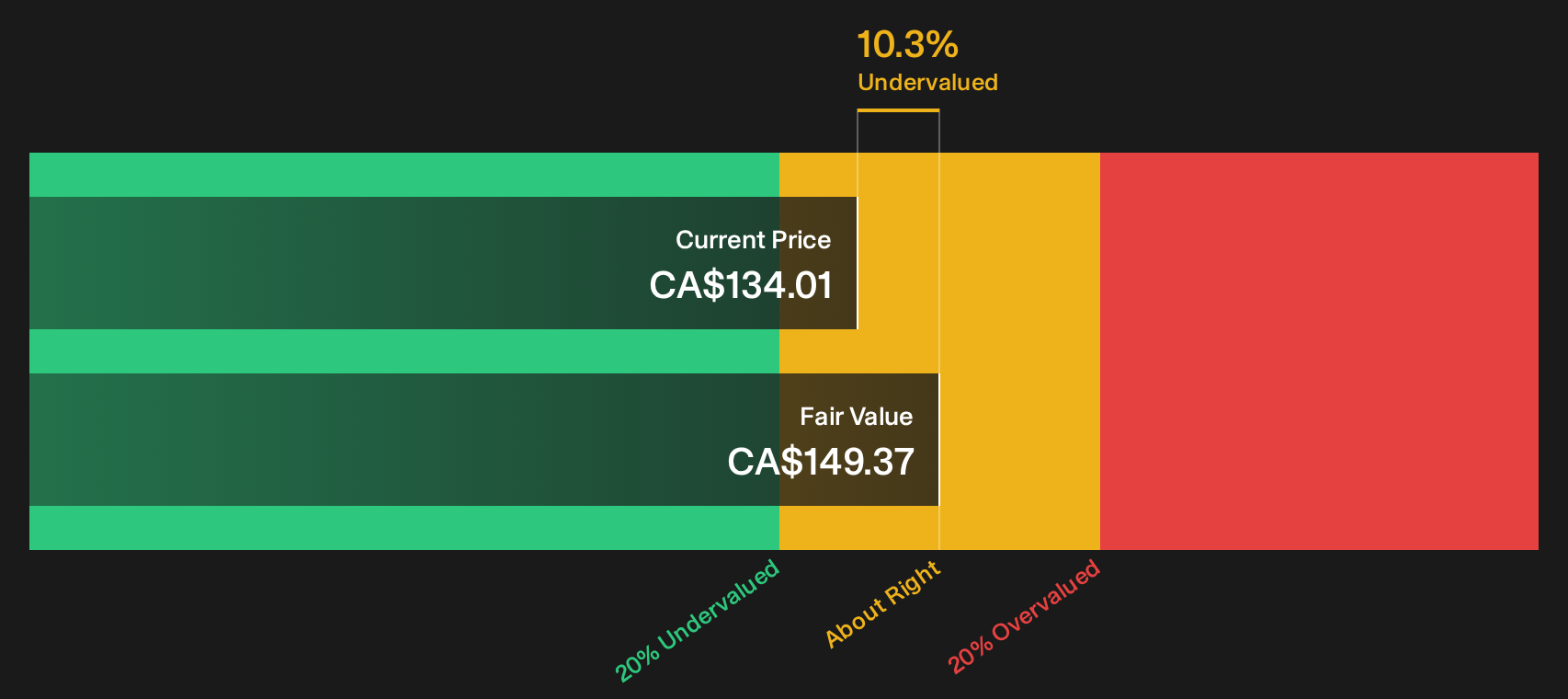
- The broader valuation checks lean expensive, with the company only scoring 2 out of 6 on value metrics even though the DCF estimate sits about 10.3% above the current market price.
For investors, the debate is whether Cameco’s strong five year share price performance already reflects the intrinsic value suggested by the DCF work, or whether the current market premium on multiples still leaves room for further upside.
Scan beyond Cameco’s surge and recent pullback by sizing up uranium related opportunities in 91 nuclear energy infrastructure stocks that share similar infrastructure and nuclear energy themes.
Is Cameco a Bargain on Cash Flow?
The Discounted Cash Flow (DCF) model used here estimates what Cameco’s potential future cash generation could be worth in today’s terms. Based on the latest twelve-month figures, Cameco produced free cash flow of about CA$649.5 million. The valuation analysis assumes cash flows continue growing from that level rather than shrinking. Under those assumptions, the 2 Stage Free Cash Flow to Equity model arrives at an estimated intrinsic value of about CA$149.37 per share.
That estimate is roughly 10.3% above the current share price, which indicates the stock may be undervalued from this cash flow perspective. The recent restart of the Cigar Lake uranium mine and the long term supply agreement with India help explain why projected cash flows support a higher value than the market is currently assigning.
On this DCF view, Cameco stock appears undervalued relative to the cash the business is expected to generate.
Our Discounted Cash Flow (DCF) analysis suggests Cameco is undervalued by 10.3%. Track this in your watchlist or portfolio, or discover 5 more high quality undervalued stocks.
Does Cameco Look Pricey on Sales?
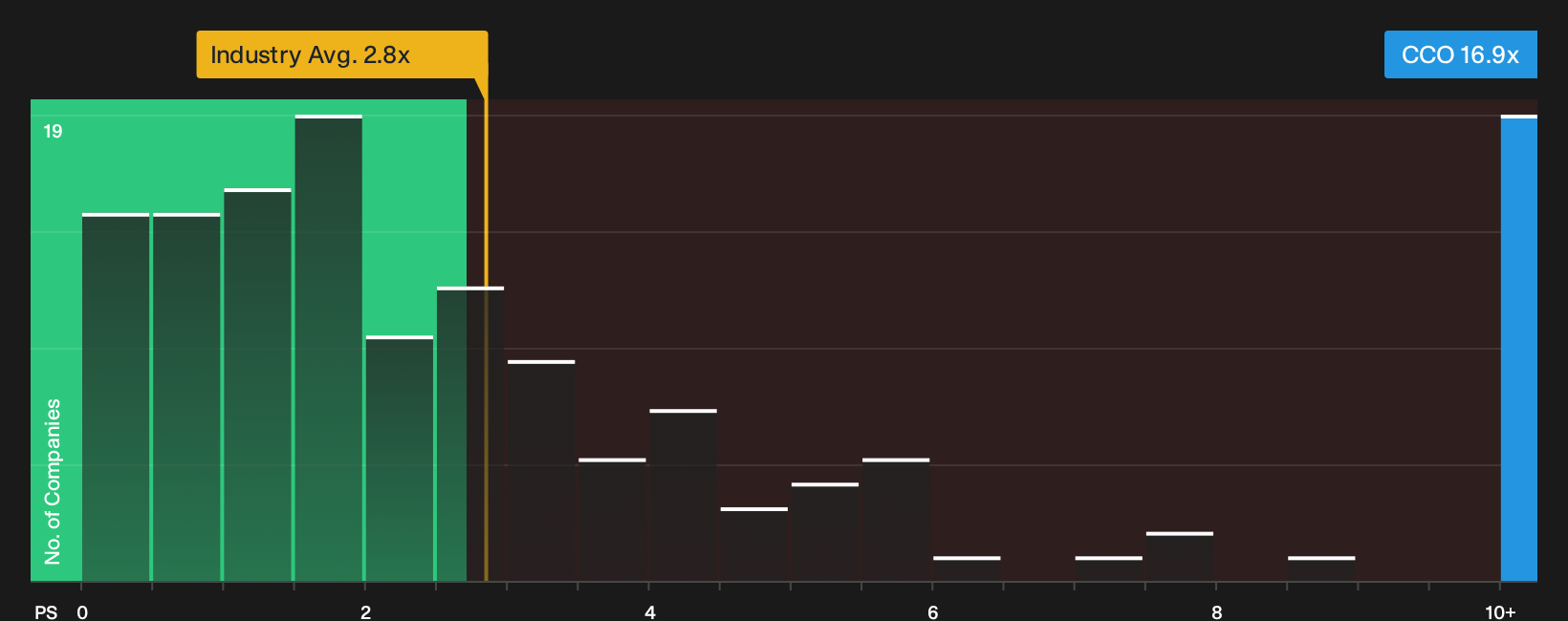
P/S is a useful yardstick for Cameco because uranium producers often see earnings swing around, while revenue better reflects contracted demand. Cameco trades on a P/S of about 16.8x, compared with an oil and gas industry average near 2.8x and a peer group closer to 10.7x. That is a sizeable premium before even looking at any cash flow work.
The Fair Ratio model suggests a P/S closer to 2.3x for Cameco, although that framework heavily penalises the company for its risk profile and the quality of its current revenue base. The gap to the actual 16.8x is therefore less a precise target and more a warning flag that the stock screens very expensive on headline sales. Against that backdrop, the recent enthusiasm around mine restarts, the India contract and Westinghouse exposure already appears baked into what investors are paying for each dollar of revenue.
On the P/S multiple, Cameco shares appear expensive compared with both sector norms and what the Fair Ratio model would typically support.
See what the numbers say about this price — find out in our valuation breakdown.
The Cameco Narrative: What Would Justify Today's Price?
Simply Wall St Narratives for Cameco pick up where this valuation puzzle leaves off by spelling out which paths for Cameco's future revenue, margin profile and earnings power would need to play out for the current share price to look either stretched or too low. Rather than leaning on a single multiple or one model output, each narrative lays out the assumptions behind its fair value view so you can line them up against the company’s results as they arrive, all within the Community page.
One of the top community narratives on Cameco: 25% undervalued
"Established Tier 1 production assets and a disciplined strategy of only bringing supply online in step with contract demand allow Cameco to capitalize on rising uranium prices without risking oversupply..."
Read one of the top narratives on Cameco
Do you think there's more to the story for Cameco? Head over to our Community to see what others are saying!
The Bottom Line
Cameco’s Discounted Cash Flow (DCF) work points to intrinsic value that sits above the current share price, yet market multiples still flag an overvalued stock. The clash comes from cash flow assumptions that place weight on future project delivery, while P/S and related ratios hinge on already stretched expectations after a very strong move. Broader valuation checks remain weak despite the DCF signal. As a result, the crux for investors is whether future uranium cash generation ultimately justifies today’s rich revenue multiple or proves that the current discount to intrinsic value was a value trap all along.
This article by Simply Wall St is general in nature. We provide commentary based on historical data and analyst forecasts only using an unbiased methodology and our articles are not intended to be financial advice. It does not constitute a recommendation to buy or sell any stock, and does not take account of your objectives, or your financial situation. We aim to bring you long-term focused analysis driven by fundamental data. Note that our analysis may not factor in the latest price-sensitive company announcements or qualitative material. Simply Wall St has no position in any stocks mentioned.
Have feedback on this article? Concerned about the content? Get in touch with us directly. Alternatively, email editorial-team@simplywallst.com