
Planet Fitness (PLNT) Stock Could Be 47% Undervalued On Subscription Cash Flow
Planet Fitness shares have dropped sharply year to date, yet both intrinsic value work and market multiples currently point to a stock that screens as cheap rather than expensive.
- The share price is down 53.8% year to date, which means the market has reset expectations materially even as valuation checks flag potential mispricing.
- Future cash generation from its largely subscription based franchise model can support value, while any slowdown in member additions or pressure on franchisee economics may weigh on what investors are willing to pay.
- The broader checks lean cheap, with Planet Fitness scoring highly on value metrics in 5 of 6 tests. You can review these in more detail here.
The issue now is whether the current discount to intrinsic value reflects genuine margin of safety or is simply compensation for business and execution risks that are harder to see in the numbers.
Broaden your watchlist by comparing Planet Fitness with other beaten down opportunities that also screen as attractively priced using our hand picked 31 high quality undervalued stocks list.
Is Planet Fitness a Bargain on Cash Flow?
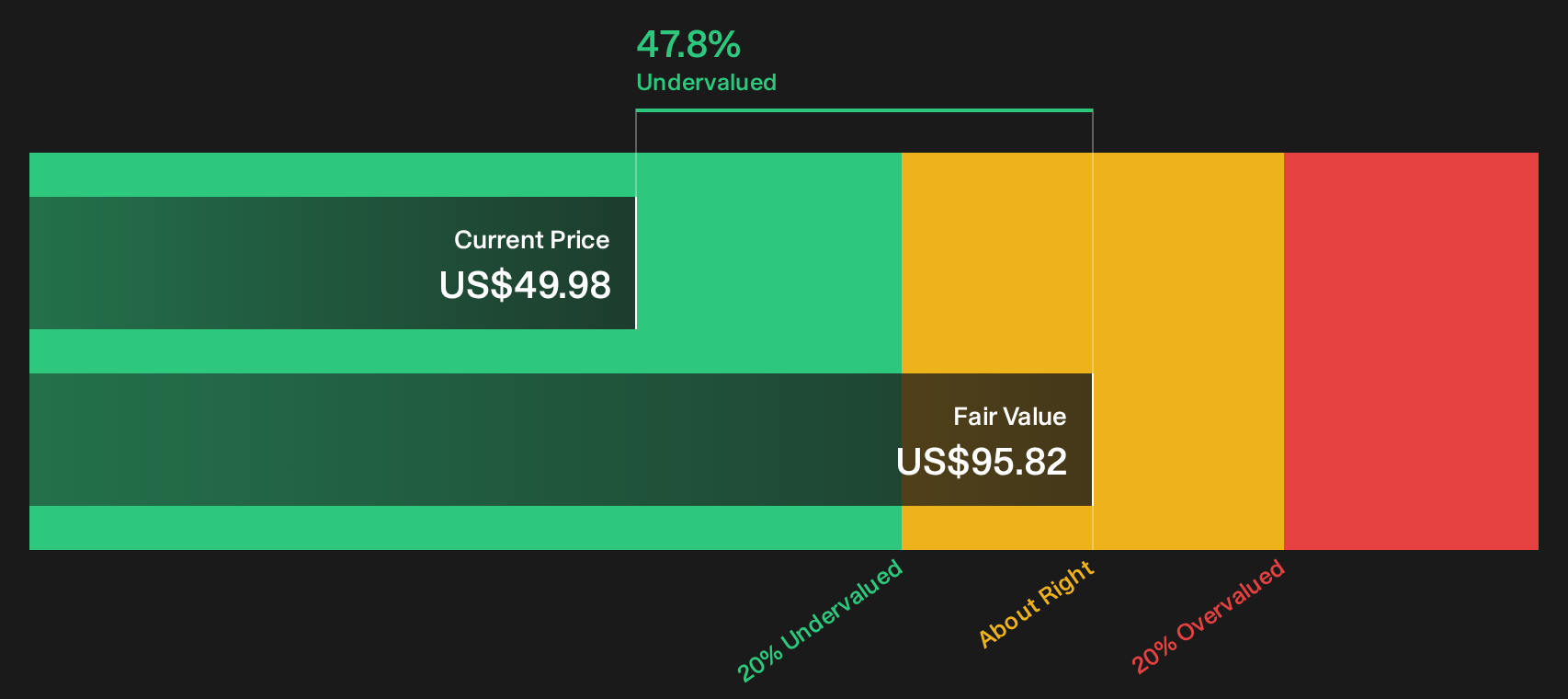
The Discounted Cash Flow (DCF) model here weighs what Planet Fitness could earn in the future against what you pay today. Latest twelve month free cash flow sits at about $256.8 million, and the projection path assumes growing cash generation rather than a shrinking business. On that cash flow profile, the DCF model points to an intrinsic value of about $95.85 per share.
Compared with the current Planet Fitness share price, that estimate implies the stock trades at roughly a 47.1% discount to the modelled value. The gap suggests the market is pricing in meaningful execution or business risk that is not fully reflected in the cash flow path used in this forecast.
On this DCF view, Planet Fitness appears undervalued at current levels.
Our Discounted Cash Flow (DCF) analysis suggests Planet Fitness is undervalued by 47.1%. Track this in your watchlist or portfolio, or discover 31 more high quality undervalued stocks.
Does Planet Fitness Look Undervalued on Earnings?
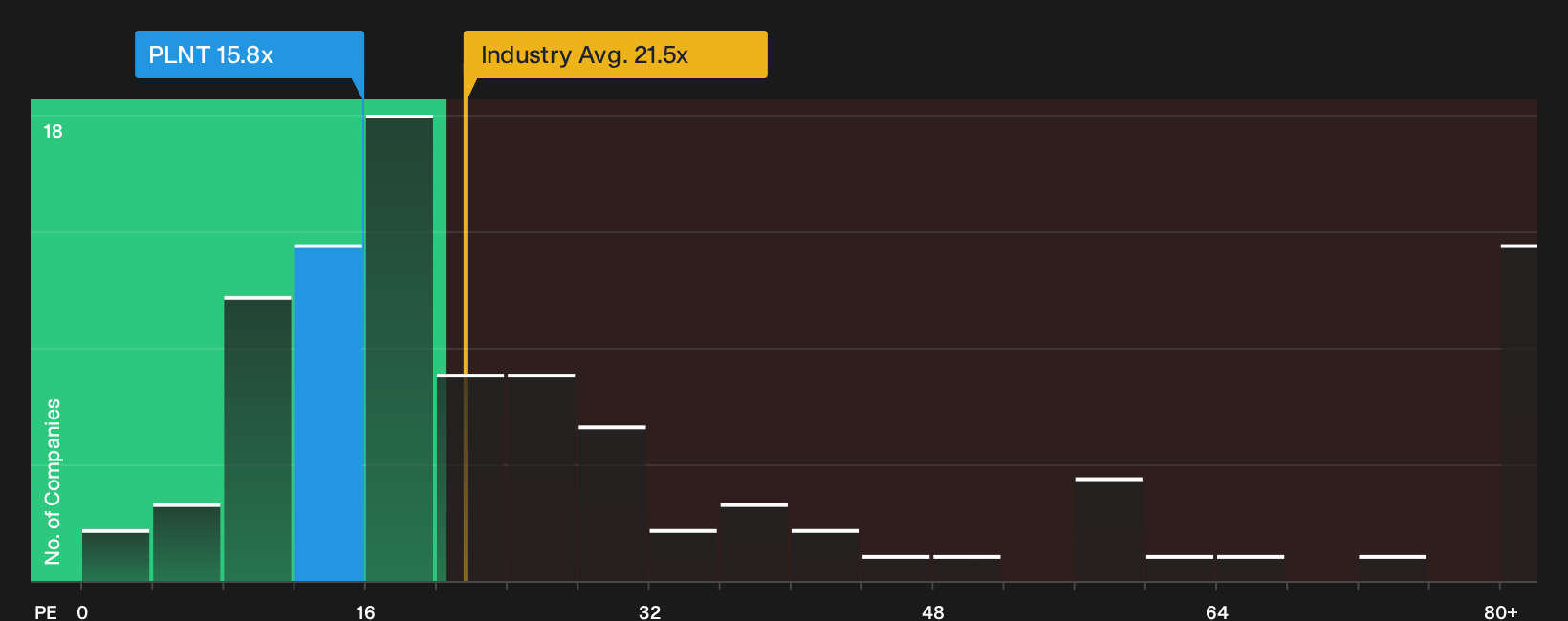
P/E works well for Planet Fitness because earnings are a key focus for investors in subscription style consumer businesses. The current P/E sits around 16.0x, compared with a hospitality industry average near 21.5x and a peer group closer to 24.5x. On this snapshot, the stock trades at a visible discount to both the sector and directly comparable companies.
A fair P/E multiple for Planet Fitness, based on its mix of profitability, scale, and risk, is estimated at about 20.3x. That is several turns higher than the current 16.0x level. This indicates the market is applying a heavier risk discount than this framework implies. If earnings remain broadly in line with what the multiple is built on, that gap signals the shares screen as undervalued on earnings power.
On the P/E test, Planet Fitness stock appears undervalued relative to what its earnings profile would typically justify.
See what the numbers say about this price — find out in our valuation breakdown.
The Planet Fitness Narrative: What Would Justify Today's Price?
Planet Fitness' valuation gap raises a simple question for Narratives on Simply Wall St's Community page: what would the business need to deliver on growth, margins, and earnings for the shares to be worth materially more or less than today's price? Each narrative treats fair value as a thesis about how the company might perform over time, so you can see how the idea holds up as fresh information comes through.
Community views on Planet Fitness are sharply split, with one camp focused on youth driven growth and another fixated on churn and legal risk.
Bull case: 24% undervalued
"Rising Black Card penetration, combined with proven ability to implement price increases with minimal impact on churn, signals future near-term potential for further price hikes at this higher margin tier…"
Read the full Bull Case to see why Planet Fitness could be undervalued
Bear case: roughly fairly valued
"The national rollout of streamlined online membership cancellation, while positioned as member-friendly, is already translating into structurally higher churn and elevated attrition…"
Read the full Bear Case to see why Planet Fitness could be overvalued
Do you think there's more to the story for Planet Fitness? Head over to our Community to see what others are saying!
The Bottom Line
On valuation, Planet Fitness screens as clearly undervalued, with both the Discounted Cash Flow (DCF) intrinsic value estimate and the earnings multiple view pointing in the same direction. The high value score reinforces that the current price embeds a meaningful discount rather than a full recovery scenario. What determines whether that gap closes is simple. The key question is whether Planet Fitness can keep its subscription cash flows resilient while containing churn and franchisee pressure enough for the market to grow comfortable with a higher multiple again.
This article by Simply Wall St is general in nature. We provide commentary based on historical data and analyst forecasts only using an unbiased methodology and our articles are not intended to be financial advice. It does not constitute a recommendation to buy or sell any stock, and does not take account of your objectives, or your financial situation. We aim to bring you long-term focused analysis driven by fundamental data. Note that our analysis may not factor in the latest price-sensitive company announcements or qualitative material. Simply Wall St has no position in any stocks mentioned.
Have feedback on this article? Concerned about the content? Get in touch with us directly. Alternatively, email editorial-team@simplywallst.com