
Trinity Industries (TRN) Marks Its 250th Dividend, Is The Stock Still A Bargain?
What Trinity Industries’ 250th Dividend Means For Investors
Trinity Industries (TRN) has declared a quarterly dividend of $0.31 per share, marking its 250th consecutive payout. Investors of record on October 15 are set to receive cash on October 30, 2026.
Trinity Industries’ share price has eased over the past three months, with a 90 day share price return of 18.41% in the red, even though the year to date share price return is 5.23% and the 3 year total shareholder return is 31.36%. This suggests longer term holders have still been rewarded despite recent pressure around the time of this 250th dividend announcement.
Compare the long dividend track record of Trinity Industries with its rail and industrial peers by scanning a curated list of 6 dividend fortresses that prioritize consistency of payouts.
Trinity Industries looks like a solid railcar landlord and manufacturer on paper, yet the share price has slipped over the past quarter. Is that recent drop a chance to buy quality at a fair tag, or a warning signal?
Most Popular Narrative: 16.6% Undervalued
Against Trinity Industries’ last close of $28.36, the most followed valuation narrative points to a fair value of $34, which frames the recent pullback very differently.
The analysts have a consensus price target of $34.0 for Trinity Industries based on their expectations of its future earnings growth, profit margins and other risk factors. In order for you to agree with the analysts, you would need to believe that by 2029, revenues will be $2.0 billion, earnings will come to $59.3 million, and it would be trading on a PE ratio of 56.2x, assuming you use a discount rate of 8.9%.
Want to see what bridges today’s earnings power to that higher fair value for Trinity Industries? The anchor assumptions combine flat revenue, slimmer margins and a sharply higher future earnings multiple. It is worth asking which moving piece does the heavy lifting in that story.
Result: Fair Value of $34 (UNDERVALUED)
Have a read of the narrative in full and understand what's behind the forecasts.
Still, Trinity Industries depends heavily on cyclical sectors like energy and agriculture, and rising maintenance and compliance costs could pressure earnings if pricing power weakens.
Find out about the key risks to this Trinity Industries narrative.
Another View On Trinity Industries’ Valuation
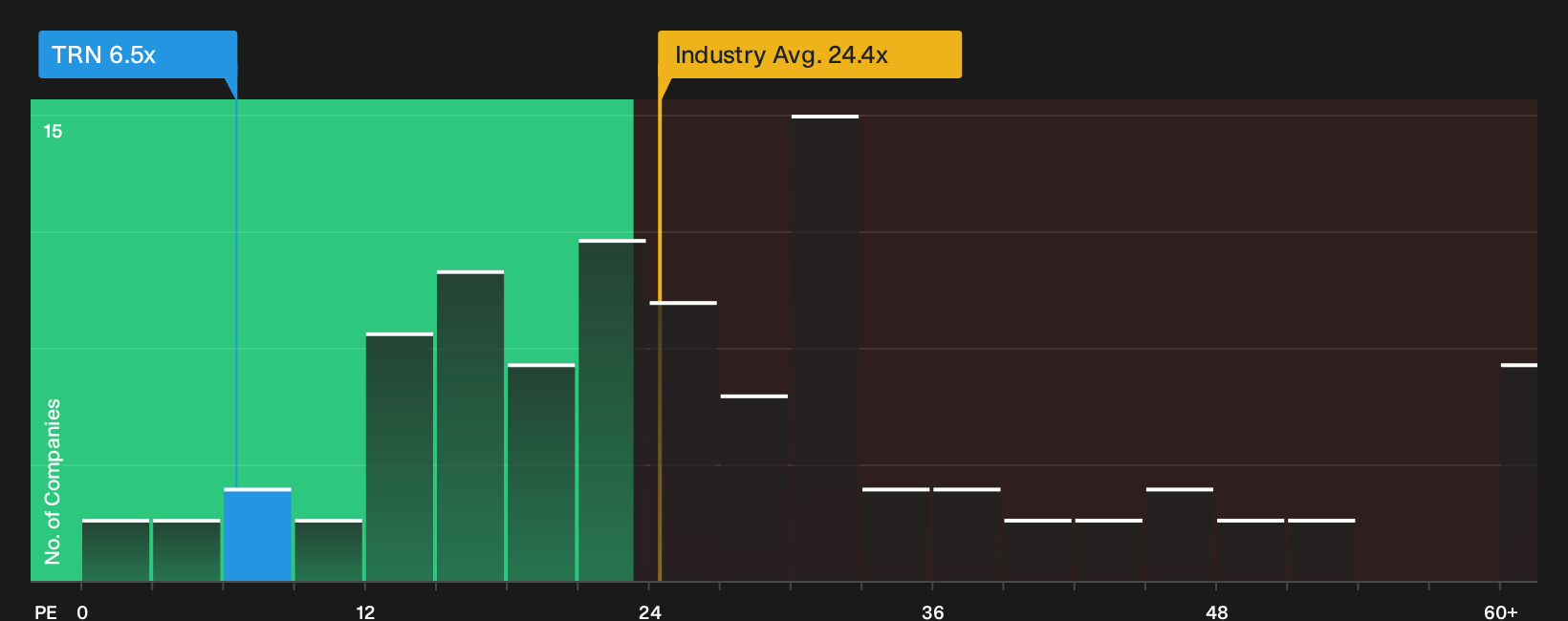
The analyst narrative relies on a future P/E of 56.2x to call Trinity Industries undervalued at a fair value of $34. Yet today the stock trades at 6.5x earnings, versus a fair ratio of 5.7x and peer and industry averages of 20.1x and 24.9x. That gap hints at cheapness relative to machinery rivals but a richer tag than the fair ratio, which raises a simple question: Is the discount a genuine opportunity or just payment for real business risk?
See what the numbers say about this price — find out in our valuation breakdown.
Next Steps
Mixed messages in the Trinity Industries story so far. Check the data yourself, weigh the upside against the downside, and walk through the 2 key rewards and 5 important warning signs.
Looking For More Ideas Beyond Trinity Industries?
If Trinity Industries has your attention, do not stop there. Broaden your watchlist now and give yourself more options before the next move arrives.
- Target dependable cash generators by scanning a 6 dividend fortresses that focuses on companies prioritizing steady shareholder payouts.
- Hunt for mispriced opportunities by checking a 33 high quality undervalued stocks that blends strong fundamentals with attractive valuations.
- Protect your downside by reviewing a 11 resilient stocks with low risk scores designed to surface businesses with more resilient financial profiles.
This article by Simply Wall St is general in nature. We provide commentary based on historical data and analyst forecasts only using an unbiased methodology and our articles are not intended to be financial advice. It does not constitute a recommendation to buy or sell any stock, and does not take account of your objectives, or your financial situation. We aim to bring you long-term focused analysis driven by fundamental data. Note that our analysis may not factor in the latest price-sensitive company announcements or qualitative material. Simply Wall St has no position in any stocks mentioned.
Have feedback on this article? Concerned about the content? Get in touch with us directly. Alternatively, email editorial-team@simplywallst.com