
It Might Not Be A Great Idea To Buy Simmons First National Corporation (NASDAQ:SFNC) For Its Next Dividend
Some investors rely on dividends for growing their wealth, and if you're one of those dividend sleuths, you might be intrigued to know that Simmons First National Corporation (NASDAQ:SFNC) is about to go ex-dividend in just three days. The ex-dividend date is one business day before a company's record date, which is the date on which the company determines which shareholders are entitled to receive a dividend. It is important to be aware of the ex-dividend date because any trade on the stock needs to have been settled on or before the record date. Thus, you can purchase Simmons First National's shares before the 15th of September in order to receive the dividend, which the company will pay on the 1st of October.
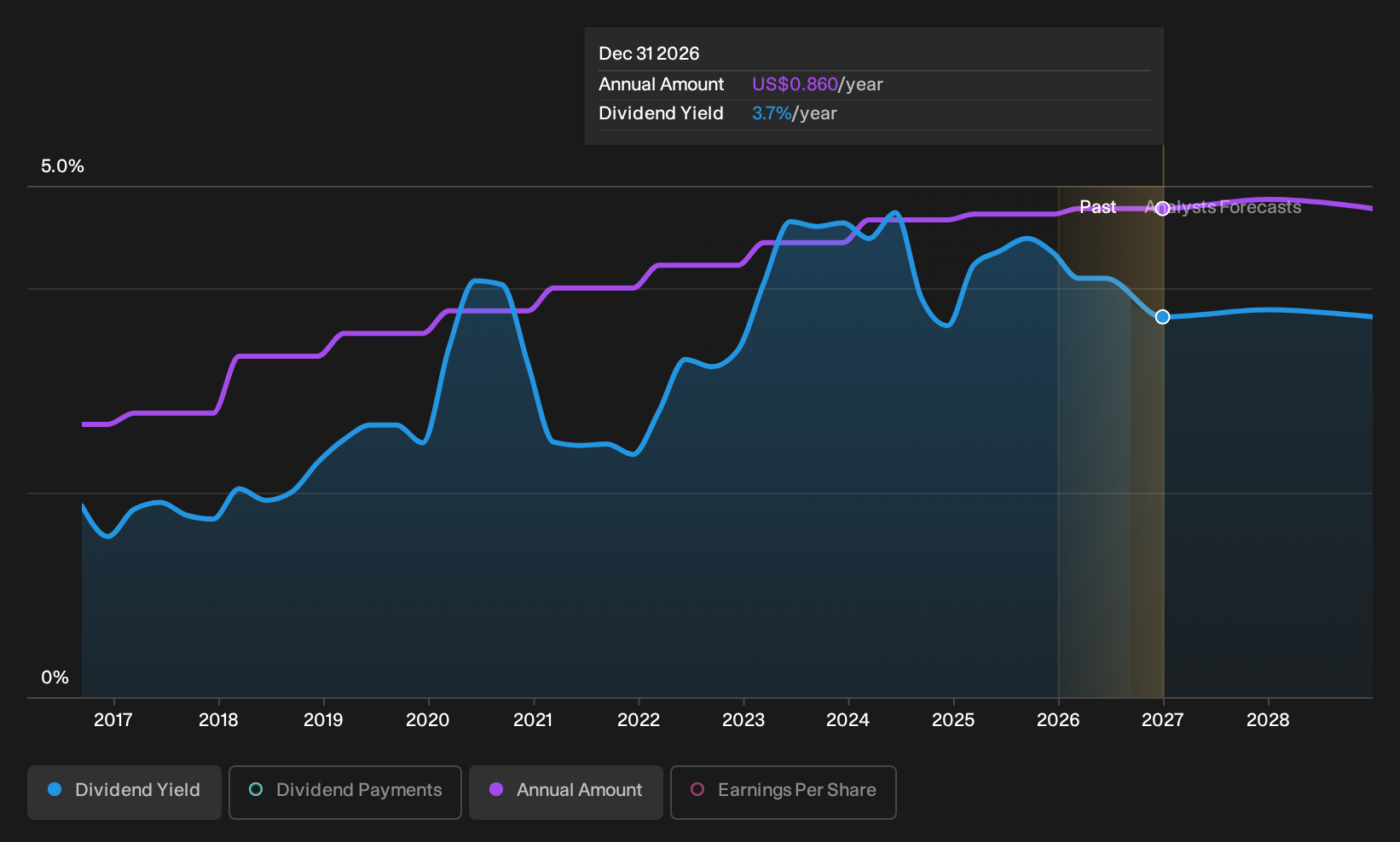
The company's next dividend payment will be US$0.215 per share, and in the last 12 months, the company paid a total of US$0.86 per share. Based on the last year's worth of payments, Simmons First National stock has a trailing yield of around 3.7% on the current share price of US$23.13. Dividends are an important source of income to many shareholders, but the health of the business is crucial to maintaining those dividends. So we need to check whether the dividend payments are covered, and if earnings are growing.
Dividends are typically paid out of company income, so if a company pays out more than it earned, its dividend is usually at a higher risk of being cut. Simmons First National's dividend is not well covered by earnings, as the company lost money last year. This is not a sustainable state of affairs, so it would be worth investigating if earnings are expected to recover.
Check out our latest analysis for Simmons First National
Click here to see the company's payout ratio, plus analyst estimates of its future dividends.
Have Earnings And Dividends Been Growing?
When earnings decline, dividend companies become much harder to analyse and own safely. Investors love dividends, so if earnings fall and the dividend is reduced, expect a stock to be sold off heavily at the same time. Simmons First National reported a loss last year, and the general trend suggests its earnings have also been declining in recent years, making us wonder if the dividend is at risk.
Simmons First National also issued more than 5% of its market cap in new stock during the past year, which we feel is likely to hurt its dividend prospects in the long run. Trying to grow the dividend while issuing large amounts of new shares reminds us of the ancient Greek tale of Sisyphus - perpetually pushing a boulder uphill.
Many investors will assess a company's dividend performance by evaluating how much the dividend payments have changed over time. In the past 10 years, Simmons First National has increased its dividend at approximately 6.5% a year on average.
Get our latest analysis on Simmons First National's balance sheet health here.
The Bottom Line
From a dividend perspective, should investors buy or avoid Simmons First National? First, it's not great to see the company paying a dividend despite being loss-making over the last year. Worse, the general trend in its earnings looks negative in recent years. These characteristics don't generally lead to outstanding dividend performance, and investors may not be happy with the results of owning this stock for its dividend.
Having said that, if you're looking at this stock without much concern for the dividend, you should still be familiar of the risks involved with Simmons First National. Our analysis shows 1 warning sign for Simmons First National and you should be aware of it before buying any shares.
A common investing mistake is buying the first interesting stock you see. Here you can find a full list of high-yield dividend stocks.
Have feedback on this article? Concerned about the content? Get in touch with us directly. Alternatively, email editorial-team (at) simplywallst.com.
This article by Simply Wall St is general in nature. We provide commentary based on historical data and analyst forecasts only using an unbiased methodology and our articles are not intended to be financial advice. It does not constitute a recommendation to buy or sell any stock, and does not take account of your objectives, or your financial situation. We aim to bring you long-term focused analysis driven by fundamental data. Note that our analysis may not factor in the latest price-sensitive company announcements or qualitative material. Simply Wall St has no position in any stocks mentioned.