
How Flex Pay Launch At Six Flags Entertainment (FUN) Has Changed Its Investment Story
- Six Flags Entertainment introduced Flex Pay by Upgrade in September 2026, letting eligible guests buy Season Passes and other products of US$49 or more online and pay over time through fixed monthly installments, with immediate access to pass benefits after activation and no prepayment penalties.
- This financing option could influence how visitors budget for trips, with more spending potentially shifting toward recurring passes and planned visits rather than one off ticket purchases. This matters for how predictable Six Flags Entertainment’s cash inflows can become.
- We will examine how Six Flags Entertainment’s investment narrative is affected by Flex Pay’s installment structure and its impact on recurring demand.
Scan how Six Flags Entertainment’s new Flex Pay model compares with other businesses leaning into recurring, experience driven spending by reviewing the hand picked 18 high quality undiscovered gems in this space.
Six Flags Entertainment Investment Narrative Recap
To own Six Flags Entertainment, you need to believe the merged park group can turn heavy assets and strong guest demand into steadier, recurring cash flows. The Flex Pay rollout fits that story, since it steers more guests toward season passes and memberships, which can smooth attendance patterns and make revenue timing a bit more predictable.
The near term swing factor still sits with attendance recovery and cost control, while the biggest threat remains the sizeable debt load and interest bill. Flex Pay does not change those balance sheet pressures. Its impact will likely be modest unless it scales meaningfully across the portfolio.
The Flex Pay launch lines up neatly with prior efforts to push multi park loyalty products, upgraded ticketing, and mobile driven e commerce. All of these aim to turn a hit driven, weather sensitive business into something with more repeat visitation and digital touchpoints. For you, the question is how quickly that shift shows up in the numbers.
Execution risk sits in the background. High leverage, aging parks that need ongoing capital spending, and exposure to extreme weather still hang over the story, regardless of payment options. Flex Pay can support the season pass catalyst, but it does not offset the structural risks around debt, costs, and concentrated North American exposure.
Six Flags Entertainment's current analyst script points to US$3.2 billion in revenue and US$97.2 million in earnings by 2029, built on 1.2% yearly revenue growth and an earnings swing of roughly US$1.9 billion from a loss of about US$1.8 billion today to that projected profit level.
Discover why Six Flags Entertainment's fair value suggests a 55% potential upside from its current price, and why this opportunity may narrow quickly.
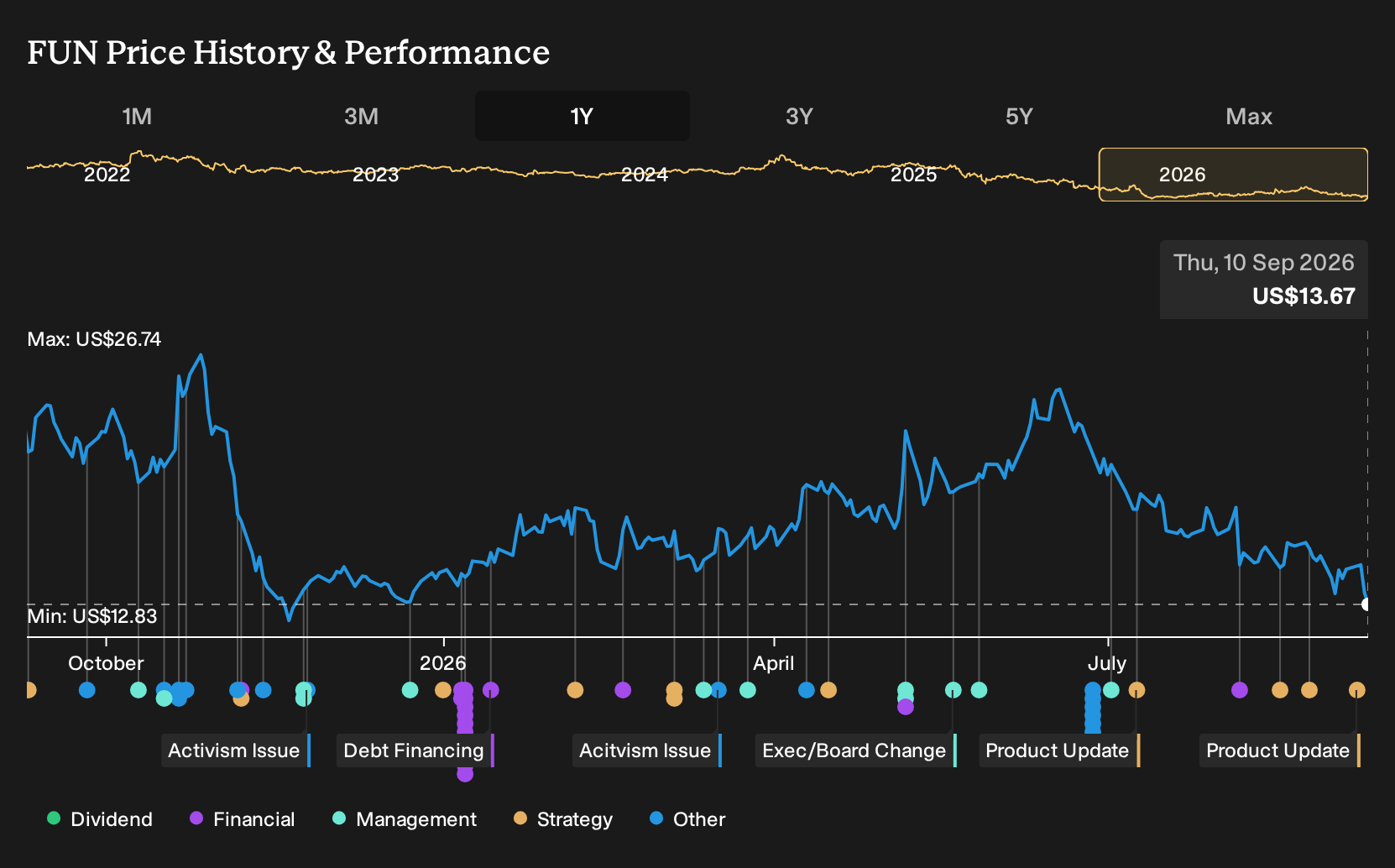
Exploring Other Perspectives
One alternate view worries less about Flex Pay itself and more about long term relevance for Six Flags Entertainment. The most pessimistic analysts already framed 2029 as a flat revenue story near US$3.1b and saw room for earnings to land as low as a US$16.4 million loss. Those expectations came before this financing shift, so you may want to compare several different narratives yourself.
Explore 4 other Six Flags Entertainment fair value estimates, including one that suggests as much as 24% downside from the current price.
Reach Your Own Conclusion
Don't just follow the ticker. Dig into the data and build a conviction that's truly your own.
- A great starting point for your Six Flags Entertainment research is our analysis highlighting 3 key rewards that could impact your investment decision.
- See our latest analysis for Six Flags Entertainment. The report includes a comprehensive fundamental analysis summarized in a single visual, the Snowflake, making it easy to evaluate Six Flags Entertainment's overall financial health at a glance.
Looking for more Six Flags Entertainment sized investment ideas?
Once you have a view on Six Flags Entertainment, it helps to widen the lens and compare it with other potential opportunities that fit your risk, income, and balance sheet preferences. The Simply Wall St Screener can help you quickly surface stocks that line up with the kind of profile you want to research next.
- If you care most about quality at a sensible entry point, scan the 33 high quality undervalued stocks that currently look mispriced based on their fundamentals.
- If downside resilience matters more than anything, filter for companies in the 11 resilient stocks with low risk scores and see which ones match your tolerance for volatility and balance sheet strength.
- If you want a starting list of financially steady businesses, shortlist candidates from the list of solid balance sheet and fundamentals (23 results) and then run your own deeper checks on each idea.
This article by Simply Wall St is general in nature. We provide commentary based on historical data and analyst forecasts only using an unbiased methodology and our articles are not intended to be financial advice. It does not constitute a recommendation to buy or sell any stock, and does not take account of your objectives, or your financial situation. We aim to bring you long-term focused analysis driven by fundamental data. Note that our analysis may not factor in the latest price-sensitive company announcements or qualitative material. Simply Wall St has no position in any stocks mentioned.
Have feedback on this article? Concerned about the content? Get in touch with us directly. Alternatively, email editorial-team@simplywallst.com