
How Investors May Respond To Oracle (ORCL) Q1 Earnings Preview
- Oracle plans to report its fiscal Q1 2027 results after the close on September 10, 2026, with investors watching how its large AI-driven cloud backlog and heavy data center spending flow through revenue, earnings, and cash generation.
- Kahuna Workforce Solutions announced a partnership that integrates its skills and competency platform with Oracle Cloud HCM, highlighting how Oracle aims to link growing AI and cloud infrastructure demand to real-world enterprise workflows in healthcare, manufacturing, and energy.
- The focus then shifts to how Oracle's record AI-oriented remaining performance obligations may influence its longer term investment narrative.
Scan how Oracle's AI-heavy buildout compares to other potential breakouts by running the same playbook over a curated set of 89 AI infrastructure stocks in one sweep.
Oracle Investment Narrative Recap
Owning Oracle today means buying into a long runway for AI infrastructure and cloud software built on a very large, contracted backlog. The immediate swing factor is simple. Can Oracle turn its US$638b in remaining performance obligations into Oracle Cloud Infrastructure and database revenue quickly enough to cover heavy AI data center spending and support earnings. The flip side is clear. Massive capex, rising debt needs and customer concentration around flagship AI clients leave the business exposed if usage or contract timing softens.
This coming earnings release matters because management has flagged plans to fund roughly US$70b of fiscal 2027 capex with about US$40b of new debt and equity. Investors will want to see whether guidance and cash flow trends show that these facilities are filling at a pace that supports that build. Any hint of slower conversion of backlog, weaker free cash generation or more aggressive financing plans would keep the near term risk skewed toward funding pressure rather than operational upside.
The Kahuna Workforce Solutions integration into Oracle Cloud HCM is one of the more telling announcements around this earnings moment. It shows Oracle trying to link its AI and cloud infrastructure initiatives to practical workflows in healthcare, manufacturing and energy, where validated skills data and regulatory compliance sit directly on top of its applications. That kind of embedded use case can act as a catalyst for stickier software revenue and higher value contracts, although it still sits in the shadow of the broader questions around AI infrastructure utilization and OpenAI exposure.
For shareholders, this type of HCM partnership is notable because it connects Oracle’s back end capacity build to front line decision making in large, regulated enterprises. Strong execution here can make Oracle’s stack harder to replace and can support multi year migrations into its cloud, which is what the backlog reflects. The risk is that if AI infrastructure demand or pricing changes, incremental wins like this may not fully offset the scale of the capex committed.
That said, the picture looks less straightforward once you factor in ...
Read the full Oracle narrative to see the case behind these numbers.
Oracle's current analyst narrative points to forecast revenues of US$182.2b and earnings of US$42.3b by 2029, based on an assumed yearly revenue expansion of 39.3% and an earnings increase of about US$25.3b from US$17.0b today.
Oracle's forecasts puts fair value at $241.97 compared with $161.63, indicating a 50% upside to its current price that may not last much longer.
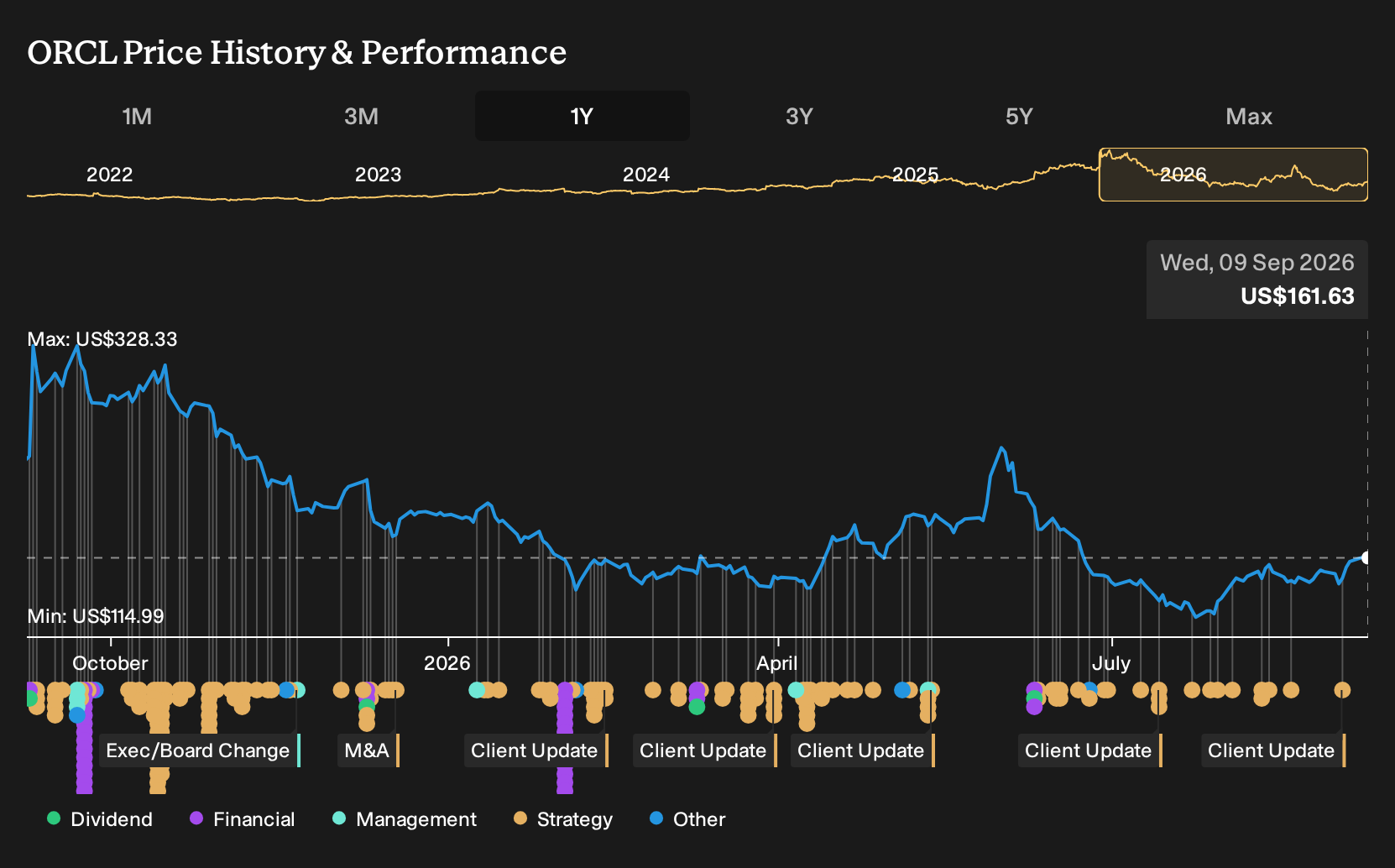
Exploring Other Perspectives
One of the sharpest disagreements sits around just how far Oracle’s AI push can stretch earnings. The most optimistic analysts were pencilling in revenue of about US$196.6b and earnings of US$46.5b by 2029, far above the baseline view. With Q1 2027 results now approaching, expect those competing stories to evolve.
To balance Oracle's current fair value view, compare it with 22 other fair value estimates for Oracle from the wider community before making your next move.
The Verdict Is Yours
Don't just follow the ticker; dig into the data and build a conviction that's truly your own.
- A great starting point for your Oracle research is our analysis highlighting 4 key rewards and 2 important warning signs that could impact your investment decision.
- See our latest analysis for Oracle. The report includes a comprehensive fundamental analysis summarized in a single visual, the Snowflake, making it easy to evaluate Oracle's overall financial health at a glance.
Looking For More Ideas Beyond Oracle?
If Oracle has sharpened your thinking about AI infrastructure and long-term contracts, it can be useful to line that story up against a few very different setups using the Simply Wall St Screener.
- If you care most about stability and capital preservation, start by checking companies that screen as resilient on risk metrics and balance sheet strength using the 10 resilient stocks with low risk scores.
- For readers hunting for mispriced quality, compare Oracle's setup with a curated pool of businesses that combine strong fundamentals with attractive valuations through the 31 high quality undervalued stocks.
- Income focused investors who value consistency over headlines may want to review companies with higher yields and sturdier payouts, which you can do in one pass with the 6 dividend fortresses.
This article by Simply Wall St is general in nature. We provide commentary based on historical data and analyst forecasts only using an unbiased methodology and our articles are not intended to be financial advice. It does not constitute a recommendation to buy or sell any stock, and does not take account of your objectives, or your financial situation. We aim to bring you long-term focused analysis driven by fundamental data. Note that our analysis may not factor in the latest price-sensitive company announcements or qualitative material. Simply Wall St has no position in any stocks mentioned.
Have feedback on this article? Concerned about the content? Get in touch with us directly. Alternatively, email editorial-team@simplywallst.com