
3 U.S. Bank Stocks Built for Higher Rates
Fed rate hike odds are jumping, inflation readings remain firm and oil above $100 risks squeezing everything from corporate budgets to household wallets. That mix can reshape how banks, insurers and bond-focused asset managers earn money, and where risk quietly builds. This article walks through three U.S. rate-beneficiary stocks exposed to these shifts to help you decide which ideas deserve a closer look on your watchlist right now.
The three stocks covered next are just a sample, and the full screen surfaced 39 more U.S. banks, insurers and fixed-income asset managers with equally compelling rate exposure stories that are not included here.
To identify and analyze the highest-conviction ideas in this space, head straight to the U.S. Rate-Beneficiary Banks, Insurers and Fixed-Income Asset Managers screener.
Burke & Herbert Financial Services (BHRB)
Overview: Burke & Herbert Financial Services is a Virginia based community bank that offers deposit accounts, loans and wealth services to households and businesses.
Operations: The bank generates all of its US$360 million in revenue from community banking services in the United States.
Market Cap: US$1.4b
Burke & Herbert Financial Services is a classic community lender that lives on the spread between what it pays on deposits and earns on loans, which ties directly into a higher Fed rate backdrop. Net interest income of US$93.05 million in 2Q26 and a 3.1% dividend keep it firmly in the rate-beneficiary bucket, while one unresolved pressure on earnings quality could still shift how much of that rate benefit reaches shareholders.
To see how much of that rate uplift might be at risk, review the 3 key rewards and 4 important warning signs (1 is major!) before earnings quality surprises you.

Bank First (BFC)
Overview: Bank First is a Wisconsin based regional bank holding company offering traditional deposit accounts, loans and related financial services to households and businesses.
Operations: Bank First generates US$217 million in revenue from banking operations in the United States, anchored in its core lending and deposit franchise.
Market Cap: US$1.7b
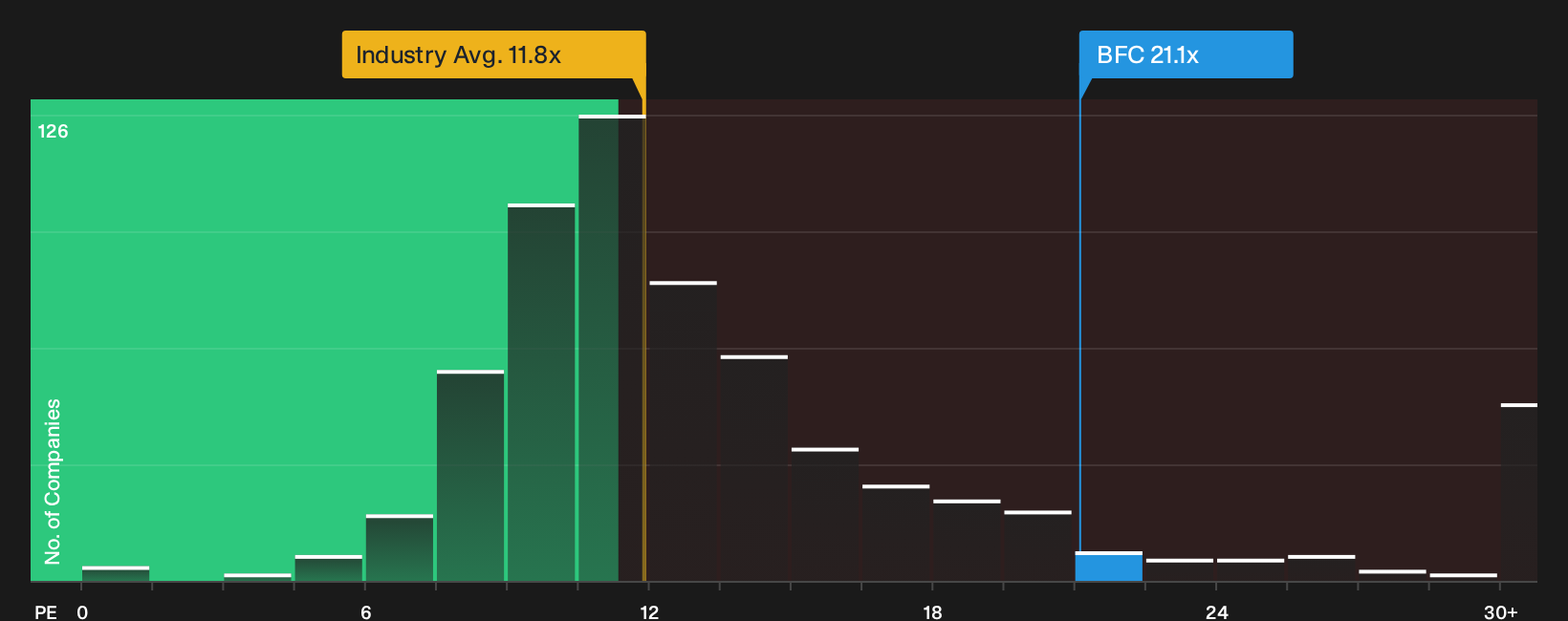
Bank First fits this rate-beneficiary screen neatly because it leans on plain vanilla lending, where higher policy rates can lift net interest income when deposit costs stay in check. Earnings growth has been strong, the dividend is reliable, and recent buybacks support shareholder returns. However, the premium 21.1x P/E means much depends on how pressure on profitability plays out if rates stay higher for longer.
With that rich P/E already baking in optimism, tap into the analysis report for Bank First to see whether Bank First's valuation is stretching ahead of its fundamentals.
Seacoast Banking Corporation of Florida (SBCF)
Overview: Seacoast Banking Corporation of Florida is a Florida-based bank holding company providing retail, commercial, wealth management, mortgage and insurance services to local customers.
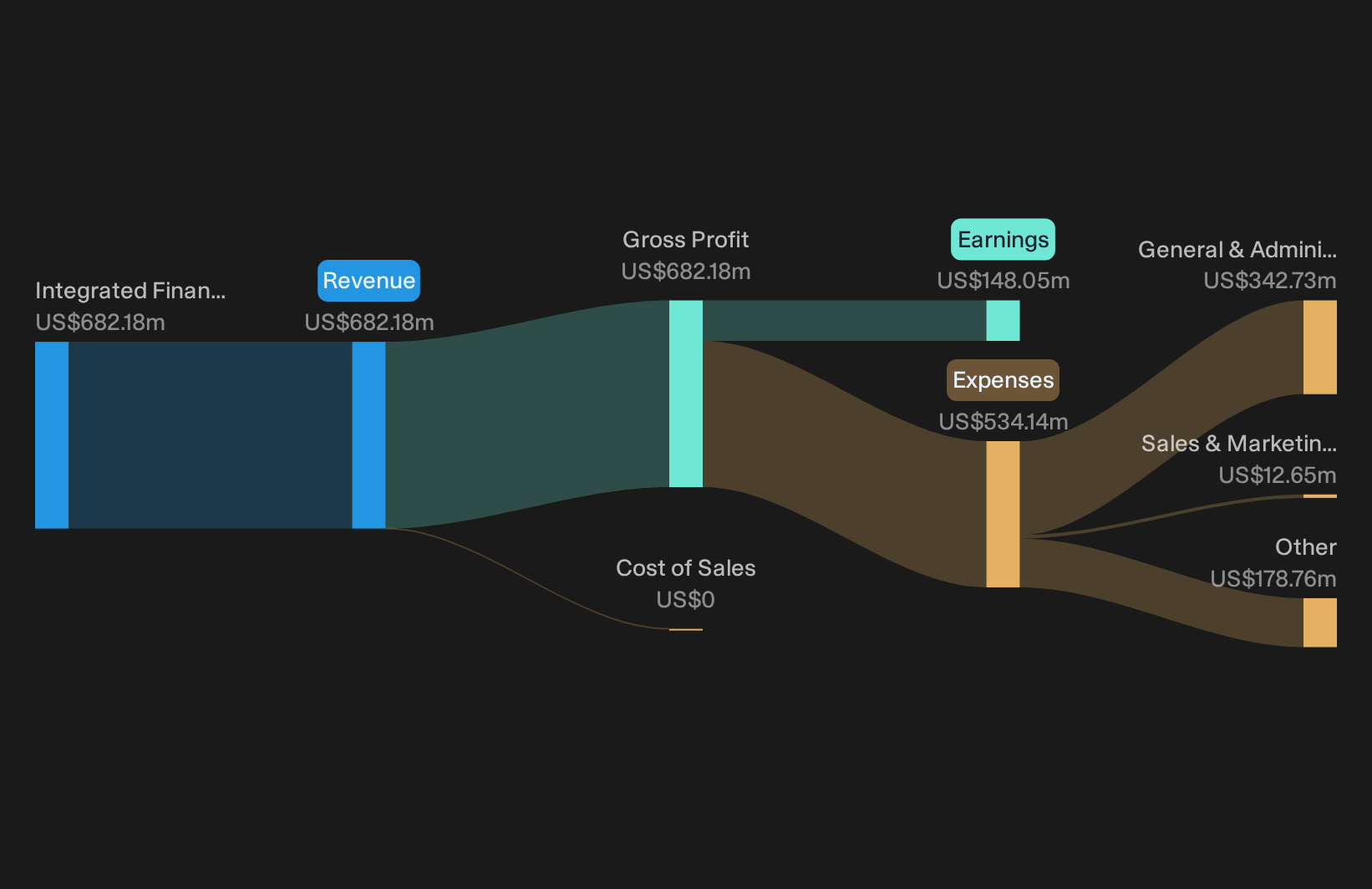
Operations: Seacoast Banking Corporation of Florida generates US$682 million of integrated financial services revenue entirely from customers in the United States.
Market Cap: US$3.3b
Seacoast Banking Corporation of Florida sits squarely in the rate-beneficiary camp because its Florida-focused lending and deposit franchise leans heavily on net interest income, which becomes more valuable when higher policy rates persist longer than markets once expected.
"Seacoast is actively expanding its market share through disciplined, accretive acquisitions (Heartland Bancshares closed and Villages Bank Corporation pending), expected to provide high-quality, low-cost core deposits and complementary loan portfolios, significantly enhancing operational synergies, core net interest margin, and long-term earnings growth."
The real swing factor is how that new funding mix behaves if competition for deposits tightens just as the higher-rate tailwind peaks.
If that funding mix continues to change, the full narrative for Seacoast Banking Corporation of Florida details how Seacoast Banking Corporation of Florida could experience earnings power and deposit costs moving in a direction that may benefit investors.
Seeking Fresh Alternatives Before Others Do
Fresh ideas move first. Breakout themes gain momentum while most investors are caught watching yesterday’s winners dropping from the highs. Scan under the radar for now and act now.
- Target dependable income streams by reviewing a curated group of potential 6 dividend fortresses that aim to keep payouts flying while the window for attractive entry yields is still open.
- Spot early technology momentum and filter for 89 AI infrastructure stocks before heavy inflows crowd the trade and narrow the gap between current prices and future expectations.
- Hunt for resilient balance sheets through a focused list of solid balance sheet and fundamentals (24 results) that surfaces businesses built to stay on their feet while weaker competitors struggle to keep up.
This article by Simply Wall St is general in nature. We provide commentary based on historical data and analyst forecasts only using an unbiased methodology and our articles are not intended to be financial advice. It does not constitute a recommendation to buy or sell any stock, and does not take account of your objectives, or your financial situation. We aim to bring you long-term focused analysis driven by fundamental data. Note that our analysis may not factor in the latest price-sensitive company announcements or qualitative material. Simply Wall St has no position in any stocks mentioned.
Have feedback on this article? Concerned about the content? Get in touch with us directly. Alternatively, email editorial-team@simplywallst.com