
Austal Stock After Full Year Loss Raises Fresh Questions
- Austal reported full year 2026 results with sales of A$2,028.96 million but swung from A$89.73 million profit to a A$53.6 million loss, translating to a basic loss per share of A$0.127 from continuing operations.
- The combination of higher revenue and a move into the red highlights rising cost or contract pressures that outweighed top line growth for Austal. This raises fresh questions about how reliably its pipeline can translate into sustainable earnings.
- With Austal shifting from profit to a full year loss, we will examine how this reversal influences its longer term investment narrative.
Austal Investment Narrative Recap
To own Austal, you need to believe that a large, long dated defence and support backlog can offset lumpier shipbuilding economics. The latest full year result complicates that belief. Revenue reached A$2,028.96 million, but the group moved from a profit to a net loss of A$53.6 million, with a basic loss per share of A$0.127. The near term swing into the red keeps execution on major contracts front and centre as the key catalyst. It also reinforces that margin pressure on newer or onerous programs is probably the biggest operational risk right now.
The 2026 earnings announcement on August 30 is the key data point to focus on. Sales were A$2,028.96 million compared with A$1,823.34 million a year earlier, yet the business went from A$89.73 million net income to a A$53.6 million loss. That combination links directly to the existing risk list around government program transitions, cost overruns and margin compression. For anyone tracking Austal, contract mix, shipyard utilisation and support work share now look like the practical levers that could either ease or extend this profit squeeze.
That said, there is a more uncomfortable wrinkle buried in this story that you will want to think through before leaning too hard into it...
Read the full Austal narrative to see the case behind these numbers.
Austal's current analyst framework points to revenue of A$3.0b and earnings of A$178.5 million by 2029, anchored on assumed 12.5% yearly revenue growth and an earnings increase of about A$83.4 million from A$95.1 million today.
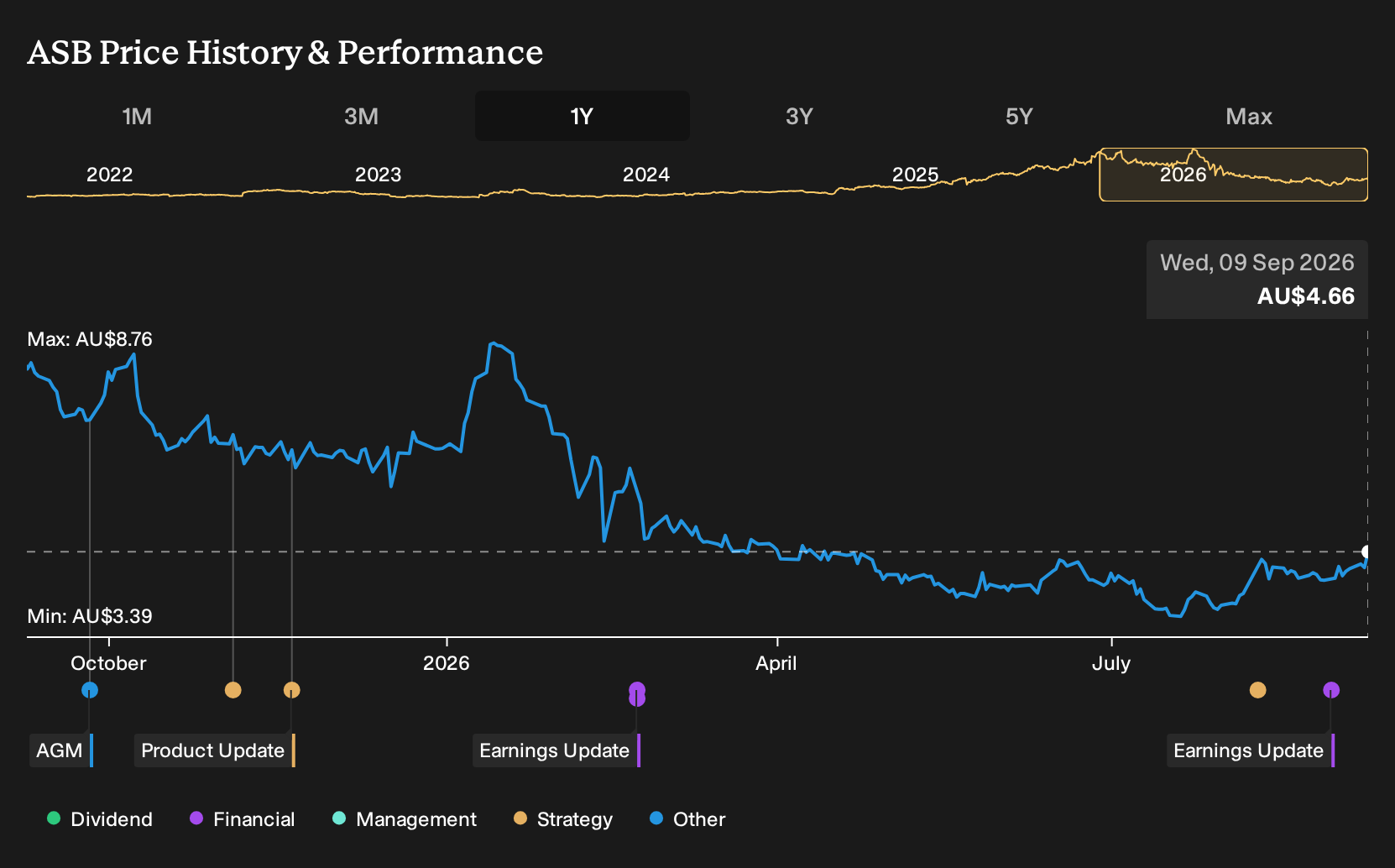
Austal's forecasts point to a fair value of A$5.62 compared with a A$4.66 share price, a 21% upside to its current price that could narrow quickly.
Exploring Other Perspectives
For a very different angle, focus on the bearish view that Austal’s heavy dependence on government defence customers and complex US programs could keep contract risk front and centre. The lowest analysts were already modelling revenue falling toward about A$1.1b by 2029 and earnings near A$112.5 million. That is far more cautious than the consensus. These forecasts were set before the 2026 loss, so you should expect some of these storylines to evolve. Use that gap between A$3.0b and A$1.1b revenue assumptions as a prompt to explore several viewpoints rather than rely on a single script.
You can stress test your own view on Austal by comparing it with 4 other fair value estimates for Austal.
The Verdict Is Yours
Disagree with existing narratives? Extraordinary investment returns rarely come from following the herd, so consider trusting your own analysis.
- A great starting point for your Austal research is our analysis highlighting 2 key rewards that could impact your investment decision.
- See our latest analysis for Austal. The report includes a comprehensive fundamental analysis summarized in a single visual, the Snowflake, making it easy to evaluate Austal's overall financial health at a glance.
Looking for more Austal investment ideas beyond this stock?
If Austal's mixed result has you rethinking concentration risk, it can help to line it up against a wider set of companies with different balance sheets, income profiles and payout habits. The Simply Wall St screener makes that comparison quick so you can shortlist candidates that better match your own return and risk preferences.
- For investors who want income first and volatility second, start with companies that have paid out consistently by checking a set of potential 4 dividend fortresses.
- If capital preservation sits high on your list, filter for businesses with steadier fundamentals and fewer red flags by reviewing a 3 resilient stocks with low risk scores.
- For those hunting for under followed opportunities with stronger metrics than the market narrative suggests, consider a 14 high quality undiscovered gems.
This article by Simply Wall St is general in nature. We provide commentary based on historical data and analyst forecasts only using an unbiased methodology and our articles are not intended to be financial advice. It does not constitute a recommendation to buy or sell any stock, and does not take account of your objectives, or your financial situation. We aim to bring you long-term focused analysis driven by fundamental data. Note that our analysis may not factor in the latest price-sensitive company announcements or qualitative material. Simply Wall St has no position in any stocks mentioned.
Have feedback on this article? Concerned about the content? Get in touch with us directly. Alternatively, email editorial-team@simplywallst.com